

Singapore banks may bid for parts of Citi's Asia consumer business as giant makes exits
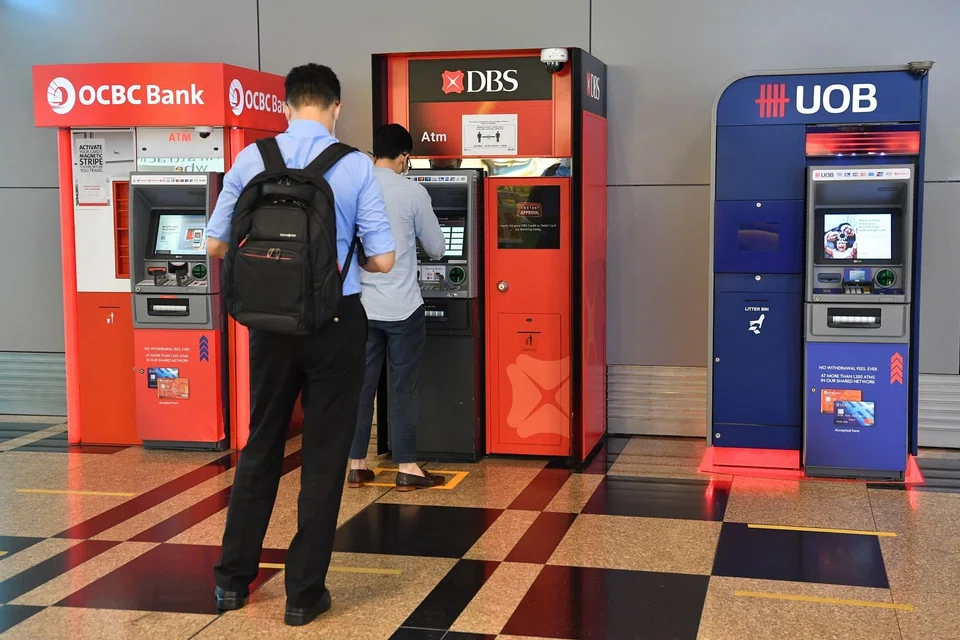
EYES are now on whether Singapore banks will snap up Citi's assets in markets that the local trio already play in, as the Wall Street giant sheds several of its consumer banking businesses across Asia.
Reuters on Tuesday reported that banks including DBS Group, Mitsubishi UFJ Financial Group (MUFG), OCBC and Standard Chartered are set to bid for parts of Citigroup's consumer business in Asia. The report cited people with direct knowledge of the matter.
When asked by The Business Times, OCBC declined comment.
In a statement, DBS said: "At this juncture, the details are still unclear. However, we have always been open to exploring sensible bolt-on opportunities in markets where we have a consumer banking franchise (China, India, Indonesia and Taiwan) and where we can overlay our digital capabilities to serve our customers better."
Citi made a call last week to exit 13 consumer markets, citing the lack of scale needed to compete in those markets as well as broader plans scale up on wealth management. Many of these are key markets for Singapore and Asia-focused banks. The 13 consumer markets Citi will exit are: Australia, Bahrain, Indonesia, South Korea, Malaysia, the Philippines, Poland, Russia, Taiwan, Thailand, Vietnam, India and China.
An investment banker told The Business Times that some of the markets up for sale, such as Malaysia and China, are "focus areas" for the Singapore banks. "You'll see a good amount of overlap. I think it's fair to say that the Singapore banks would certainly look at them," he said.
The sale process will start within a couple of weeks, Reuters reported. The report added that as Citi is not giving up its banking licences in most of these markets, the sale of the consumer banking portfolios and branches will only appeal to lenders with existing presence in these countries.
Still, while there are market expectations of potential acquisitions, such deals may not be significant for the Singapore trio, industry watchers say.
Any acquisitions will not be "massively material" for the trio, the banker noted, given that Citi's retail loan book in its Asia markets sit in the S$5 billion to S$10 billion range.
In Malaysia, for example, Citi's gross loans as at Q1 stood at 20.1 billion ringgit (S$6.48 billion), of which majority came from retail borrowers. In China, the bank had a retail loan book of 22.5 billion yuan (S$4.59 billion) as at end-2019.
"If you compare that to the size of Singapore banks' loan books, any acquisition would be not be massively material," the banker told BT.
That said, he pointed out that Citi has built up a "pretty decent" franchise in certain areas, such as cards and mortgages. "For banks that want to grow in these segments, it will be a nice acquisition," he noted.
Singapore banks are also well-capitalised. OCBC's CET-1 ratio as at end-December 2020 was highest of the trio at 15.2 per cent. UOB's CET-1 ratio was at 14.7 per cent, while DBS's CET-1 ratio was at 13.9 per cent.
Philip Securities analyst Tay Wee Kuang said attractive markets that Citi is exiting include China, Taiwan, Malaysia, the Philippines, Thailand, Vietnam and India. But over the short term, he reckoned that Singapore banks may hold off an acquisition.
This comes as DBS has recently expanded its footprint in India with its Lakshmi Vilas Bank takeover, and will likely focus on restructuring its newly-acquired business.
After market close, DBS on Tuesday evening separately announced that it would pay S$1.08 billion to subscribe for a 13 per cent stake in Shenzhen Rural Commercial Bank Corporation. It said the investment is in line with the group's strategy of investing in its core markets and accelerating its expansion in the rapidly growing Greater Bay Area.
While OCBC and UOB have not made any acquisitions recently, they are unlikely to do so given their "established footprint" in the overlapping geographies with Citi's assets, said Mr Tay.
"Furthermore, both banks' target segment of the affluent overlaps with Citi's footprint in these markets, making the marginal benefits from acquisition of Citi's assets less attractive compared to the premium that will likely to be tagged to the assets," he added.
All 13 consumer markets combined recorded a loss of US$40 million in 2020, with total revenue contribution of about US$4.2 billion.
In Q1 this year, Citi's Asia consumer banking revenue fell 9 per cent year-on-year on a reported basis, and 12 per cent in constant dollars reflecting lower cards revenues, as well as lower deposit spreads, partially offset by investments revenues and deposit growth.
Citi's new CEO Jane Fraser has said that the divestment comes as part of a strategic refresh to focus on wealth management. The bank's core consumer strategy is to serve the mass affluent market and bump these clients up to the private banking tiers over time. Sanford C Bernstein analyst Kevin Kwek said: "Citi is not giving up the higher net worth customers, they will be recruiting more private bankers to handle them in Asia." For the lower end of the consumer segment, Singapore banks will likely "cherry pick those they can take on at low incremental cost" in locations where they already have at least some scale, he added, citing Malaysia and Indonesia as potential markets for OCBC and UOB. "China is attractive but the likes of DBS has already positioned themselves to tackle the higher net worth customers - and these aren't ones Citi is giving up," said Mr Kwek.
On Tuesday, shares of DBS closed unchanged at S$29.02. Shares of UOB were up four cents to S$26.27, while that of OCBC fell four cents to S$11.92.
READ MORE:
TRENDING NOW
Easy to rent out, hard to sell: Are buyers losing interest in Singapore’s one-bedroom condos?

GovTech retrenches another 38 staff in second round of layoffs

Stocks to watch: Seatrium, CapitaLand Investment, Keppel DC Reit, Suntec Reit, CLCT, TSH Resources

World’s largest offshore wind platform by Seatrium consortium on track to be completed by 2028

