

Singapore banks post robust Q1 results, but NIMs look to have peaked

Tan Nai Lun
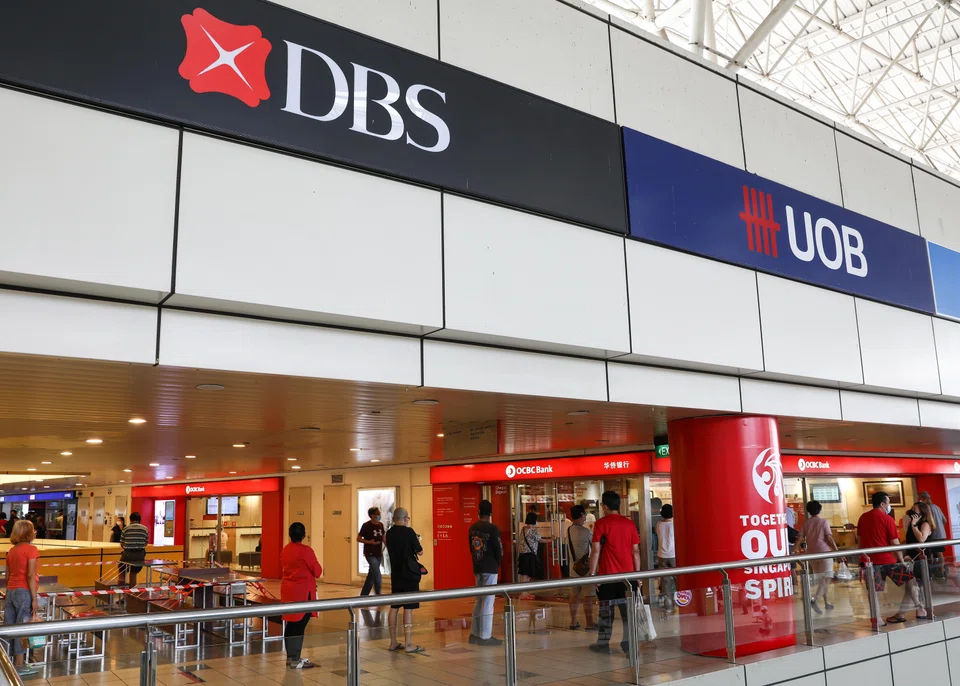
THE trio of local banks continued to post robust results for the first quarter of 2023, but their net interest margins (NIMs) appear to be past their peak.
All three banks’ chief executives said they will remain prudent ahead of rising credit quality risks.
For the first quarter of 2023, UOB’s net profit rose 67 per cent on year to S$1.5 billion. Its retail business received a boost from the inclusion of the newly acquired Citi consumer portfolio.
DBS posted a record net profit of S$2.6 billion, up 43 per cent on year, amid sustained growth in its NIM and healthy business momentum.
OCBC also posted a record net profit, up 39 per cent to S$1.9 billion, buoyed by strong net interest income growth.
The equity research team at OCBC Investment Research (OIR) noted that the Singapore banks have held up relatively well despite the global banking turmoil in March.
This “reflects investors’ relative comfort with the sector’s solid capital, liquidity ratios and risk management standards”, they said.
But OIR said softer global growth could weigh on the outlook for loans growth, credit costs and non-performing loan trends over the medium term.
The three lenders cut their guidance for loan growth for the year – each bank initially guided for a mid-single-digit percentage loan growth during their fourth-quarter results briefings.
DBS dialled its loan growth guidance back to 3 per cent to 5 per cent, while UOB and OCBC are now expecting a low- to mid-single-digit percentage for the year.
Peaking NIMs may also indicate tougher times ahead for the three banks.
DBS analysts Lim Rui Wen and Tabitha Foo said there are limited catalysts for now as the US Federal Reserve rate comes close to its peak in the cycle.
UOB’s NIM moderated eight basis points quarter on quarter (qoq), due to an increase in funding costs and liquidity surplus placed into high-quality assets.
OCBC’s NIM fell by one basis point qoq, as a rise in asset yields was offset by higher funding costs and a lower loan-to-deposit ratio.
DBS’ NIM grew eight basis points qoq, but its management warned that the bank’s NIM has likely peaked.
Nevertheless, UOB Kay Hian analyst Jonathan Koh expects Singapore banks will still benefit from the expanded NIM on a full-year basis in 2023.
All three banks boosted their wealth management business in the quarter, and expect the segment to grow further.
UOB booked around S$6 billion in net new money in the quarter, DBS had inflows of S$6.2 billion, while OCBC’s net new money inflow was around S$10 billion.
CGS-CIMB analysts Andrea Choong and Lim Siew Khee noted that DBS and OCBC had benefited from a flight to safety.
“A recovery in sentiment, albeit still generally cautious, drove stronger wealth management earnings in the quarter,” they noted.
UOBKH’s Koh maintained his “buy” call on DBS and OCBC, as he expects the banks will be a proxy to growth in Asean countries given their extensive network within the region.
He raised his target price on OCBC to S$17.32 from S$16.80, after raising his earnings forecast to factor in the strong Q1 performance.
Meanwhile, he cut DBS target price to S$41 from S$41.80 after trimming earnings forecast due to moderation in NIM.
The RHB Singapore research team downgraded its call on DBS to “neutral” from “buy”, and cut its target price to S$35.70 from S$39.80, as it expects the stock may be capped in the near term by concerns over the downside risk to earnings.
The team maintained its “buy” call on OCBC and UOB. It trimmed OCBC’s target price to S$14 from S$14.80, and kept its target price on UOB at S$34.90.
The RHB team said UOB is its preferred pick among the Singapore banks, given its focus on leveraging its Asean network. It also expects sustained momentum in fee income and contributions from Citi’s retail assets to drive topline figures and offset short-term NIM weakness.






