

Singapore banks may deliver special Q4 dividends along with margin growth: analysts

Tan Nai Lun
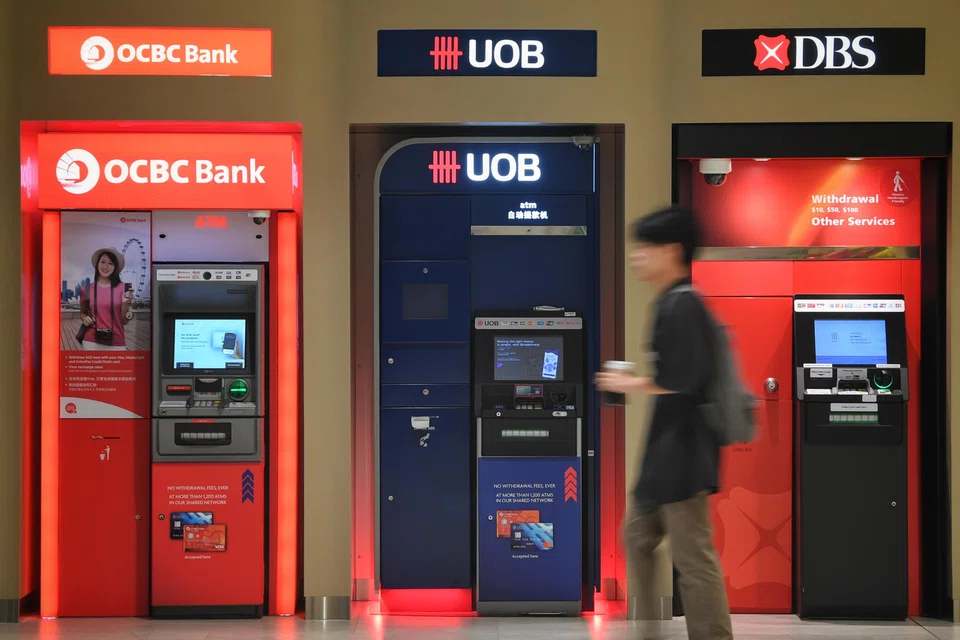
SINGAPORE’S trio of local banks should continue to post solid growth in net interest margins (NIMs) for the fourth quarter of 2022, thanks to the high interest rate environment.
Rate hikes by the Federal Reserve throughout 2022 have driven up the cost of borrowing and boosted the NIMs of banks.
The rate of NIM expansion has likely started to moderate, analysts said. Nevertheless, the banks’ high capital levels and above-regulation provisioning coverage mean an upside surprise in dividends.
The banks are set to release their fourth-quarter results in the coming weeks, with DBS on Feb 13, UOB on Feb 23 and OCBC on Feb 24.
Maybank analyst Thilan Wickramasinghe said the two Fed rate hikes during Q4 likely boosted asset yields and further supported NIM expansion across the three lenders.
The trio will, however, likely book a higher cost of funding in the quarter, especially with an increase in competition for fixed deposits and current accounts savings accounts (Casa), Wickramasinghe said in a note on Jan 30.
The higher cost of funding will likely cause NIM expansion to moderate in Q4, particularly as NIMs have already reached “high watermark levels” in the third quarter, said DBS Group Research analyst Lim Rui Wen in a report on Feb 1.
Lim expects Casa ratios across the banks will continue to decline in Q4, as the lenders see Casa outflow to alternative higher-yielding instruments such as fixed deposits, Treasury bills, and Singapore Savings Bonds.
At the same time, Maybank’s Wickramasinghe said loan growth may see weakness as corporates look to offset rising interest costs by making repayments.
He also expects the banks will be cautious and guide for increased credit costs in 2023 amid higher interest rates, rising input costs and weaker global growth.
Even so, the lenders may surprise investors with higher payouts. Wickramasinghe noted that they can afford to do so as provisioning coverage is high and capital levels are well above regulatory minimums.
These will likely come in the form of special dividends, said Bank of America research analysts Anand Swaminathan and Ryan Foo in a report on Feb 7.
Despite strong fiscal-year earnings, the analysts believe the banks are unlikely to make big hikes to their base dividends given uncertainties around rate cycles, macroeconomic concerns and markets.
Based on current surplus capital levels, DBS and OCBC likely have the most upside potential for special dividends. They might, however, prefer to “keep some dry powder for any potential opportunities”, the analysts added.
DBS’ Lim also noted that while OCBC does not have a track record of giving out special dividends, its Common Equity Tier 1 ratio – which measures a bank’s capital against its risk-weighted assets to determine its ability to withstand financial distress – of 14.4 per cent at the end of Q3 represents ample capacity to pay higher dividends.
UOB Kay Hian (UOBKH) analyst Jonathan Koh expects DBS to return its surplus capital to shareholders through a special dividend of S$0.80 per share.
Koh also flagged risks of falling non-interest income. DBS, he noted, is likely to see “lacklustre” contributions from wealth management as high-net-worth clients continue to adopt a risk-off approach and remain on the sidelines.
He also expects OCBC will see a decline in wealth management fees as investors gravitate towards low-risk assets, such as fixed deposits and T-bills.
Analysts have largely maintained their respective “buy” calls on the banks.
For DBS, UOBKH has a target price of S$45.35 and Maybank’s target price is S$42.69.
For UOB, DBS Group Research has a target price of S$34.20 and Maybank’s target price is S$33.77.
As for OCBC, UOBKH has a target price of S$17.75; DBS Group Research has a target price of S$15; and Maybank’s target price is S$14.70.
Meanwhile, Bank of America rates DBS as “neutral” and both UOB and OCBC as “underperform”.
On Wednesday (Feb 8), shares of DBS closed 0.6 per cent higher at S$36.19, UOB rose 1 per cent to S$30.84, while OCBC finished at S$13.15, up 1 per cent.

