

Singapore chip manufacturing sector set to boom as global DRAM shortage continues
Benefits could ‘cascade across the entire value chain’, as demand outstrips supply of the computer memory hardware

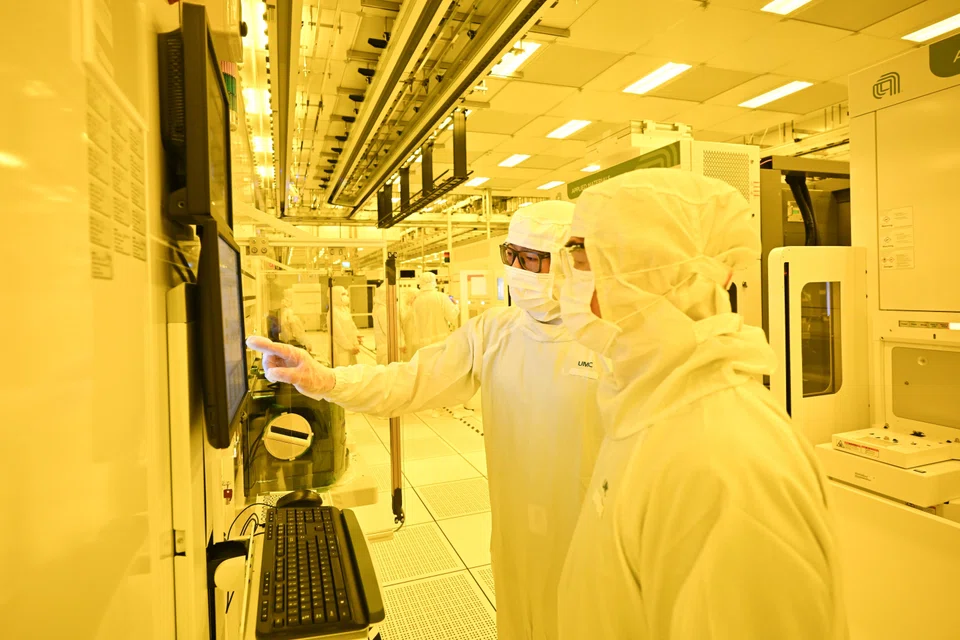
[SINGAPORE] Singapore’s manufacturing sector stands to benefit from the sustained global shortage of dynamic random-access memory (DRAM) chips. The scarcity is expected to last for at least another year.
DRAM, the most common type of RAM, is used in technology products such as phones and personal computers. The upward trajectory of the price of DDR5 DRAM – the benchmark and fastest version in the market – began in earnest last October.
Contract prices for this piece of hardware rose to US$3.45 in December last year, a sharp rise of 28.7 per cent from October and an even larger 40.2 per cent rise from January 2025, according to data from Bloomberg.
While there have been shortages of memory chips previously, Glyn Truscott, practice director at Bain & Co, suggested that the current insufficiency may turn into a “multi-year super-cycle”, with normalisation expected in 2027.
Anant Shivraj, managing director and partner at Boston Consulting Group (BCG), noted: “This looks less like a classic memory cycle and more like a multi-year structural squeeze.”
Driving this global squeeze is the sustained increase in demand for high-bandwidth memory (HBM) – which is used for high-performance tasks such as training artificial intelligence (AI).
HBMs use three to four times more wafers than traditional DRAM, pointed out Jake Silverman, an analyst at Bloomberg Intelligence.
Manufacturing boom to spillover
Analysts believe that the ongoing demand for DRAM chips is fuelling Singapore’s manufacturing industry, which in turn is helping to drive the country’s gross domestic product growth.
This was reflected in the latest fourth-quarter economic numbers, where the manufacturing sector saw a substantial expansion of 15 per cent, significantly higher than the 4.9 per cent increase in the previous quarter.
“Growth during the quarter was largely driven by output expansions in the biomedical manufacturing and electronics clusters,” noted the Ministry of Trade and Industry (MTI).
Maybank Research expects the AI boom to continue as mega-cap US tech firms guide for higher capital expenditures.
Google’s parent company Alphabet hiked its capital expenditure for 2025 to between US$91 billion and US$93 billion. It had a capital expenditure of US$52.5 billion in 2024.
Global DRAM capital expenditure is expected to have surged 29.2 per cent in 2025 to US$48.3 billion, and rise a further 10.2 per cent in 2026 to US$53.2 billion, noted DBS in a recent research note.
Maybank added that such an increase will support Singapore’s electronics exports, investments and tech services activity.
Micron Technology – one of the three significant global producers of DRAM chips alongside Samsung and SK Hynix – has a significant business presence in the Republic. It produces 98 per cent of its top-end flash memory chips, or Nand, in the country.
Ang Wee Seng, executive director of the Singapore Semiconductor Industry Association, said that the benefits will “cascade across the entire value chain, rather than accruing to a single segment”.
“Higher memory prices in the near term typically improve utilisation rates and investment confidence, which can translate into expanded manufacturing activity, process upgrades and higher-value engineering work locally.”
He added that potential beneficiaries include companies involved in advanced packing, back-end manufacturing and semiconductor equipment, as well as those supporting AI, data centres and high-performance computing platforms.
DBS identified local precision engineering firm UMS Integration and technology solutions firm Frencken as potential beneficiaries of the global shortage of memory chips.
“UMS is supported by multiple growth drivers, including strong industry tailwinds, with the global semiconductor market forecast to (have grown) 17.8 per cent in 2025,” noted the lender.
According to research firm Gartner, the market is set to expand a further 17.8 per cent in 2026 and 9.3 per cent in 2027.
DBS added that Frencken is also well-positioned to capitalise on the recovery in the technology sector, supported by its sound balance sheet and diversified portfolio.
Downstream users exposed
However, the global DRAM shortage will still result in winners and losers.
Companies that are “downstream memory users”, such as those in consumer electronics manufacturing or retail, may face negative consequences, said Associate Professor Goh Puay Guan from the NUS Business School’s department of analytics and operations.
Truscott noted that enterprises with large data centre footprints and cloud service providers could also be negatively impacted.
“Higher memory costs increase server and device component costs, which could affect enterprise investment decisions and postpone buyer upgrade cycles,” he added.
Smaller enterprises are also put at risk, said Shivraj, as “higher memory and storage costs flow straight into IT budgets, especially for small and medium-sized enterprises and non-hyperscaler corporates”.
Still, a positive outlook overall
Last week, the US imposed a 25 per cent tariff on imports of certain advanced chips and specified derivative products, which MTI said will have only a “minimal impact” on Singapore. These chips are currently not manufactured here.
The city-state is still likely to emerge positively, given the current supply crunch.
“Gains in higher-value upstream semiconductor activity are expected to outweigh broader but more limited downstream cost pressures,” Truscott noted.
Prof Goh concurred, noting that Singapore is a major contributor to the global semiconductor industry – accounting for 10 per cent of global output and 20 per cent of equipment manufacturing.
However, Shivraj believes that the impact of the DRAM shortage on the Republic will be more nuanced.
“The net outcome depends on whether Singapore can capture disproportionate upstream value during this AI-led super-cycle, in which case this cycle is more likely a strategic plus than a broad economic drag,” he said.
Supply chain adaptations that can be done in the short and medium term to alleviate the shortages include a slower roll-out of new products, or using chips that are more widely available, suggested Prof Goh.
Production yield could also be improved, so that existing manufacturing capacity can produce more, he added.
The current shortage of memory chips coincides with the planned opening of Micron’s HBM manufacturing plant in Singapore, which is expected to commence operations this year.
The company announced in January 2025 that it will expand its operations in the city-state, with a new US$7 billion HBM advanced packaging facility – the first of its kind in the Republic.
The plant is expected to generate 1,400 jobs initially, and potentially 3,000 jobs in the future. The facility is expected to strengthen the local semiconductor ecosystem and innovation.
TRENDING NOW

First Resources blames El Nino, outside fires for Kalimantan hotspots amid haze scrutiny

High Court rules against Julius Baer’s Singapore trust arm in US$50 million family trust dispute
Singapore key exports jump by higher-than-expected 68.4% in September, led by non-electronics

MSCI proposes downgrading Indonesia to standalone market status

