
Singapore equities could gallop as opportunities heat up in the Year of the Fire Horse: fengshui master

Some of the best investment opportunities can be found in the local market, adds Maybank Securities’ Thilan Wickramasinghe

Summarise
Jude Chan
Published Tue, Feb 3, 2026 · 07:00 AM
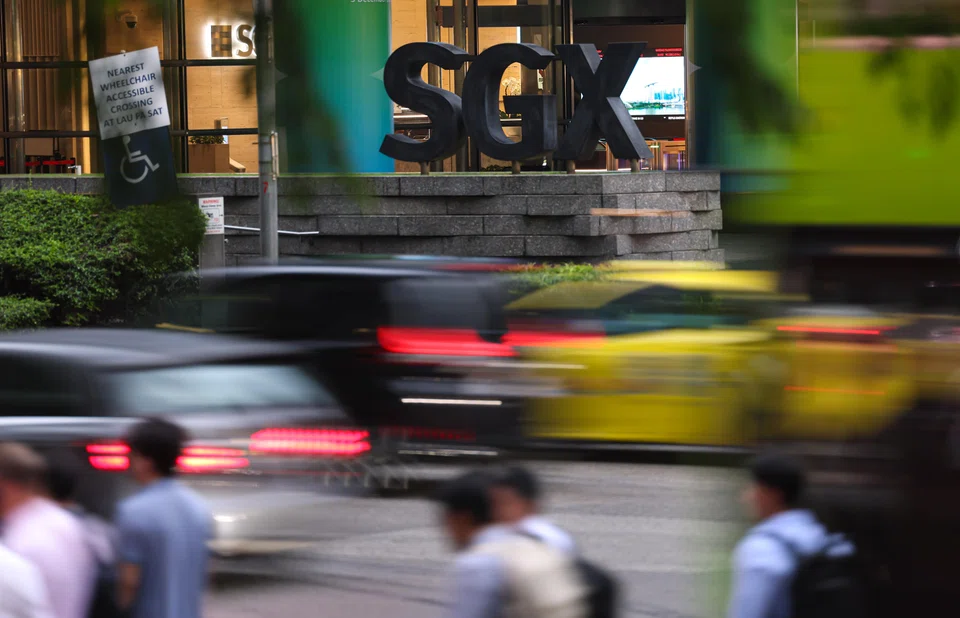
    • Already, Singapore's stock market has been gaining momentum, following a raft of reforms led by the government.
    • Already, Singapore's stock market has been gaining momentum, following a raft of reforms led by the government. PHOTO: YEN MENG JIIN, BT

    [SINGAPORE] If fengshui master Ken Koh were to sum up the Year of the Fire Horse in one word, it would be “irrational”. He predicts quick, spontaneous bursts of irrationality that will flare up throughout 2026 – and spill over into the equities markets.

    But this might not be a bad thing for investors. “It will create a lot of opportunities,” he said.

    The way Maybank Securities’ head of research Thilan Wickramasinghe sees it, global investors could flock to Singapore as a “safe haven” amid a rise in geopolitical uncertainty.

    “Markets like volatility, but they don’t like uncertainty – and what we are having in this world right now is a lot of uncertainty,” he said at a market outlook and fengshui event organised by Maybank on Saturday (Jan 31).

    “As the world becomes uncertain, more and more liquidity comes to Singapore – and I like to think of that as dry powder,” he added. “This is firepower to be deployed. Not all of it will go to the market, but even if some of it goes to the market, that’s going to create a significant impact.”

    Indeed, Koh and Wickramasinghe believe the stars are aligning for the Singapore equities market.

    The analyst forecasts that more capital will enter the city-state, fuelled by an ongoing construction boom and an economy that is displaying “significantly more resilience than ever before”.

    Already, the domestic stock market has been galloping on the back of a raft of market reforms led by the government.

    One such initiative that has brought excitement is the Monetary Authority of Singapore’s S$5 billion Equity Market Development Programme (EQDP), which invests in strategies managed by asset managers based here that have a strong focus on local equities.

    To broaden investor participation beyond large-cap stocks, the Singapore Exchange (SGX) also launched the iEdge Singapore Next 50 indices. They track the performance of the 50 biggest and most liquid counters in the local market beyond the 30 constituents of the benchmark Straits Times Index (STI).

    Last year, the STI generated a total return – with divestments reinvested – of 28.8 per cent, while the iEdge Singapore Next 50 companies ran up 26.7 per cent.

    Interest has been piling into smaller names on the SGX, but to this point, Wickramasinghe has a contrarian view. “I know everyone talks about EQDP and small and mid-caps, but the reality is, this year is going to be about large-caps,” he said.

    One of the reasons for this? Singapore investment firm Temasek.

    Temasek companies could lead the charge

    “Something happened in 2020,” the Maybank research head said. “That’s when Temasek said to most of the Temasek-linked companies that they need to restructure – they need to make their balance sheets a lot more nimble, they need to pay a lot more dividends to shareholders.”

    He noted that last August, the investment company announced that it will restructure and set up three entities to manage three distinct portfolio segments – including one to oversee the Singapore-based companies. These include DBS , Singtel , ST Engineering , Keppel , Sembcorp Industries , CapitaLand Group and Mapletree Investments.

    “And look what’s happened,” Wickramasinghe said, pointing out that many of these portfolio companies’ earnings have expanded over the last five years of restructuring, and that the market has rewarded them with higher share prices. “There’s a lot more reform and a lot more ROEs (returns on equity) that can be squeezed out of Singapore’s large-caps.”

    He also sees “a new pool of liquidity” coming into the market in the form of retail investors. “Singapore has one of the lowest retail participation rates in the world for developed markets, but given some of the reforms that we’re seeing, such as making lot sizes smaller… that’s going to drive more liquidity into the market from retail investors.”

    And as interest rates fall sharply, investors may also put their money into the equities market instead.

    “As Singaporean investors, we have a lot of options. We can invest anywhere, and we’ve got a strong currency to invest anywhere,” he added. “But in 2026, I truly believe that some of the best investment opportunities will be right here at home.”