Singapore has no choice but to double down on trusted-hub status amid US-China friction: NUS dean
NUS professor Joseph Liow notes that the Manus episode reflects the wider geopolitical pressures facing S-E Asia


[SINGAPORE] As geopolitical fragmentation threatens to disrupt global commerce, Singapore has “no choice” but to double down on its identity as a trusted, neutral global hub as a key differentiator, said Professor Joseph Liow, dean of the NUS Lee Kuan Yew School of Public Policy.
“That is our value proposition for investments that are coming from the United States and China,” he added.
Prof Liow was speaking during a fireside chat at VP Bank’s H2 CIO Outlook held at The Edition hotel on Thursday (Jul 16), where he flagged that South-east Asia is increasingly feeling the squeeze of escalating major-power rivalry.
He highlighted artificial intelligence startup Manus as a case in point. “The Manus case is symptomatic of the larger concern that South-east Asia has about being caught between the US and China,” he noted.
Meta acquired AI agent developer Manus in late December 2025, but the deal fell through when Beijing ordered Meta to unwind its US$2 billion acquisition. Manus had moved its operations to Singapore in 2025 from China. (* See amendment note)
Against this fragmented backdrop, navigating the geopolitical crosscurrents of global superpowers is inherently difficult for small countries like Singapore, Prof Liow said.
He warned that the global shift away from free trade and the unhindered flow of investment capital towards weaponised trade tools – such as entities lists and stringent export controls – places the region in a precarious position.
Historically, he pointed out, South-east Asia has been a prime beneficiary of both the US and China. It has capitalised on China’s rapid economic expansion by providing raw materials and banking services, while maintaining deep ties with the US – which remains the largest foreign direct investor in the region.
This growth momentum is now shifting to the AI race, triggering a rush across developing markets in South-east Asia.
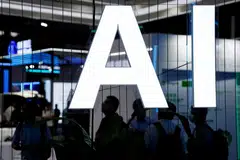
“In Asia, you see a rush to ride… the AI wave, where countries like Laos and Cambodia are talking about starting data centres,” he noted. “To be a legitimate member of the international community, you must have a data centre on the soil.”
A two-player AI race
When it comes to the AI race, Prof Liow noted that there are only two main players: the US and China.
“The Europeans, the Japanese and the Koreans are important big players – but they are not the main players,” he noted, adding that this structural shift is influencing a lot of dynamics affecting small countries.
“You... have to pay attention to... the kind of changes in the regulatory environment in each country, especially vis-a-vis each other.”
A recent study by the Pew Research Center found that China is now viewed more positively than the US in many countries around the world.
This data aligns with shifting perceptions on the ground, as Prof Liow noted that Western competitors increasingly recognise the rapid advancement and sophistication of Chinese industries.
However, he added that the challenge for China is the internationalisation of the supply chain.
While the US can rely on countries such as Japan, the Netherlands and South Korea, for example, for semiconductors, the Chinese have to indigenously develop these capabilities themselves, he said.
“The advantage that the United States has is that (it) has a lot of friends who are prepared to do business. China suffers a deficiency in that,” he noted.
Pick the winners
Looking ahead, Prof Liow identified three key shifts that could happen: the acceleration of renewables; the creation of alternative energy supply routes; and massive infrastructure rebuilding in the Gulf economies once regional conflicts subside.
However, the rapid roll-out of AI infrastructure will introduce complex trade-offs, particularly regarding sustainability.
“This is essentially the essence of the fourth or fifth Industrial Revolution,” he said. “The challenge would… be managing a number of aspects.”
He flagged the climate challenge as being a “trade-off” for countries looking to move forward in the AI race. He added that as both US and China invest heavily in building insulated, decoupled technology stacks, semiconductor independence will remain the ultimate battleground.
Against this backdrop, Dr Felix Brill, chief investment officer, VP Bank, cautioned against concentrated bets. Investors cannot afford to wager on a “single horse” simply because it shows the most immediate innovation.
“The nature of the industry is going to be one that those that are going to innovate fast are going to be the ones that will be at the forefront,” said Prof Liow.
Amendment note: An earlier version of this article incorrectly stated that Meta had moved its operations to Singapore from China in 2025. Manus relocated its operations, not Meta.
Decoding Asia newsletter: your guide to navigating Asia in a new global order. Sign up here to get Decoding Asia newsletter. Delivered to your inbox. Free.
Copyright SPH Media. All rights reserved.