Singapore healthcare firms ailed by rising costs, but there are bright spots

Anita Gabriel
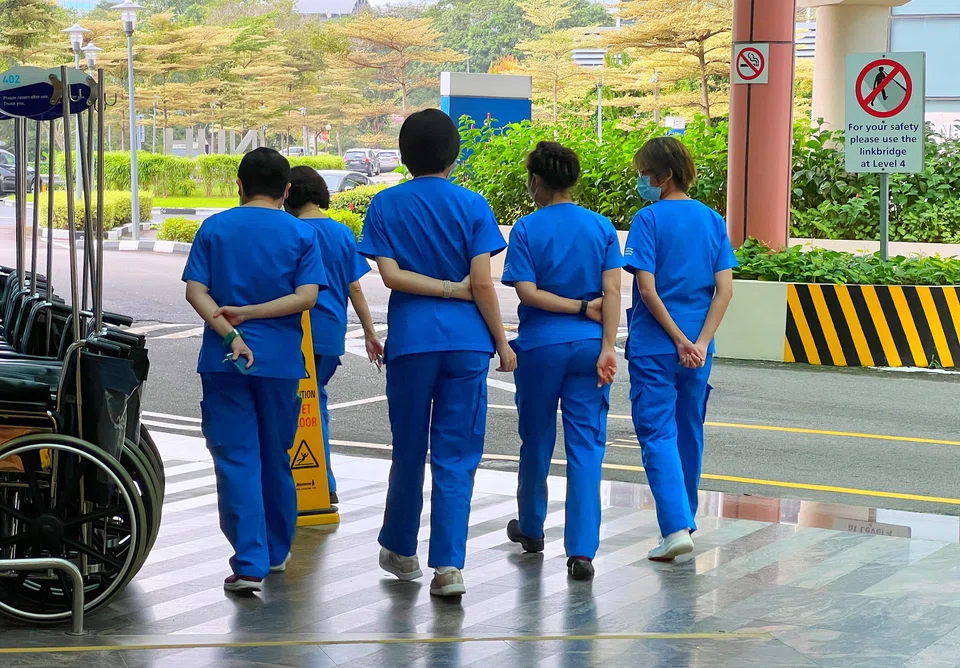



AS SINGAPORE’S healthcare players leave the worst of the pandemic behind them, they appear beset by other pain points, from rising operating costs to slowing economic growth and a staff crunch in the city-state to boot.
While the lifting of mobility and border curbs since last year have seen the return of local as well as foreign patients, which are driving inpatient volumes and bed occupancy higher, the sting of rising costs threatens to be this year’s party poopers for the sector.
Joe Sim, the group chief operating officer of Asia’s largest private healthcare operator IHH Healthcare, said: “This year is about navigating the ‘new normal’ as we are now firmly in the post-Covid phase.”
He added: “At IHH, we have seen patients returning in strength, and expect our admission volumes and bed occupancy to grow... these long-term megatrends remain positive for our sector. From a business perspective, this has offset the reduction in Covid-related services provided.”
Nevertheless, headwinds are aplenty.
“In the near term, we see macroeconomic headwinds such as inflationary pressures – including on salary costs from nursing shortages – as well as high energy prices and rising interest rates,” said Sim.
To tackle price pressures, IHH, which counts Singapore and Malaysia as anchor markets and also has a large presence in Turkey and India, raised prices across its operations.
A spokesperson from Raffles Medical Group cited similar challenges, adding that the shortage of healthcare staff, particularly nurses, is a “concern” and hence, “higher medical costs can be expected”.
On IHH’s part, it has ramped up hiring efforts as pipelines of new nurses are being built.
According to a December report by CGS-CIMB Research following the group’s Q3 results release last year, IHH’s management estimated that staffing constraints may have affected up to 10 per cent of patient admissions over the quarter.
While Singapore’s Catalist-listed Singapore Paincare Holdings (SPCH) founder, executive director and chief executive Bernard Lee does not expect the rising medical costs to hamper its business – “pain is ubiquitous in every single condition”, he said – more cost pinch may be afoot.
According to Dr Lee, the group is “adopting a look-and-see approach” on the impact of the higher goods and services tax (GST), which was raised to 8 per cent on Jan 1 this year. Singapore-based businesses with an annual turnover exceeding S$1 million are required to register for GST.
The firm offers a range of pain care services from specialist and primary care doctors, as well as traditional Chinese medicine (TCM) and physiotherapy. It also has 10 general practitioner clinics, three specialists clinics, two physiotherapy centres, one TCM clinic and two health screening facilities and rehabilitation as of June 2020. Half of them are GST-registered.
“We are looking to see whether our overall revenue can keep going and then there’s not a need to have to adjust our prices,” he said.
Amid rising operating costs and as the operating environment turns more challenging post-pandemic, multidisciplinary healthcare specialist Livingstone Health’s CEO Wilson Tay deemed the firm’s move to a new centralised facility in Henderson Road last year as a “timely one”.
He expects the firm to recognise cost savings by the first half of this year and added that the new four-storey facility, equipped with a warehouse for medical supplies, will be able to generate economies of scale and improve operational efficiency.
One big upside for Singapore’s healthcare firms could be medical tourism, which is set to get a shot in the arm as China reopens. This follows a noticeable return of foreign patients to the city-state for treatment and services from elsewhere in the region since the reopening of their home borders.
“At Raffles Hospital, we generally see about 25 per cent of foreign patients who fly into Singapore to seek medical services. This excludes expatriates who reside here. Since the borders reopened on April 2022, we have been seeing foreign patients returning, especially from countries we have presence in, including Indonesia and Indochina,” said the Raffles Medical spokesperson.
“We expect more foreign patients to return as China reopens its borders, and for medical tourism to gain momentum,” the spokesperson added. China accounts for around 7 per cent of Raffles Medical Group’s revenue.
IHH has seen foreign patient numbers recovering to near pre-pandemic levels as economies reopened and expects the trend to remain positive for 2023.
“Singapore remains an attractive destination for its accessible location, ease of travel rules, value-effective services, robust regulatory framework for healthcare, and the high quality of staff and treatment available,” remarked IHH’s Sim.
Even so, Dr Tay of Livingstone Health, which draws mostly local patients and less than 5 per cent of foreigners, pointed out that the medical tourism market remains competitive, as other South-east Asian markets have been ramping up efforts to attract medical tourists.
According to Dr Lee, medical tourism accounted for about 30 per cent of SPCH revenue, which was hurt by the pandemic as international borders were shut to curb the spread of Covid-19. That drop, however, was “balanced off” by more local patients, as evinced by its record top line and bottom line performance for the fiscal year ended June 2022.
“The moment the borders were lifted, we had an influx in medical tourism on the back of pent-up demand. The surge happened around April to May last year,” he recalled. Seventy per cent of Singapore Paincare’s foreign patients hail from Indonesia. Since then, foreign patient numbers have tapered off and “stabilised” to about 20 to 25 per cent today, he added.
Another thing to look forward to, said Dr Lee, is the Singapore government’s campaign for a “Healthier SG” – a major preventive health strategy that is set to launch in the second half of 2023. This could bring more patients for the group.
“We are no longer just talking about degenerative-related pain. We could see a lot more sports or exercise injury-related pain as people try to get more healthy,” he said, referring to those who have not done such activities in a while and are eager to do so.
Livingstone Health had earlier said it planned to add more clinics under its primary healthcare arm, Phoenix Medical Group, to increase patient outreach and grow cross-disciplinary referrals, as primary healthcare providers will serve as a core pillar of the “Healthier SG” approach.