


Singapore, Hong Kong IPO rebound set to continue into H2 2026, but risks remain
The cities are reinforcing their roles as Asia’s leading capital-raising hubs as listing activity gathers pace

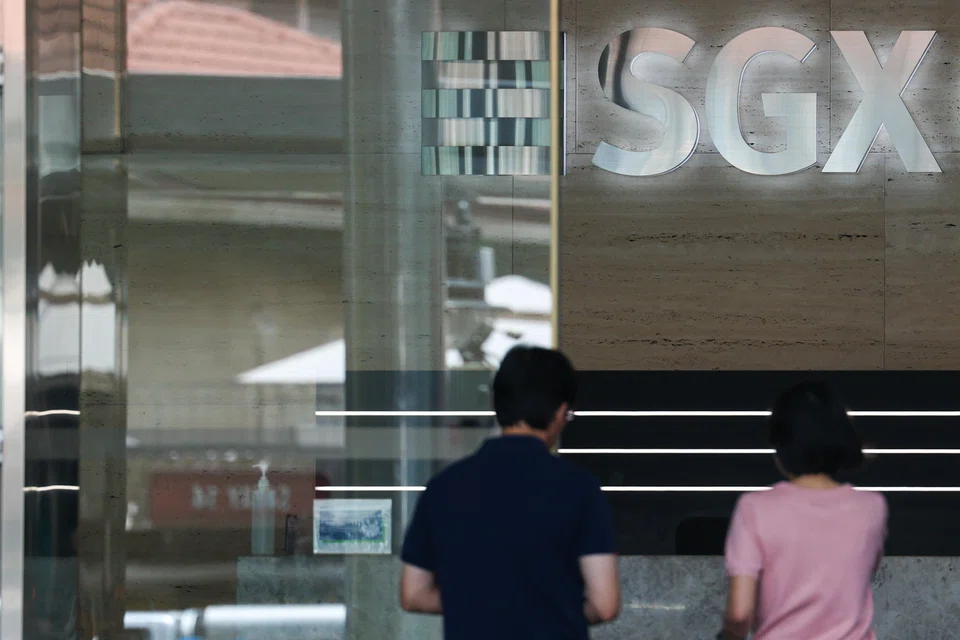
[SINGAPORE] A revival in initial public offerings in Singapore and Hong Kong is expected to extend into the second half of 2026, as regulatory reforms and improving market liquidity sustain a strong recovery in listing activity.
Singapore’s IPO market has emerged from a prolonged lull, with five listings raising about S$1.1 billion in the first six months of the year, up from just a single IPO for the same period in each of the last two years.
The five listings in the first half spanned real estate investment trusts (Reits), technology and event management companies. Since then, Foundation Healthcare made its debut on the mainboard, with three more listings expected to come.
Market observers said the rebound on the Singapore Exchange (SGX) reflects strong investor confidence, policy support and a broader pipeline of issuers, although geopolitical tensions and macroeconomic uncertainty remain key risks.
The improvement comes alongside a resurgence in Hong Kong, reinforcing both financial centres’ roles as complementary capital-raising hubs in Asia.
Hong Kong hosted 85 IPOs, raising about HK$210.4 billion (US$26.9 billion) in H1 2026. That compares with 42 new listings raising HK$107.1 billion in the year before, representing a jump of about 102 per cent in deal volume and 96 per cent in proceeds.
Edward Au, Southern Region managing partner for Deloitte China, noted that the 17 biggest IPOs accounted for about 60 per cent of Hong Kong’s IPO proceeds in H1 2026. These included Chinese printed circuit board manufacturer Victory Giant Technology’s mega listing, which ranked among the world’s largest IPOs this year.
He attributed Hong Kong’s growth to expectations of lower US interest rates, policies to boost domestic consumption, robust valuations of the artificial intelligence sector, and support for advanced manufacturing and technology.
Specifically, Au pointed out that the high-tech industry is now Hong Kong’s primary growth engine.

Driven by AI, semiconductors, robotics and biotech, these innovative tech firms captured over 70 per cent of listing volume and nearly 80 per cent of all funds raised.
Au cautioned against seeing Hong Kong and Singapore as competing financial hubs.
“Hong Kong offers connectivity to China and global capital, while Singapore provides access to South-east Asian investors and regional diversification,” he said.
The more relevant question, he added, is no longer which market to choose, but how to optimise both liquidity pools, valuation frameworks and investor bases in a more interconnected Asia.
Regulatory reforms underpin rebound
Steven Lo, co-head of capital markets at Drew & Napier, pointed to a series of regulatory changes over the past year as a key driver in both markets.
In Singapore, he cited the listing corporate income tax rebate introduced by the Monetary Authority of Singapore (MAS) on Feb 21, 2025, and the reforms SGX and MAS introduced to transition Singapore’s capital markets to a more disclosure-based regime, effective last Oct 29.
“Key changes (also) include reducing the mainboard profit listing requirement from S$30 million to S$10 million and shifting from prescriptive measures to requiring disclosures of internal control weaknesses and remediation steps,” he said.
He added that this comes alongside the S$6.5 billion Equity Market Development Programme (EQDP) to catalyse investments in Singapore-listed equities. (*See amendment note)
Introduced in February 2025, EQDP is an initiative by the Singapore government to boost trading and revive the local stock market.
Meanwhile, Hong Kong Exchanges and Clearing implemented reforms to IPO price discovery and open market requirements in August 2025.
Hong Kong’s gains stem from a surge in mainland Chinese companies seeking to raise capital there and a demand for AI and new economy companies, he noted.
Secondary listings gather pace
Secondary and dual listings are also expected to become a bigger growth driver.
Jimmy Seet, capital markets partner, PwC Singapore, said SGX recorded one secondary listing in H1 2026, while the launch of the SGX-Nasdaq Global Listing Board could encourage more regional companies to pursue dual listings that combine US liquidity with an Asian investor base.
In Hong Kong, Au noted that the key driver was the rise of A+H structures and dual-primary listings, with mainland Chinese issuers accounting for the bulk of the fundraising.
An A+H listing is a dual-listing structure where a mainland Chinese company issues stock on both a domestic Chinese exchange (as A-shares) and the Hong Kong Stock Exchange (as H-shares).
“This reinforces Hong Kong’s role as the international gateway to China, connecting onshore valuation, offshore liquidity and global investors within a single platform,” said Au.
Cautious optimism for H2
Market observers expect IPO activity to remain healthy in the second half of 2026, although the pace will depend on geopolitical developments, interest rates and after-market performance.
One challenge for IPO hopefuls in Singapore lies in convincing investors that these stocks can deliver solid post-listing performance.
About four in five of those listed in the first half were trading below IPO prices as at Jul 8. The worst performance was by co-working space provider JustCo; its shares slumped about 40 per cent below its IPO price at the end of trading on Jul 8.
Even so, industry watchers remain cautiously optimistic. Seet noted that the Middle East conflict was a key headwind in H1 that prompted some issuers to delay fundraising.
This was mitigated by various measures put forth by the Equities Market Review Group, which have improved market liquidity, he added.
Lo said Singapore’s pipeline points to continued momentum, with two companies lodging their preliminary prospectuses for a mainboard IPO on Jun 30, and Foundation Healthcare having debuted on Wednesday (Jul 8).
If the conditions hold, SGX could record 20 to 30 IPOs in 2026, building on the 15 in 2025, he noted.
In Hong Kong, Deloitte expects the exchange to end 2026 with 160 IPOs raising not less than HK$300 billion, supported by about 600 active listing applications with more than 100 A-share issuers.
“The market’s final sprint hinges on key global variables – specifically the resolution of Middle East conflicts, the direction of US interest rates, and how the market prices two upcoming titanic global AI listings later this year,” Au said.
*Amendment note: This article has been amended to reflect the correct value of the EQDP.
Decoding Asia newsletter: your guide to navigating Asia in a new global order. Sign up here to get Decoding Asia newsletter. Delivered to your inbox. Free.
Copyright SPH Media. All rights reserved.
TRENDING NOW
Government to bring forward raising of retirement age, give employers more financial support to create flexi-load jobs
Former minister Maliki Osman, Revolut chairman join Asia Gulf Holdings advisory board

Is Manila Asia’s new dining hot spot?
Simba at risk of losing operating licence over spectrum misuse

