Singapore investors see SpaceX investment as a long-term bet on the future of the space economy
With its growth potential, the US company could become a key firm supporting a new layer of economic activity
Meera Pathmanathan

[SINGAPORE] Everyone is eager to climb onto the SpaceX bandwagon now, but Singapore-based technology entrepreneur and investor Lim Qing Ru had her eye on it as a promising investment back in 2021.
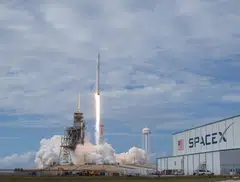
The founding partner at venture capital firm True Global Ventures 4 said that by Q2 2021, SpaceX had shifted from being a daring venture to being the world’s only provider of operational reusable rockets, effectively commanding about 60 per cent of the global commercial launch market.
For her, investing in SpaceX gives exposure to a sector that is still at an early stage: “We truly believe that the space economy is just at the very beginning of its story.”
Lim said that the investment case became clear when SpaceX’s reusable launch capability was viewed in the context of the rapidly expanding satellite network of Starlink, SpaceX’s satellite Internet business that is laying the groundwork for global connectivity.
The Musk factor
And then when she factored in founder Elon Musk’s track record of “turning the impossible into the inevitable”, she gained confidence to invest.
Another investor Ho Kheng Lian, general partner at investment firm Turn Capital, told The Business Times that she had invested in SpaceX about a decade ago, when its valuation was about US$16 billion. The company’s market capitalisation is now a whopping US$2.4 trillion.
At that time, SpaceX stood out to her because it had a large market opportunity, a clear technology advantage and a management team capable of executing an ambitious plan.
“If SpaceX succeeded, it would not have simply become another aerospace company; it had the potential to fundamentally alter the economics of access to space,” she said. “Opportunities where success can reshape an industry are rare, and they often produce outcomes that are disproportionate to the initial investment.”
Long-term growth potential
Still, the space economy remains a high-risk area.

Space-linked companies are capital-intensive, technically complex and highly competitive. Many space-related business models are also still being tested, and it is not a given that every company with strong technology would build a sustainable commercial business.
Musk may bring credibility to the infrastructure bet, but investors are also backing the possibility that space could become a new major infrastructure market.
Investing in SpaceX may look like a bet on Elon Musk’s ability to turn ambitious ideas into large-scale businesses, but the larger investment case rests on a broader thesis – that SpaceX could turn space into the next layer of global infrastructure.
Investors believe that cheaper and more reliable access to orbit could pave the way for more space-enabled businesses, ranging from satellite broadband and Earth observation to data services, artificial intelligence and other commercial uses.
With that long-term growth potential, SpaceX could become a key company supporting a new layer of economic activity.
Kelvin Lee, CEO of alternative asset platform Alta, said: “We view the space economy as the ecosystem of businesses that are enabled by or which would benefit from increasingly affordable and reliable access to space.
“It represents an emerging economic layer comprising businesses whose products, services or business models become commercially viable as access to space expands.”
Alta is noting “early but growing interest” in opportunities linked to SpaceX, particularly businesses that sit at the intersection of space infrastructure and artificial intelligence.
For now, SpaceX remains the company drawing much of investors’ attention in the space economy. Lee said this is because it has built a cost and reliability advantage in launch capabilities and created competitive moats that have been tough for its peers to replicate.
“Launch platforms such as SpaceX have significantly reduced costs and improved reliability, making a range of previously uneconomic business models increasingly viable,” he added.
Starlink has become an important part of the investment story. For investors, it shows how cheaper access to orbit can support a large commercial business serving customers on Earth.
Based on public filings, SpaceX has identified Starlink as a major driver of SpaceX’s long-term commercial opportunity, Lee said.
Local dimension
Singapore’s own push into the space sector has added a local dimension to the investment theme.
In April, the Republic announced that it was setting up the National Space Agency of Singapore (NSAS) to lead the country’s national space efforts. The agency will support areas such as satellite tasking, geospatial data analytics and the development of national space capabilities.
Since 2022, the government has set aside S$210 million for projects in the Space Technology Development Programme; it has supported research institutes and companies in developing and launching payloads and testing technologies in space.
The Ministry of Trade and Industry said that through NSAS, Singapore will tap the opportunities in the global space economy, which is projected to hit US$1.8 trillion in value by 2035.
These initiatives suggest that Singapore is also beginning to treat space not only as a scientific frontier, but as a potential economic sector.
Alta’s Lee said that investors should be mindful of the “non-linear nature” of competition in frontier technologies.
Market leaders may lose their edge quickly as technology evolves and most of the value created in the sector may flow to a small group of winners, rather than be evenly distributed across the ecosystem.
“Careful consideration should be given to the durability of a company’s economic moats and its ability to sustain competitive differentiation over the long term,” he explained.
These risks are important to note because excitement around space can move faster than commercial reality.
Nonetheless, Ho said that early doubt is often part of investing in major new trends. “The most valuable opportunities are often met with scepticism before they are met with enthusiasm,” she added.
Decoding Asia newsletter: your guide to navigating Asia in a new global order. Sign up here to get Decoding Asia newsletter. Delivered to your inbox. Free.
Share with us your feedback on BT's products and services