Singapore market unlikely to repeat 2024’s high; moderate returns expected for 2025
Analysts say the market will remain stable going into the new year

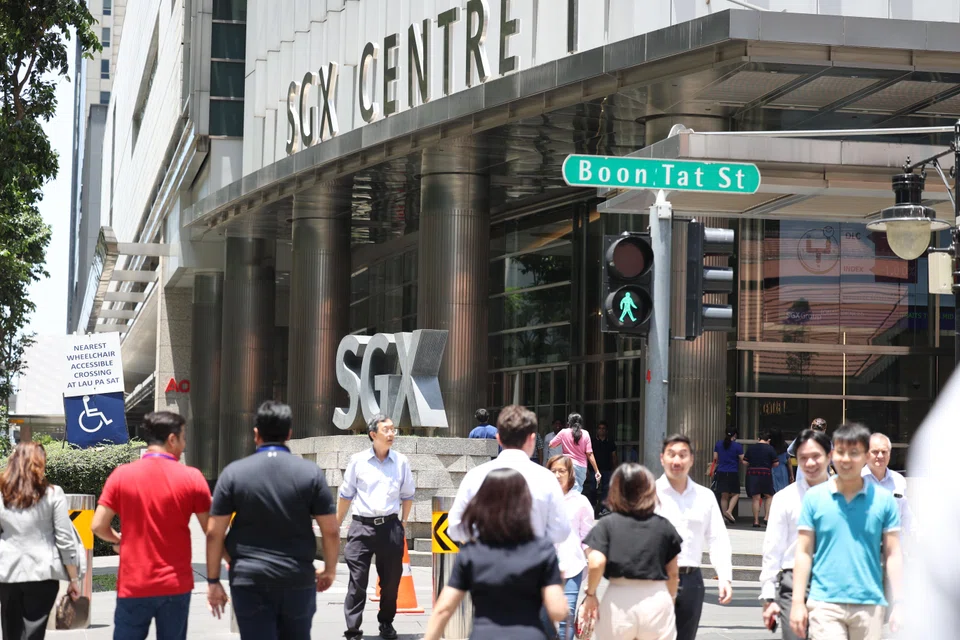
IT HAS been “a year of two halves” for the Singapore market in 2024.
While the local market remained relatively stable in the first half of this year, it saw a sharp rally in the second half, with the Straits Times Index (STI) posting its best performance since 2017. The benchmark index is up more than 16 per cent year to date, generating total returns of close to 23 per cent with dividends reinvested.
While the Singapore market is unlikely to see a similar performance in 2025, analysts said that it will remain stable going into the new year.
Why the STI rallied
Kevin Teng, the chief executive officer of wealth management firm Wrise Private Singapore, said that the financial and real estate investment trust (Reit) sectors drove market growth in 2024.
Lower interest rates due to rate cuts in the second half of the year also helped to drive demand for loans, which contributed to banks’ profitability. At the same time, Reits became more attractive due to higher yield spreads.
Among the key factors that influenced Singapore’s equity market this year was a global stocks sell-off in August as investors braced for a recession in the US, as well as “pivotal” interest rate cuts by the US Federal Reserve which provided relief to markets, said Teng.
An improvement in the profitability and market share of Internet companies, as well as a surge in the order books of industrial sectors also contributed to the STI’s rally, added Rajiv Batra, the chief Asean equity strategist at investment bank JPMorgan.
Meanwhile, the bond market remained “relatively stable”, supported by lower interest rate expectations, said Teng.
However, Sean Kelly, the emerging markets Asia rates strategist at JPMorgan, felt that the bond market in Singapore underperformed in 2024. Higher US interest rates have kept central banks more cautious than expected, he said.
Will the rally continue?
Analysts said that the Singapore market is unlikely to see the highs of 2024, but should turn in a stable performance going into 2025.
In its market outlook note published on Dec 16, RHB Bank said that it expects the STI to generate modest returns in 2025 as earnings growth moderates.
The timing and size of the decrease in interest rates and prospects for global economic growth will have a “strong influence” on Singapore’s equities market, said RHB. This is due to the significant index weightage and earnings contributions by the banks to the STI, added the bank.
Likewise, OCBC said in a research note published on Dec 16 that it would be challenging to expect another strong double-digit performance by the STI in 2025, after its stellar performance the year before.
Nevertheless, investors will continue to invest in the STI given Singapore’s resilient economy and high-dividend stock market.
The STI will also be favoured for its low valuations, added Carmen Lee, head of OCBC Investment Research, at a separate media briefing. Although the STI’s price-to-earnings ratio has gone up to around 11.7 because of companies’ earnings, the ratio remains under the 10-year historical average of 12.5. This means that the STI’s valuation is still inexpensive, she said.
In terms of sectors, RHB said that it expects manufacturing and technology to see a return in investor interest next year as earnings growth momentum improves, while OCBC’s Lee felt that industrials and banks will drive the earnings for the STI going into 2025.
While Reits are “a concern” given that interest rates are expected to stay high next year, they would still be a “slight positive” as interest rates will still be lower overall than in 2024. RHB Bank advised investors to build their positions in the Reit sector as interest rates are expected to decline.
Bond market outlook
Teng said that with a limited supply of Singapore dollar (SGD) papers and a projected growth in Singapore Government Securities issuance, the city-state’s bond market is expected to turn in a stable performance in 2025.
JPMorgan’s Kelly said that there will be more pressure on local bonds next year if the Monetary Authority of Singapore (MAS) reduces the slope of the policy band by 50 basis points in January, causing foreign exchange rates to move marginally higher than peers.
He also expects bond issuances to pick up, and the outstanding level of local stock bonds to increase by about 4.5 per cent year on year, up from the current level of around 3 and 4 per cent over the past two years.
“All told, we are expecting 10-year SGD bond yields to fall towards the 2.4 to 2.5 per cent range by end-2025,” he said.
Key events to watch for in 2025
Among the key developments to affect the equity market next year are recommendations by a review group convened by MAS to revive the Singapore stock market, said Teng. He said that the potential measures are expected to lift stock trading liquidity through capital infusion, and will likely drive positive performance of the Singapore market in 2025.
However, external factors may pose challenges, he added.
Signs of decelerating growth in the US next year may affect the Singapore market. Policies under the incoming Trump administration could also reduce expectations of interest rate cuts, with a negative impact on both equity and bond markets in Singapore.