Singapore needs to seek out partners, launch initiatives to reel in tech IPOs
Market observers also suggest that SGX identify a niche area, for example; more moves could emerge in Budget 2025

WITH the Monetary Authority of Singapore (MAS) Review Group looking into ways to revitalise the Republic’s stock market, observers are speculating that Budget 2025 could yield some moves on this front.
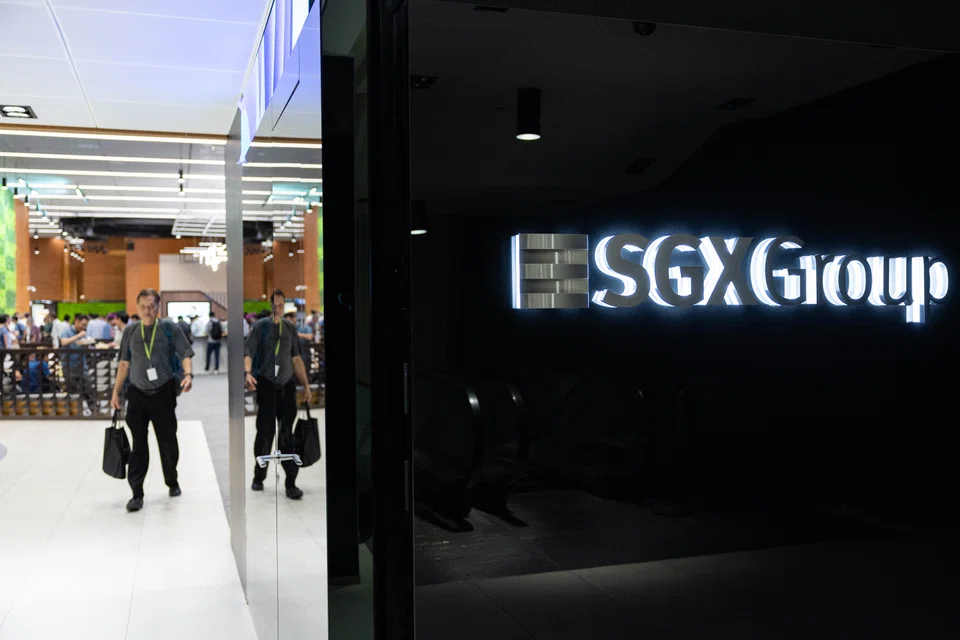
They say that the main tasks the Singapore Exchange (SGX) has to work on are teaming up with ecosystem players, and setting up initiatives to boost its attractiveness as a listing destination for tech companies and startups.
Regional peers like the Indonesia Stock Exchange have successfully wooed home-grown tech startups such as GoTo, as well as e-commerce platforms Bukalapak and Blibli.
SGX, on the other hand, lost out in convincing Grab, Sea and biotech startup Mirxes to list in Singapore. These eventually chose to list either in the US or Hong Kong.
If there is a lack of liquidity, promising startups who are based here will choose other listing venues.
The MAS Review Group, set up in August last year, has said it will report back within 12 months. Budget 2025 could give an inkling of the form the measures will take.
Market players who spoke to The Business Times cited a number of factors that startups looking to go public would consider when evaluating a listing venue, but pointed out that the depth and vibrancy of the market are key to helping with valuation, price discovery and investor interest.
Tay Hwee Ling, Deloitte South-east Asia’s accounting and reporting assurance leader, said: “The depth of the market and the stock performance of competitors within the same sector, such as whether they are properly valued, are important factors when companies consider where to list.”
In attracting companies of this ilk to list on SGX, the exchange will have to get the participation of ecosystem players – private debt and private equity investors, as well as venture capital and family offices. Their presence would spur a wider range of financial products that could generate market interest.
Chan Yew Kiang, EY Asean and Singapore IPO leader, said these players being in the ecosystem would lead to “several promising outcomes, such as the inclusion of companies in various growth stages in the market (from startups to established businesses), the development of market markers for different industries and greater transparency for investors”.
Help in the Budget?
Regulatory support is also crucial for SGX to attract such listings, say market observers. With the ongoing review of the equities market, tweaking of existing initiatives could be on the cards to better meet the needs of tech and growth-oriented companies.
These could potentially include creating specialised segments with tailored listing and profitability requirements, similar to those for mineral, oil and gas, and life sciences companies currently in place.
Jimmy Seet, capital markets partner at PwC Singapore, said: “For instance, the existing Grant for Equity Market Singapore scheme, which kicks in only after a successful listing, could be redesigned into a milestone disbursement model to address the elevated costs that companies may encounter during the IPO (initial public offering) process.”
Other tweaks could include emulating other exchanges, where the threshold for trading halts is not on a one-size-fits-all limit, but based on tiers. Widening the threshold for a circuit breaker or trading halt may attract international investors to invest with more flexibility, said Deloitte’s Tay.
More flexible and robust listing requirements for companies at the different growth stages will help, as well as offering access to specialised professional services for the tech sectors to navigate the IPO process, said Seet of PwC.
Driving investor confidence
A wider investor pool – one that includes institutional and retail investors – is also a requirement if such companies are to consider listing here.
Stephen Bates, head of deal advisory at KPMG in Singapore, suggested that SGX develop a strong equity research ecosystem to provide comprehensive analysis of tech and growth companies, which would drive investor confidence and fair valuations.
SGX already has a track record of building a supportive regulatory ecosystem for real estate investment trusts (Reits) and manufacturing, which led to boosted listings and investor interest. Replicating those initiatives could drive investor interest and listing appetite in the tech sector.
SGX could also acknowledge and recognise that tech and growth-oriented companies may not be in a profitable position at the time of listing. The exchange could consider understanding business drivers and the business as part of its gatekeeping role.
“A disclosure-based regime and perhaps relaxed requirements would encourage these companies to consider SGX,” said EY’s Chan.
Being more visible on the global stage could help SGX in this instance as well. Collaborations between exchanges could facilitate cross-listings and attract international investors.
Gail Ong, head of equity capital markets at WongPartnership, said: “In the tech space, these dual-listed companies help to attract others as their share price and valuation are anchored by the trading in their primary market.”
Marketing and identifying a niche
Marketing is essential. For instance, if Singapore positions itself as a gateway to South-east Asia’s growing digital economy, a listing here would become a natural choice for the unicorns in the region.
“The power of reputation cannot be ignored, as a track record of successful tech IPOs builds credibility, attracting even more companies to list,” said KPMG’s Bates.
SGX could also take a leaf from other exchanges. One tactic is to identify a niche, as the London Stock Exchange did, by building a fintech ecosystem to attract companies to list. A regional peer, the Hong Kong Stock Exchange (HKEX), made alternative criteria available for biotechnology and tech companies, including pre-revenue ones.
Joel Shen, head of Withers Tech Asia and the Indonesia practice at Withersworldwide, said: “In the same way that HKEX built relationships with mainland Chinese tech firms, SGX can try and build relationships with regional tech firms, and enhance regional cooperation with South-east Asian tech hubs like Jakarta to create a pipeline of growth companies.”
But ultimately, SGX will have to find its own niche and focus on those sectors.
EY’s Chan said: “It should also consider the size of the companies that the exchange can realistically attract, with its liquidity and investors base. A broad approach to target every sector or segment is not realistic.”
TRENDING NOW
Grab CEO’s wife Chloe Tong on life with Anthony Tan and finding her purpose
What role can Japan play in Asean’s future?
He built the Vingroup empire. Now South-east Asia’s richest man is handing some key roles to his sons
Asean’s challenge is to become resilient against global geopolitics: former Indonesia trade minister