

Singapore Reit ETFs holding up amid global Reits rout

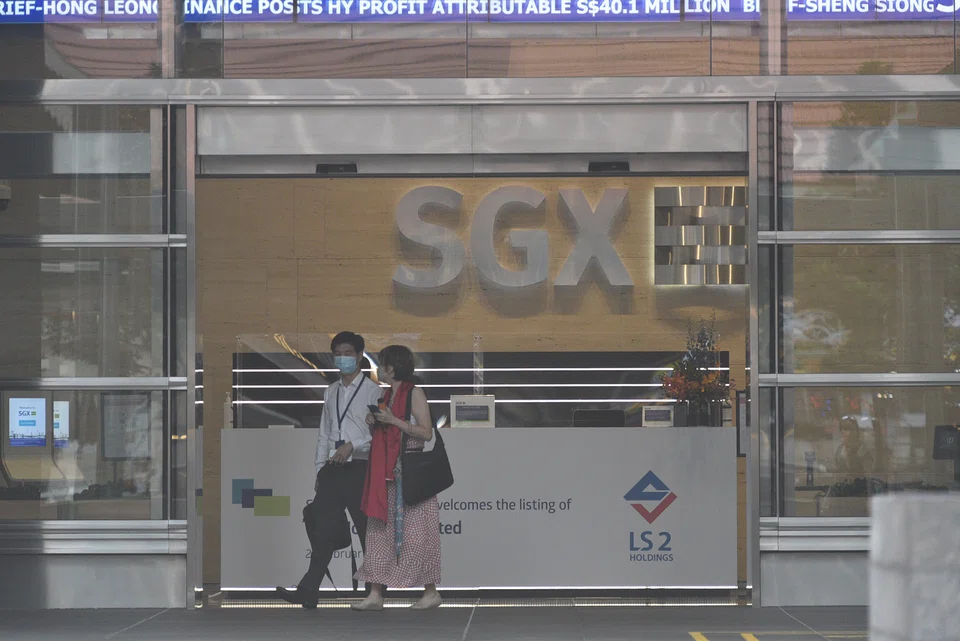
EXCHANGE-traded funds (ETFs) with significant exposure to Singapore-listed real estate investment trusts (S-Reits) are outperforming their peers amid a rout in the global Reits market.
Of the 5 Reit ETFs listed on the Singapore Exchange (SGX), the 3 with a higher allocation of S-Reits have seen flattish share price returns in the year to date.
The Lion-Phillip S-Reit ETF and CSOP iEdge S-Reit Leaders ETF, whose constituents comprise purely S-Reits, saw returns of -2 per cent and 0.2 per cent, respectively, for the year to Apr 29.
Meanwhile, the NikkoAM-Straits Trading Asia Ex-Japan Reit ETF , which has 76 per cent of its allocation in S-Reits, has managed year-to-date returns of -1.1 per cent.
On the other hand, Phillip SGX Apac Dividend Leaders Reit ETF , which has 34 per cent of its allocation in S-Reits, has seen its year-to-date returns at negative 5.6 per cent.
The UOB Asia Pacific Green Reit ETF – the SGX-listed Reit ETF with the smallest allocation to S-Reits at just 15 per cent – has declined 6.4 per cent this year.
“Global Reit markets declined in 2022, amid geopolitical escalations, macro uncertainty and increasing expectations of aggressive rate hikes,” said SGX market analyst Candace Li.
“However, the FTSE ST Reit Index recorded total returns of 1 per cent in the year to Apr 19 - outperforming global developed Reit markets, which averaged close to 6 per cent declines across the same period,” she added.
Singapore is currently the largest Reit ETF market across Asia ex-Japan, with total combined assets under management of over S$800 million.
ETFs allow investors to buy into a basket of securities that typically track an underlying index.
For example, the CSOP iEdge S-Reit Leaders Index ETF, which was listed in November 2021, tracks the iEdge S-Reit Leaders Index, while the Lion-Phillip S-Reit ETF tracks the Morningstar Singapore Reit Yield Focus Index.
“Retail investors continue to show strong interest in SGX-listed Reit ETFs, with March 2022 marking the 26th consecutive month when retail net purchases of Reit ETFs from the secondary market exceeded net sales,” Li said.
In total, the 5 SGX-listed Reit ETFs received combined net inflows of close to S$350 million last year.
“Reit ETFs allow investors to participate in a broad basket of Reits, which has lower volatility compared to individual Reits while also providing stable dividends,” Li said.
She added that as these Reit ETFs are based on indices, and are professionally managed, investors do not have to worry about index rebalancing or corporate actions by the individual Reits.
Aside from direct cash investments, retail investors may also invest in SGX-listed Reit ETFs via the Supplementary Retirement Scheme (SRS) and the CPF investment scheme (CPFIS), she said.
Investors looking for outsized returns above the benchmark levels, however, could still prefer buying into individual Reits.
Veteran Reit investor Gabriel Yap believes Reit ETFs may appeal to passive investors who “do not have the time to differentiate and understand the different comparative advantages of the individual Reits or sectors”.
“I have never bought any Reit ETFs,” said Yap, who is chairman of investment firm GCP Global. “Making your millions in Reits is about buying the right Reits at the right time and avoiding the wrong Reits before they go sour. If you have the skills and mindset for this, individual Reit investing and trading is far more lucrative.”
Yap noted that the performance of Reit ETFs and individual Reits may diverge substantially under extreme market conditions – such as when the US Federal Reserve raised interest rates aggressively in 2018.
“Only 2 Reits – CapitaLand Mall Trust and Mapletree Commercial Trust – ended in the black,” he said. ‘Reit ETFs, of course, were all blue-black (Singlish for "badly bruised") and ended the year in the red.”
TRENDING NOW
DBS, OCBC, UOB rout lops billions off STI as inflation, rate concerns spook investors

Grab CEO’s wife Chloe Tong on life with Anthony Tan and finding her purpose
OCBC sheds S$8 billion in value as shares close nearly 6% down; analysts cautious on banks
Deal between tycoon friends sparks scrutiny of Philippine power sector

