

Singapore a ‘safe harbour’ amid global volatility with Singdollar set to gain: Julius Baer
The wealth manager urges investors to look to growth areas for portfolio diversification
Benicia Tan &
Koh Kim Xuan
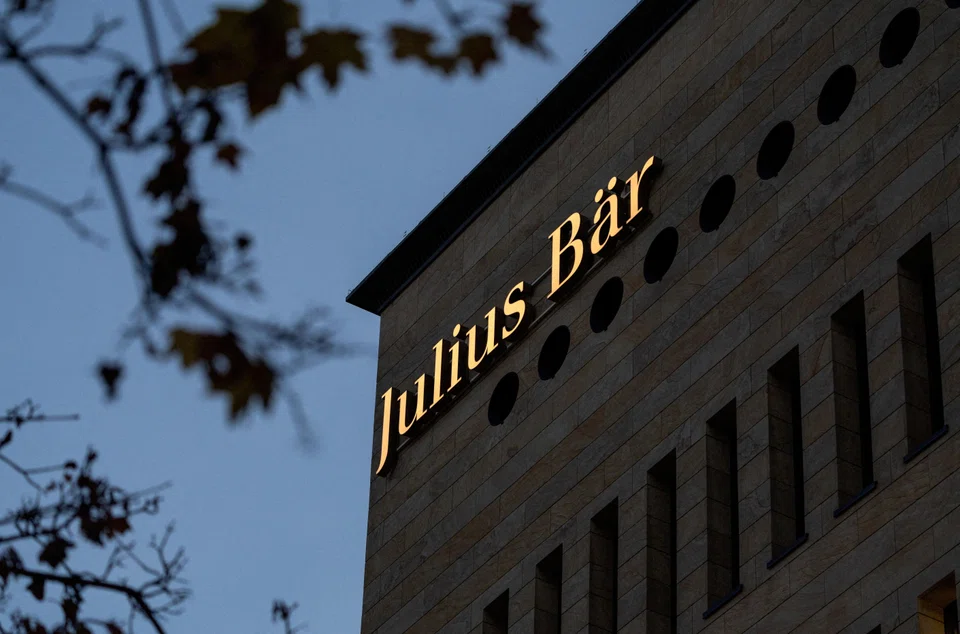
[SINGAPORE] The Republic represents a “safe harbour” amid a volatile and rapidly shifting macroeconomic environment, said Swiss private bank Julius Baer in its 2026 market outlook, forecasting gains for the Singapore dollar and local equities.
Mark Matthews, head of research for Asia at Julius Baer, forecasts that the Singapore dollar will appreciate this year and projects corporate earnings to grow around 8 per cent.
With dividend yields for the Straits Times Index around 5 per cent, altogether this would provide an “excessive” 10 per cent return in dollars, he said during a media briefing on Tuesday (Jan 20).
Within South-east Asia, Vietnam is another bright spot, supported by the widespread adoption of the “China plus one” strategy among manufacturers and developments in its infrastructure, he noted.
Julius Baer’s 2026 outlook remains unchanged by the uncertainty stemming from the Trump administration’s latest round of tariff threats linked to Greenland, said Matthews.
Bhaskar Laxminarayan, chief investment officer for Asia and the Middle East at Julius Baer, noted that the recent geopolitical developments present a “new reality”. Asset markets, however, have shown limited reaction to it so far.
He added that while the recent US policy announcements may have been “radical”, they are unlikely to persist, though their longer-term impact remains unknown.
“There is a little bit of an immediacy factor that gets reflected in day-to-day prices, which means you have slightly higher volatility, but otherwise it doesn’t change the trajectory of how things are moving.”
Portfolio diversification
Julius Baer also urged investors to look to growth areas for portfolio diversification in its 2026 market outlook report.


“While artificial intelligence is likely to remain a key performance driver, global policy divergence creates broader opportunities, encouraging diversification both geographically and in terms of sectors,” stated the report.
It cited the examples of defensive sectors such as global healthcare and cyclical stocks in Europe for portfolio diversification.
Matthews noted that the MSCI World Health Care Index remains at an estimated 20 per cent discount relative to the MSCI World Index based on price-to-earnings ratios.
The healthcare sector had an earnings growth of 13 per cent in the third quarter of 2025, beating consensus estimates of 7 per cent, he said. Analysts have since begun upgrading their forecasts. This optimism about the future also extends to healthcare companies, which are engaging in more mergers and acquisitions, he added.
The report explained: “Healthcare offers exactly what is missing elsewhere: high visibility on defensive earnings, growing cash flows and less dependence on gross domestic product growth and hyperscaler capital expenditure.”
De-dollarisation
Amid geopolitical uncertainty, investors are turning to safe-haven currencies and precious metals, added Laxminarayan.
The report said: “The US dollar may weaken as slower growth and lower rates reduce the appeal of US assets, with strong outflows from trade deficits and high external indebtedness likely driving the currency lower.”
Matthews remarked that the Swiss franc and Singapore dollar are among safe-haven alternatives to the greenback.
“It’s those smaller, non-Group of Seven developed currencies or emerging-market currencies, where there’s a sense of things becoming better, where the central banks themselves increase their allocations the most,” he said.
Based on the report, while precious metals such as gold are buoyed by central-bank buying and cyclical safe-haven seeking, speculative trading heightens volatility.
The wealth manager recommended investors to consider tactical hedging strategies and to add exposure on price weakness.
Laxminarayan also noted that a supply-demand imbalance is looming for industrial metals, driven by intensive requirements for AI, electric vehicles and defence.
Added the report: “Investors should consider shifting from a buy-and-hold approach to more tactical strategies, rebalancing portfolios towards global opportunities.”
Decoding Asia newsletter: your guide to navigating Asia in a new global order. Sign up here to get Decoding Asia newsletter. Delivered to your inbox. Free.
Copyright SPH Media. All rights reserved.
TRENDING NOW

Once staunchly pro-China, Malaysian Chinese businesses are now distancing themselves from Beijing

Looking beyond looming CEO succession, should UOB potentially pursue a transformative merger?

Could stablecoins be the future of money?

Grab CEO’s wife Chloe Tong on life with Anthony Tan and finding her purpose

