

Singapore shares open lower on Monday; STI down 0.4%
 Add BT as a preferred source
Michelle Zhu
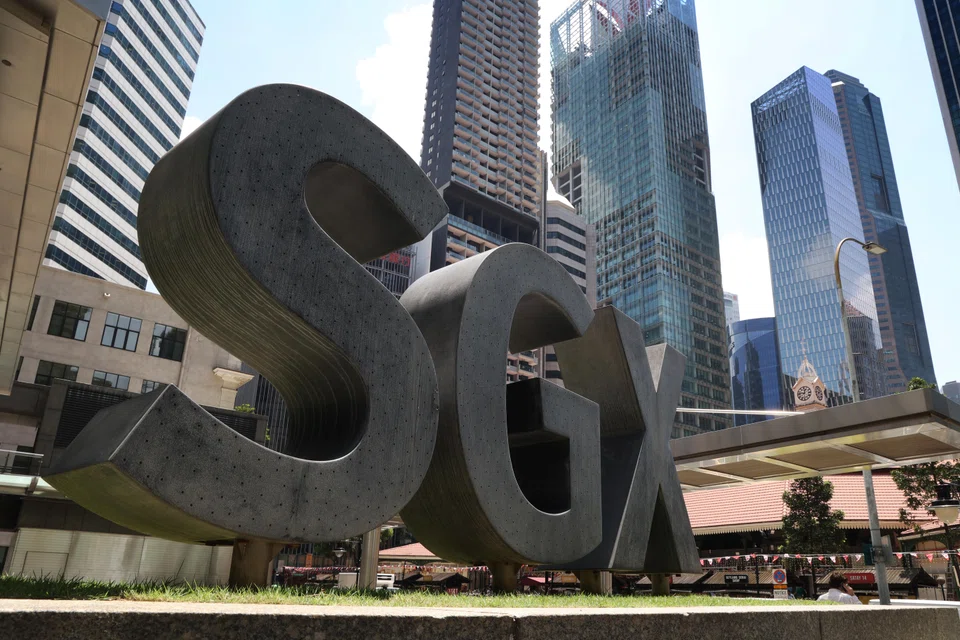
SINGAPORE stocks fell on Monday (Oct 9) after global markets ended the week on the uptrend.
The Straits Times Index (STI) was down 12 points or 0.4 per cent to 3,162.39 as at 9.01 am. Across the broader market, losers outnumbered gainers 61 to 52 after 128.5 million securities worth S$42.8 million changed hands.
Investment holding company CapAllianz was the most actively traded counter by volume, shedding S$0.001 or 25 per cent to S$0.003 with 54.6 million securities moved.
Seatrium was briskly traded as well, though the its share price remained unchanged at S$0.123.
Oil and exploration company Rex International gained S$0.009 or 5.1 per cent to S$0.184 in early trade.
Local banking stocks all fell in early morning trade. DBS fell S$0.15 or 0.4 per cent to S$33.64. UOB lost S$0.08 or 0.3 per cent to S$28.18, and OCBC declined S$0.09 or 0.7 per cent to S$12.76.
Wall Street stocks rebounded on Friday after an initial sag as traders digested a hotter-than-expected US jobs report.
The Dow Jones Industrial Average closed 0.9 per cent higher at 33,407.58, while the S&P 500 jumped 1.2 per cent to 4,308.5. The Nasdaq Composite rallied 1.6 per cent to end at 13,431.34.
European shares also advanced on Friday to track Wall Street gains.

The pan-European Stoxx 600 index rose 0.8 per cent to end the day at 444.93, though it marked the third consecutive weekly decline for the benchmark index.
Decoding Asia newsletter: your guide to navigating Asia in a new global order. Sign up here to get Decoding Asia newsletter. Delivered to your inbox. Free.
Copyright SPH Media. All rights reserved.
TRENDING NOW

Jumbo Seafood to close flagship East Coast Seafood Centre outlet on Sep 30

Shanda co-founder sells Tanglin Hill bungalow for S$76 million

Johor property old hand KSL readies family handover amid market boom

Yeo’s, Tiger Beer and now Gardenia – flight of food manufacturing from Singapore might be just as planned

