

Singapore shares rise after further US-Iran peace talks; STI closes 0.2% higher
Across the broader market, losers beat gainers 306 to 270, after 1.3 billion securities worth S$2 billion change hands

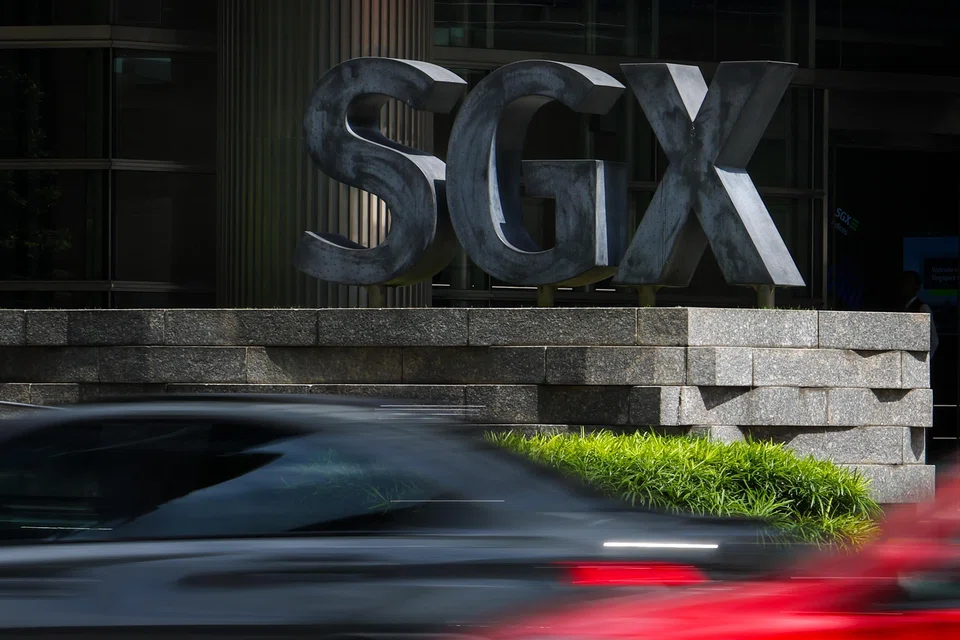
[SINGAPORE] Singapore stocks ended higher on Monday (Jun 22), after US and Iran concluded the first round of peace talks in Switzerland.
This comes amid continued threats to resume attacks in the Middle East from US President Donald Trump, a Reuters report noted.
The benchmark Straits Times Index (STI) gained 0.2 per cent or 11.31 points to finish at 5,204.01.
DFI Retail Group led the gainers on Singapore’s blue-chip index, rising 3.8 per cent or US$0.14 to end at US$3.82.
The worst performer among the STI constituents was Jardine Matheson , falling 4 per cent or US$2.56 to close at US$62.20.
The three local banks ended higher. DBS gained 0.5 per cent or S$0.33 to S$66.29, OCBC rose 1.5 per cent or S$0.37 to S$25, and UOB was up 0.5 per cent or S$0.21 at S$39.46.
Within the iEdge Singapore Next 50 Index, Frencken Group was the top gainer, rising 13.1 per cent or S$0.41 to finish at S$3.54, while PropNex was the biggest loser, falling 2.6 per cent or S$0.05 to end the session at S$1.88.
Across the broader market, losers beat gainers 306 to 270, after 1.3 billion securities worth S$2 billion changed hands.
Key regional indices ended mixed. Hong Kong’s Hang Seng Index lost 0.7 per cent and the FTSE Bursa Malaysia KLCI declined 0.7 per cent. Meanwhile, Japan’s Nikkei 225 index rose 1.5 per cent and South Korea’s Kospi was up 0.7 per cent.

Ipek Ozkardeskaya, senior analyst at Swissquote, said that a “strong appetite for technology stocks” was what which pushed South Korea’s Kospi index higher. “A softer Japanese yen is also making the Japanese stocks less expensive for foreign investors... (with the) US dollar/yen (currency pair) spiking to nearly 161.7 this morning,” she added.
She noted that physical artificial intelligence is “undoubtedly a promising area”, with Asian companies ahead of the game in the robotics arena. “But, the AI story comes with wild price swings that investors must be prepared to endure if they want to capture potential long-term gains.”
This article has been written with the assistance of AI and reviewed by a reporter
Decoding Asia newsletter: your guide to navigating Asia in a new global order. Sign up here to get Decoding Asia newsletter. Delivered to your inbox. Free.
Copyright SPH Media. All rights reserved.
TRENDING NOW

Once staunchly pro-China, Malaysian Chinese businesses are now distancing themselves from Beijing

Looking beyond looming CEO succession, should UOB potentially pursue a transformative merger?

Could stablecoins be the future of money?

Grab CEO’s wife Chloe Tong on life with Anthony Tan and finding her purpose

