

Singapore shares rise, shaking off new US tariffs; STI up 0.6%
Across the broader market, gainers beat losers 335 to 191, as 895.9 million securities change hands
[SINGAPORE] Singapore stocks ended higher on Thursday (Nov 26).
The benchmark Straits Times Index (STI) gained 0.6 per cent or 31.81 points to finish at 4,962.64. The increase came despite the US Trade Representative proposing Section 301 tariffs of up to 20 per cent on Singapore and 13 other trading partners.
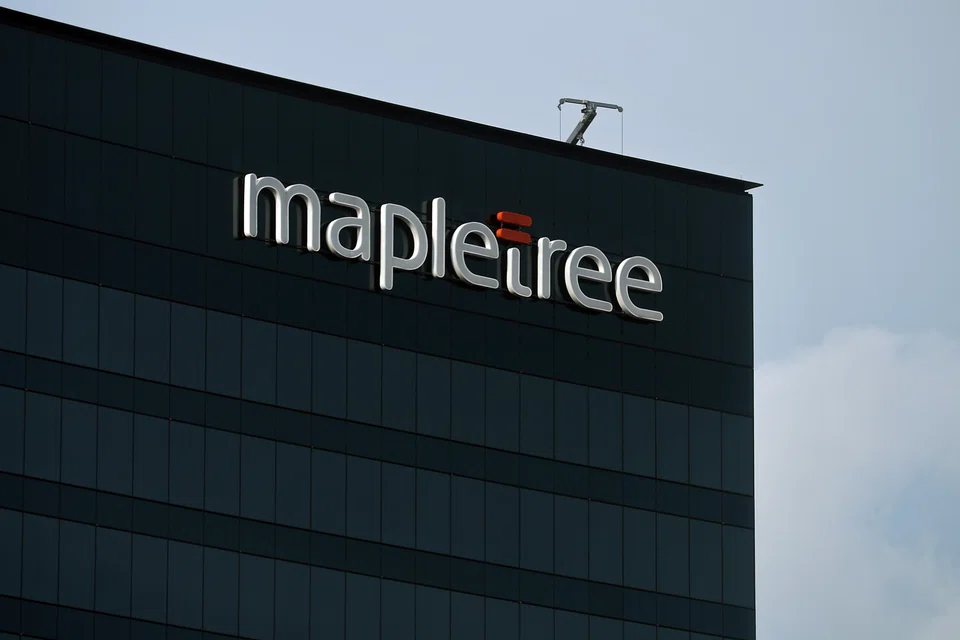
Mapletree Industrial Trust led the gainers on Singapore’s blue-chip index, rising 1.8 per cent or S$0.03 to S$1.66.
The worst performer among STI constituents was Seatrium , which fell 3.7 per cent or S$0.05 to S$1.31.
The company continued its downtrend after its retrenchment announcement earlier this week.
The three local banks ended higher. DBS gained 0.6 per cent or S$0.41 to S$65.85, OCBC rose 0.9 per cent or S$0.23 to S$26.61, and UOB was up 0.7 per cent or S$0.24 at S$35.44.

Within the iEdge Singapore Next 50 Index, ValueMax was the top gainer, rising 4.8 per cent or S$0.035 to S$0.765, while PC Partner was the biggest decliner, falling 3.2 per cent or S$0.05 to S$1.51.
Across the broader market, gainers outnumbered losers 335 to 191, after 895.9 million securities worth S$1.4 billion changed hands.
Key regional indices were positive. Hong Kong’s Hang Seng Index gained 1.2 per cent, Japan’s Nikkei 225 rose 0.9 per cent, South Korea’s Kospi was up 0.3 per cent and the FTSE Bursa Malaysia KLCI advanced 0.6 per cent.
Stephen Innes, managing partner at SPI Asset Management, said that the latest Section 301 proposal was essentially an attempt to restore tariff rates to something resembling their pre-Supreme Court position, before the court struck down the earlier International Emergency Economic Powers Act-based measures in February.
“The important distinction is that the replacement regime has narrower product coverage, meaning that even countries facing familiar headline tariff rates may ultimately experience a slightly lower effective burden.”
He noted that this was “hardly the same thing as announcing an entirely new trade war”.
“The latest proposal is marginally less aggressive than the assumptions already circulating before the announcement,” he added. “And implementation has been pushed back rather than accelerated.”
This article was written with the assistance of AI and reviewed by a reporter
Decoding Asia newsletter: your guide to navigating Asia in a new global order. Sign up here to get Decoding Asia newsletter. Delivered to your inbox. Free.
Share with us your feedback on BT's products and services
TRENDING NOW

From everyday payments to cross-border connectivity: How DBS is shaping the next wave of digital payments with PayLah!

Nvidia halts chip shipments to 4 countries in South-east Asia, including Singapore: FT
MAS green-lights retail investor access to wider range of complex funds, but excludes private-market funds for now

Yangzijiang Maritime eyes 2027-2028 profit surge on newbuild deliveries

