Singapore shares stagnate as investors pivot to US and China
Singapore
SINGAPORE'S stock market seems to be stuck in a rut following last year's gain.
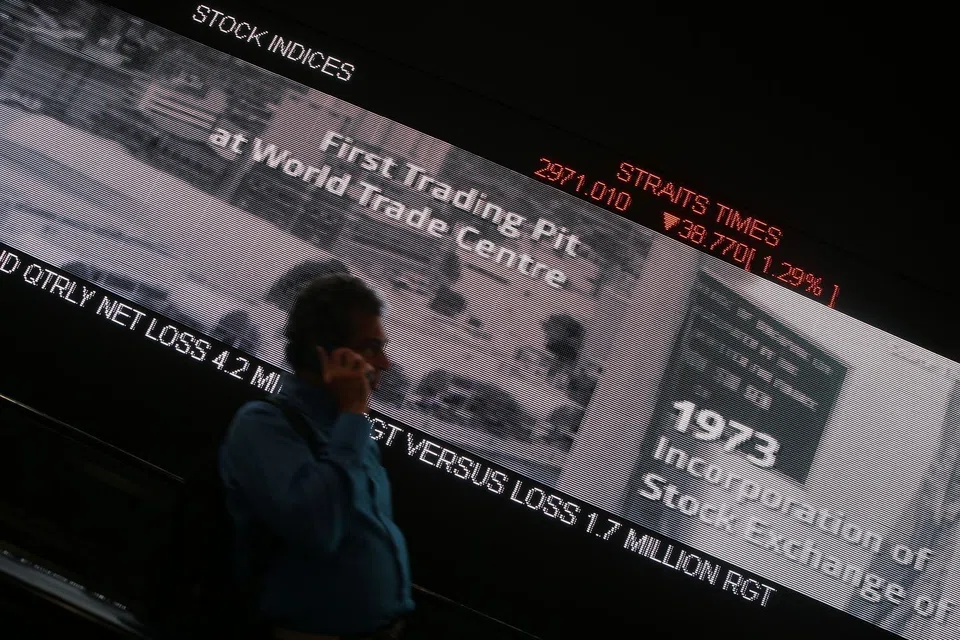
Mirroring the weakness in markets across the region, the Straits Times Index finished below the key 3,300 mark at 3,287.4 points on Friday, down 3.4 per cent since the year began.
"Equities have by and large given you zero return this year. So the almost universal feedback is that it's been a tough year to make money. You're seeing money come out of Asia, generally speaking," Aditya Srinath, executive director for equity research at JP Morgan, told The Business Times last week.
The US dollar has resumed its upward march since April, and global funds have been flowing back to the US to ride the stronger short-term growth story there.
Mr Srinath said: "Last year, things outperformed if they had a tech slant to them. This year began with optimism that money would come into the Asean market and into defensive sectors. The reality is, if that's happened, it's happened so microscopically that it hasn't made a difference to these markets at all. In fact, we're possibly starting to see a rotation back into tech."
Broadly, the Singapore market is less compelling now than it was last year.
Mr Srinath said: "Consensus expects earnings for the MSCI Singapore Index to grow at about 15 per cent this year and a further 8 per cent next year. Around this time of the year (June), investors start to think about next year's earnings . . . if price-to-earnings multiples are stable and we expect 8 per cent growth next year, then the upside potential is reasonable but not spectacular."
In a rising interest rate environment, most houses continue to like bank stocks even though they are not as cheap compared to last year. Some wonder if telcos may be oversold as people's portfolios get more defensive.
In the property sector, JP Morgan prefers developers to Reits. Its analysts wrote in a June 18 report: "While our preference all along has centred on less residential-focused names (CapitaLand and Frasers Property) in view of policy risk in the second half of the year, we think both UOL and City Developments are beginning to offer more attractive risk-return metrics. Between the two, UOL is our preferred pick given its more competitively-priced landbank, as well as potential operational synergies and redevelopment opportunities with United Industrial Corp."
But higher mortgage rates might slow the demand from "marginal buyers" such as potential buyers of mass market units who are traditionally most sensitive to interest rate changes, the report cautioned.
Overall, the current home pricing upswing could slow down: "With an estimated 14,000-18,000 units to be launched over the next six to 18 months and developers' insistence on 15-20 per cent PBT (profit before tax) margins, we think prospective buyers could take a longer time to bite."
Separately, for the longer term, Citi Private Bank is telling its clients to "supersize" their allocations to China.
The period of volatility from 2015 to 2016 was when many international investors got out of Chinese equities and never returned. Today, that "poisonous" sentiment on China is no longer justified, said Ken Peng, head of Citi Private Bank Asia investment strategy.
He said last week: "Before 2015, what we had was a sharp US dollar rally and the Chinese authorities chose to keep the renminbi strong which caused a severe tightening in domestic liquidity because they were selling dollars and buying renminbi. . .
"A lot of things at that time caused that extraordinary volatility. The build-up of the second stage of that rally was almost purely driven by margins. When that disappeared, the rally completely collapsed. There was no earnings growth, the economy was slowing down.
"Now, it's very different. Since 2016, Chinese companies have had strong earnings growth. Inflation has come back, which is positive for profits. There's a pretty clear path on how to clear the debt problem that wasn't there in 2015."