

Singapore stocks claw back losses as total market cap rises 1.6% in June

Yong Hui Ting
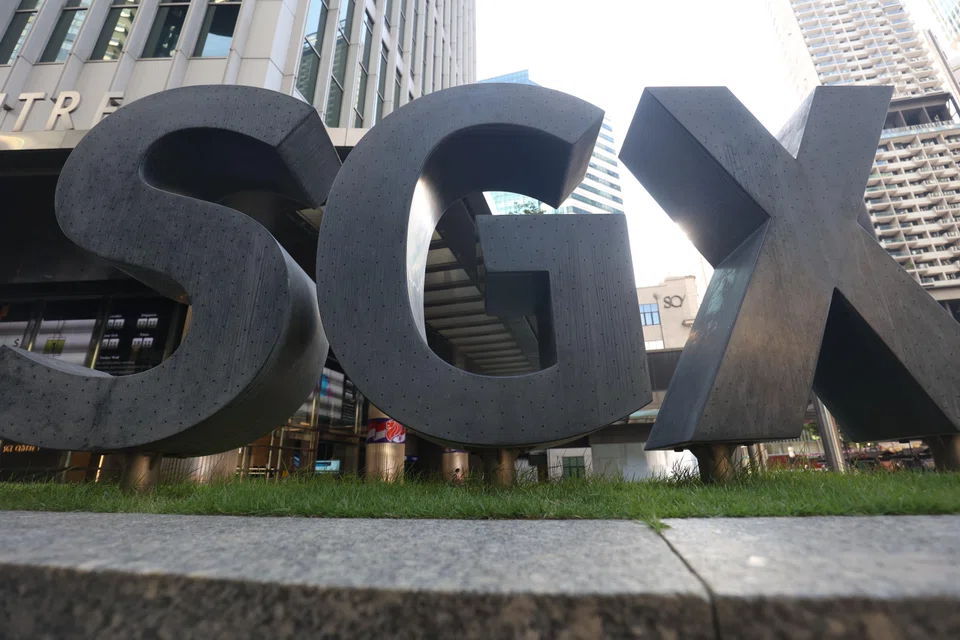
THE total market capitalisation of companies listed on the Singapore bourse rose 1.6 per cent, or S$12.7 billion, to S$804.7 billion in June, led by gains among companies in the billion dollar club.
The market capitalisation of the Straits Times Index (STI) constituents rose 2.8 per cent month on month, up S$14.6 billion, reaching S$538.4 billion for the month.
This was due in part to a change in the STI’s constituents, as Keppel DC Reit was replaced by offshore and marine company Seatrium.
Keppel DC Reit has a total market cap of S$3.7 billion, while Seatrium is worth S$8.5 billion.
Of the 629 companies listed on the Singapore Exchange (SGX), losers outnumbered gainers 234 to 228.
Electric vehicle maker Nio was among the top gainers in market cap over the course of the month, as the company’s market value grew S$4.4 billion. This was followed by DBS, whose market value rose S$3.1 billion in the same period.
Flag carrier Singapore Airlines (SIA) also emerged as a major winner, jumping S$2.2 billion in total market value.
This came even as shares of the group fell 4.7 per cent or S$0.35 to S$7.15 on Friday (Jun 30), the last trading day of the month, after Temasek revealed it sold off a 1.85 per cent stake in the company.
On a half-year basis, SIA led as the top gainer. Its market cap rose S$5.9 billion, when compared with December 2022. Year to date, the counter was up 29.3 per cent – putting it among the top three performers on the STI.
This follows the company’s strong recovery as demand for travel soared in a post-pandemic climate. SIA reported in June that it had, together with its budget carrier Scoot, served 2.8 million passengers in May. This represented a year-on-year increase of 65.8 per cent.
Other top gainers in market capitalisation were Seatrium and Sembcorp Industries, whose market values rose S$4.3 billion and S$3.9 billion, respectively, over their values at end-2022.
Utilities was the worst-performing sector across Asia-Pacific in H1 2023, noted SGX market strategist Geoff Howie. Sembcorp, however, bucked the trend and booked the highest net institutional inflows across the Singapore stock market.
“This was on the back of Sembcorp pressing ahead with the transformation of its portfolio from brown to green to support the global energy transition,” he said, adding that the company was also the STI’s second-best performer in June.
Year to date, Sembcorp shares are up 70.1 per cent to S$5.75, making the counter the top performer among STI constituents.
Meanwhile, DBS and UOB were among the biggest losers on a half-year basis. DBS’ total market capitalisation dropped S$6.2 billion, while UOB’s fell about S$4.6 billion.
In June, the Federal Reserve put a pause on its more than year-long streak of rate hikes. The federal funds rate is now between 5 per cent and 5.25 per cent.
Fed chair Jerome Powell said at least two interest rate increases are likely necessary this year to bring the inflation rate down to the US central bank’s 2 per cent target, adding that moving at consecutive policy meetings was not “off the table”.
OCBC’s Singapore strategist Carmen Lee said in a note on Jun 28 that she expects the sustained high interest rates to pose challenges to those seeking to drive growth.
“With a softer outlook, especially for consumer sentiment and confidence, this could also dent consumer demand and impact the revenues and profitability of listed companies,” said Lee.
She continued, nevertheless, to make a case for Singapore stocks, projecting the STI to increase 23.4 per cent in FY2023.
“This is largely explained by the composition of the Singapore market, which has a larger component of listed companies with stable earning streams and companies which are poised to benefit from strong tourism receipts,” she said.
Meanwhile, SGX’s Howie expects the Singapore stock market to continue taking global cues in H2.
“In particular, the Q2 2023 earnings season will be dissected for how decelerating growth is impacting revenue and wage growth impacting costs across the myriad of industries represented by the global stock market,” he said.
TRENDING NOW
Peter Kwee’s Ridley Park bungalow on the market with S$100 million asking price
Motoring tycoon Peter Kwee is back in court: Here are his previous legal battles

Demand, tech capabilities position Apac and AI as Skyscanner’s next growth frontiers: CEO Bryan Batista

South-east Asia has lost Nvidia’s best salesman

