

Singapore stocks close flat amid escalating Middle East tensions
The STI is down 0.02% or 0.92 point at 4,897.26

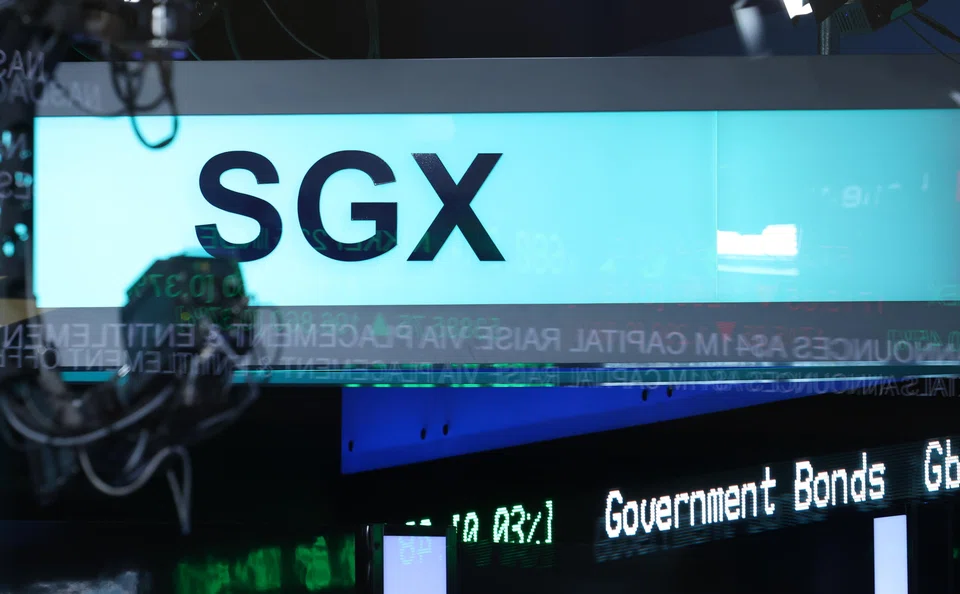
[SINGAPORE] Singapore stocks ended flat on Monday (Mar 30) as tensions in the Middle East rose.
The Straits Times Index (STI) was flattish, closing 0.02 per cent or 0.92 point lower at 4,897.26.
Sembcorp Industries led the gainers on Singapore’s blue-chip index, rising 2.8 per cent or S$0.18 to end at S$6.68.
The worst performer among STI constituents was Thai Beverage , which fell 1.1 per cent or S$0.005 to S$0.43.
The three local banks ended mixed on Monday. OCBC rose 0.3 per cent or S$0.06 to S$21.63, while DBS finished 0.3 per cent or S$0.18 lower at S$56.97, and UOB fell 0.8 per cent or S$0.31 to S$36.54.
The iEdge Singapore Next 50 Index gained 0.4 per cent or 6.49 points to 1,455.46.
China Aviation Oil was the index’s top gainer, rising 3.4 per cent or S$0.07 to S$2.14. UOB Kay Hian was the biggest loser, falling 4.2 per cent or S$0.15 to end the session at S$3.38.
Across the broader market, gainers trailed losers 268 to 349 after 1.4 billion securities worth S$2.6 billion changed hands.
Key regional indices ended Monday in negative territory. Hong Kong’s Hang Seng Index lost 0.8 per cent, Japan’s Nikkei 225 fell 2.8 per cent, South Korea’s Kospi was down 3 per cent, and the FTSE Bursa Malaysia KLCI declined 1.4 per cent.

US President Donald Trump said on Sunday that he wants to “take the oil in Iran”, as the conflict enters its fifth week.
About 3,500 additional US troops arrived in the Middle East on Friday, in what Swissquote senior analyst Ipek Ozkardeskaya described as a “big deal”.
She noted that the move brings about new uncertainty regarding trade through the Red Sea, adding that this comes as the disruption in the Strait of Hormuz takes a toll on global energy and other essential goods flows, including fertilisers.
“So now, shipping through the Red Sea is also becoming risky.”
Decoding Asia newsletter: your guide to navigating Asia in a new global order. Sign up here to get Decoding Asia newsletter. Delivered to your inbox. Free.
Copyright SPH Media. All rights reserved.
TRENDING NOW

Knight Frank’s Tan Tee Khoon leaves firm, Nicholas Keong takes over auction business
Keppel Energy, Sembcorp Utilities and Tuas Power to supply biomethane in pilot project

GovTech retrenches another 38 staff in second round of layoffs
Take-up of new private homes dives 45% in Q3 as prices accelerate with 1.4% rise

