

Singapore stocks continue rally on Friday; STI up 0.8%
Jardine Matheson leads the gainers on the blue-chip index, rising 2.3% or US$1.45 to end at US$63.25
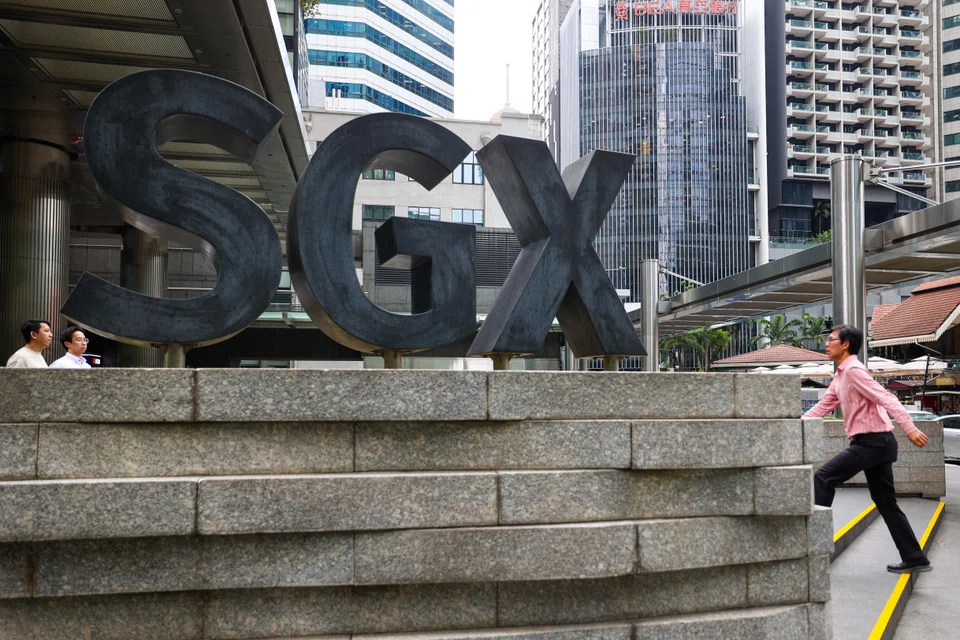
[SINGAPORE] Singapore stocks ended higher on Friday (Jun 12).
The benchmark Straits Times Index (STI) gained 0.8 per cent or 37.7 points to finish at 5,025.80.
Jardine Matheson led the gainers on Singapore’s blue-chip index, rising 2.3 per cent or US$1.45 to end at US$63.25.
The worst performer among the STI constituents was DFI Retail Group , which fell 1.1 per cent or US$0.04 to US$3.76.
The three local banks all ended higher.
DBS gained 1 per cent or S$0.64 to close the day at S$63.24, OCBC rose 0.7 per cent or S$0.16 to S$23.50, and UOB was up 0.3 per cent or S$0.10 at S$38.16.
Within the iEdge Singapore Next 50 Index, Haw Par was the top gainer, rising 2.3 per cent or S$0.36 to close at S$16.17, while First Resources was the top loser, falling 5.4 per cent or S$0.16 to end the session at S$2.83.
Across the broader market, gainers outnumbered losers 376 to 194, after 1.4 billion securities worth S$2 billion changed hands.
Key regional indices were positive.

Hong Kong’s Hang Seng Index gained 1.9 per cent, Japan’s Nikkei 225 rose 2.8 per cent, South Korea’s Kospi was up 4.6 per cent and the FTSE Bursa Malaysia KLCI advanced 0.2 per cent.
Stephen Innes, managing partner at SPI Asset Management, said that the Asian markets have repriced lower oil risk and rate pressure, and they have renewed faith that the artificial intelligence trade has not lost its sponsorship.
He added that the market has not priced in a completed peace deal, as Iran pushed back on the idea that an agreement was approved.
If a deal is signed, further risk will still exist, as oil and volatility still have conflict insurance.
If it slips, stalls or gets denied, the front-loaded premium will have to be marked back by the market.
“The rally is real, but the foundation is still headline-sensitive,” he said.
This article has been written with the assistance of AI and reviewed by a reporter
Decoding Asia newsletter: your guide to navigating Asia in a new global order. Sign up here to get Decoding Asia newsletter. Delivered to your inbox. Free.
Share with us your feedback on BT's products and services






