

Singapore stocks dip 0.2% as OCBC, Seatrium weigh on STI
City Developments Ltd leads the gainers on the blue-chip index, rising 3.7% to S$8.42
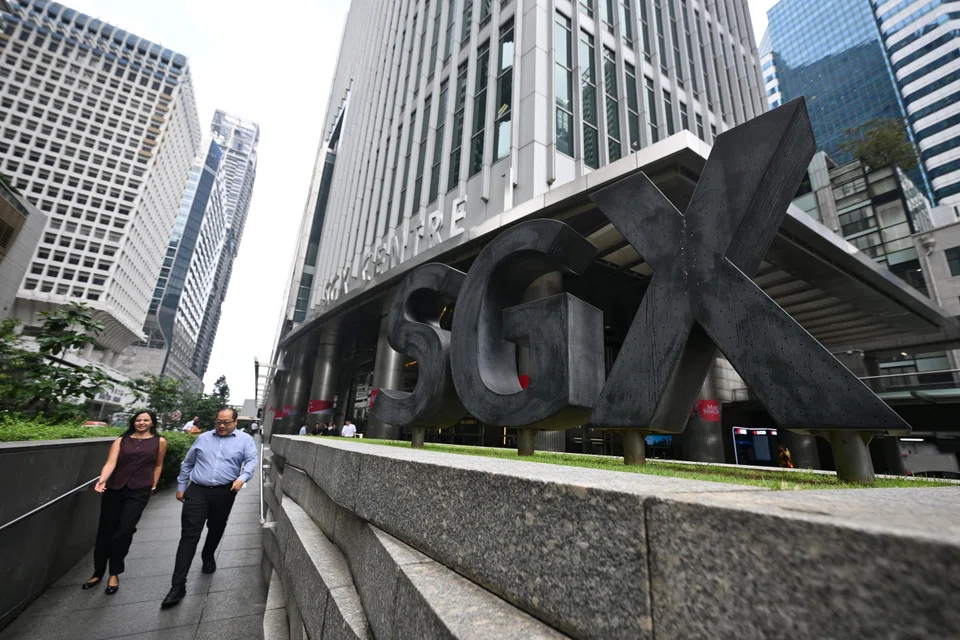
[SINGAPORE] Singapore stocks ended lower on Wednesday (Sep 23), as declines in OCBC and Seatrium outweighed gains elsewhere in the market.
The benchmark Straits Times Index (STI) lost 0.2 per cent or 13.85 points to finish at 5,709.91.
City Developments Ltd led the gainers on the blue-chip index, rising 3.7 per cent or S$0.30 to S$8.42. Seatrium was the worst performer among STI constituents, falling 2.3 per cent or S$0.05 to S$2.10.
The three local banks ended mixed. UOB rose 0.1 per cent or S$0.04 to S$42.84, while DBS slipped 0.1 per cent or S$0.11 to S$77.69. OCBC declined 1.5 per cent or S$0.49 to S$31.65.
Within the iEdge Singapore Next 50 Index, Frencken Group was the top gainer, rising 3.5 per cent or S$0.09 to S$2.68. First Resources was the biggest decliner, dropping 11.2 per cent or S$0.56 to S$4.44.
Across the broader market, gainers outnumbered losers 279 to 249, after 1.2 billion securities worth S$2 billion changed hands.
Key regional indices were mixed. Hong Kong’s Hang Seng Index lost 1 per cent, while South Korea’s Kospi rose 0.9 per cent. The FTSE Bursa Malaysia KLCI fell 0.4 per cent.
Singapore’s latest inflation data came into focus on Wednesday, with core inflation rising to 2.2 per cent in August from 2 per cent in July. Headline inflation edged up to 2.3 per cent from 2.2 per cent.
The Monetary Authority of Singapore and Ministry of Trade and Industry kept their forecasts for both core and headline inflation to average between 1.5 and 2.5 per cent for the full year.

Meanwhile, institutional investors have returned to several Singapore large-cap stocks in the third quarter, said the Singapore Exchange in a Wednesday market update.
Yangzijiang Shipbuilding recorded S$219 million of net institutional inflows in Q3, reversing S$40 million of outflows in the first half of the year. Keppel similarly drew S$159 million of inflows, after S$36 million of H1 outflows.
Thai Beverage also reversed most of its H1 outflows, with S$32 million of net institutional inflows in Q3 offsetting S$34 million of outflows in the first six months.
This article has been written with the assistance of AI and reviewed by a reporter
Decoding Asia newsletter: your guide to navigating Asia in a new global order. Sign up here to get Decoding Asia newsletter. Delivered to your inbox. Free.
Share with us your feedback on BT's products and services






