Singapore stocks eke out gains in March amid banking jitters; market cap rises to S$819 billion

Jude Chan
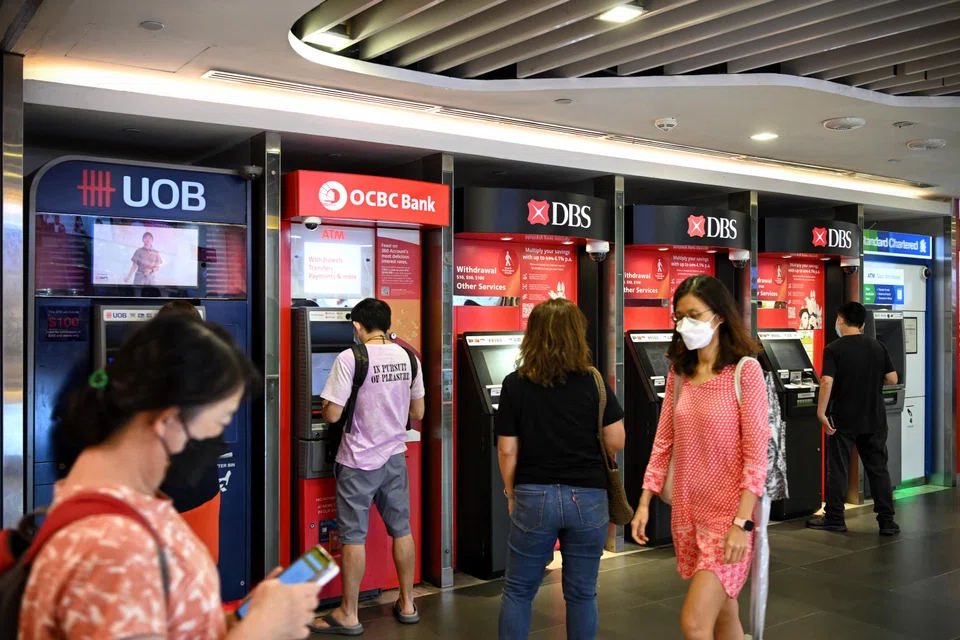
THE total market capitalisation of Singapore stocks gained S$3.8 billion or 0.5 per cent month-on-month to S$819.1 billion in March, despite a decline in banking and finance-related counters amid global banking woes.
Of the 630 companies listed on the Singapore Exchange (SGX) in March, losers outnumbered gainers 285 to 198.
Total market cap of counters listed on the SGX mainboard rose 0.5 per cent to S$810.9 billion, while the Catalist-listed counters slipped 1.6 per cent to S$8.3 billion.
Total value of companies on the benchmark Straits Times Index (STI) climbed 0.4 per cent in tandem with the wider Singapore market, gaining S$2.1 billion to finish the month at S$539.2 billion.
SGX market strategist Geoff Howie noted that the first seven trading sessions in March were relatively tight, with a trading range of about 2 per cent till the close of the market on Mar 9.
Mayhem would soon follow. Silicon Valley Bank collapsed on Mar 10, and Signature Bank two days later – marking the biggest US bank failures since the Great Recession.
Then, in Europe, Credit Suisse – one of the global banking giants previously deemed “too big to fail” – spiralled into a crisis.
“Since the Mar 9 close, focus on the US and Europe banks and several significant central bank announcements to support liquidity in the global financial sector saw the STI’s trading range more than double to 5.5 per cent for the rest of the month,” Howie said.
Amid the global banking uncertainty, Singapore’s finance sector stocks shed a total of S$4.8 billion or 1.7 per cent to S$273.1 billion in March.
Of the three local lenders, two – DBS and OCBC – ended the month among the biggest losers, dropping S$3 billion and S$1.4 billion, respectively. The third local bank, UOB , lost a more modest S$269.7 million.
Insurance company Prudential was also among the bottom performing stocks, losing S$446.9 million.
Stocks in the properties and commerce industries also chalked up losses in March, losing S$1.9 billion and S$1.3 billion in market value, respectively.
The decline was led by property players Hongkong Land , Yanlord Land and City Developments Limited as well as Jardine Matheson Holdings and DFI Retail Group in the commerce space.
However, gains in manufacturing stocks managed to drag Singapore’s market cap higher overall.
Sembcorp Marine (Sembmarine), Wilmar International and Nio were the top gainers in the month.
Sembmarine’s market cap jumped S$4.1 billion following the completion of its merger with Keppel Offshore & Marine, while Wilmar and Nio each added S$1.7 billion.
SGX’s Howie noted that, prior to the final session on Mar 31, the Singapore stock market booked net institutional outflow of S$1.5 billion for the quarter, with net retail inflow close to S$780 million.
Banks, telcos, real estate investment trusts and industrials led the net institutional outflows, while consumer cyclicals, utilities, consumer non-cyclicals and technology led the net institutional inflow, he said
“Q1 2023 has seen developments across the present-day market drivers of global interest rates, decelerating growth, persistent inflation, geopolitical tensions as well as global financial stability being nudged in March,” Howie said. “However, while these five drivers began the year as ‘overarching’, their universal impact on sectors and stock has been dissipating this quarter.”
“If downside or contagion risks of the five key global market drivers do not escalate in Q2, one might expect increased emphasis of the bottom-up aspect to stock investing, versus the top-down approach which has dominated in recent years,” he added.