

Singapore stocks fall on Thursday, tracking regional decline; STI down 0.4%
Losses are led by the local banks, which all finish in the red

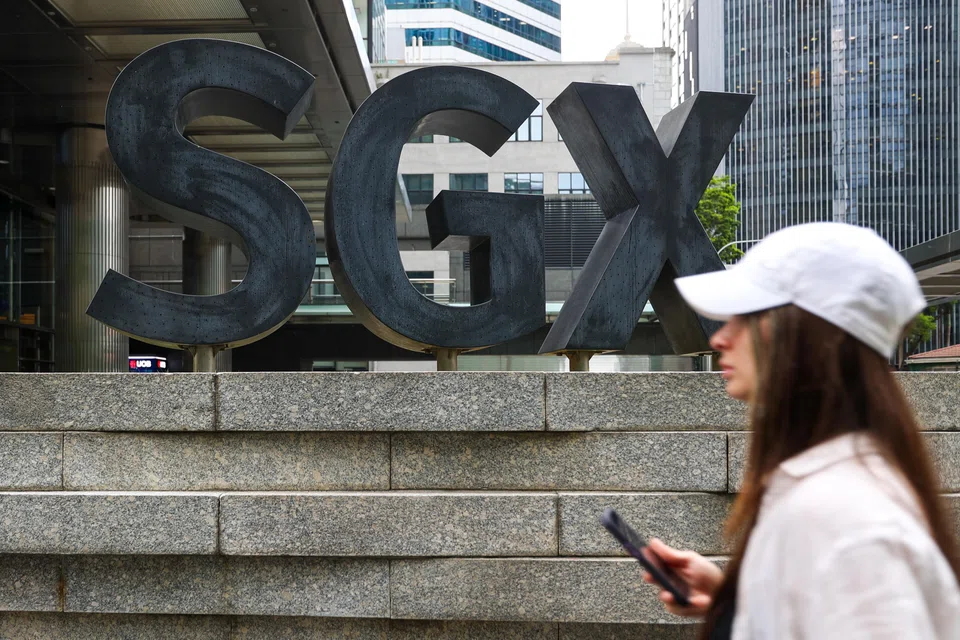
[SINGAPORE] Singapore stocks ended lower on Thursday (Apr 9), tracking declines across regional bourses as investors remained cautious, despite headlines of a temporary ceasefire in the Middle East.
The benchmark Straits Times Index (STI) fell 0.4 per cent, or 18.97 points, to close at 4,977.08.
Losses were led by the local banks, which all finished in the red. DBS slipped 0.2 per cent, or S$0.10, to S$57.20, OCBC declined 0.6 per cent, or S$0.13, to S$22.19, and UOB edged down 0.1 per cent, or S$0.02, to S$37.30.
Across the broader market, losers outnumbered gainers 325 to 252, with 1.5 billion securities worth S$2 billion traded.
Regional markets were broadly weaker. Hong Kong’s Hang Seng Index fell 0.5 per cent, Japan’s Nikkei 225 declined 0.7 per cent, South Korea’s Kospi dropped 1.6 per cent, and Malaysia’s FTSE Bursa Malaysia KLCI slipped 0.6 per cent.
Among STI constituents, DFI Retail Group led the gainers, rising 3 per cent, or US$0.13, to US$4.51.
Wilmar and City Developments Limited (CDL) were the joint worst performers. Wilmar fell 1.8 per cent, or S$0.07, to S$3.92, and CDL declined 1.7 per cent, or S$0.15, to S$8.44.
“The market is trading a ceasefire that exists more in headlines than in flow,” said Stephen Innes, managing partner at SPI Asset Management, referring to Wednesday’s two-week Iran war ceasefire.
“In the end, this remains a market trading the clock, not the destination. The ceasefire has bought time, but it has not resolved the underlying tensions,” Innes said.
“Until barrels flow freely and the geopolitical risk premium is truly extinguished, every rally carries an expiration date.”
Decoding Asia newsletter: your guide to navigating Asia in a new global order. Sign up here to get Decoding Asia newsletter. Delivered to your inbox. Free.
Copyright SPH Media. All rights reserved.






