

Singapore stocks rise on Monday amid buzz over potential US-Iran deal; STI up 0.1%
Across the broader market, gainers beat losers 286 to 161, after 1.5 billion securities change hands
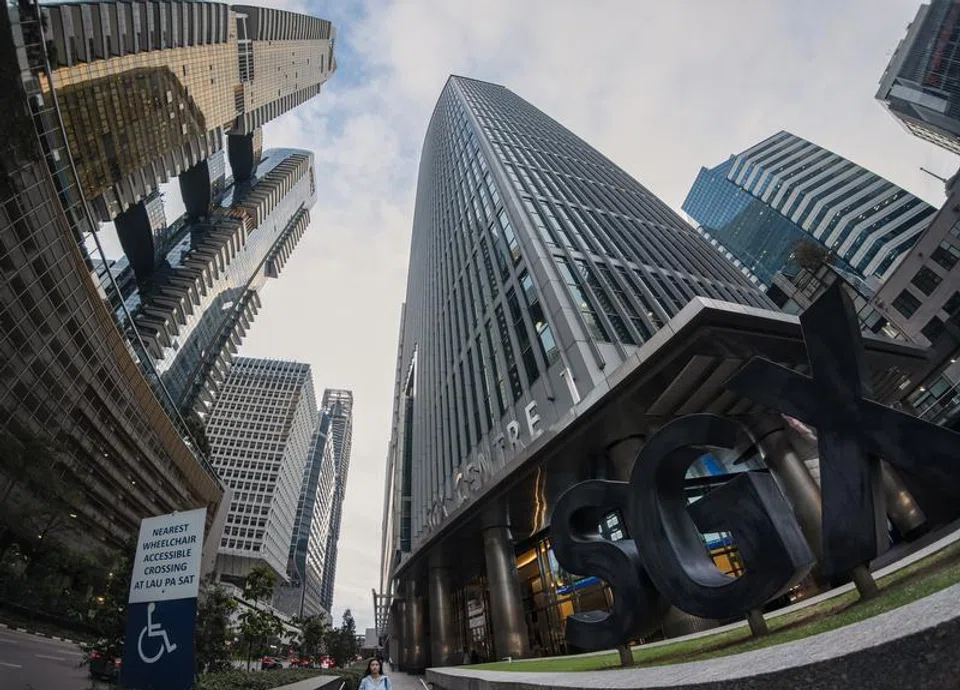
[SINGAPORE] Singapore stocks ended higher on Monday (May 25) while regional markets closed mixed, as the possibility of a US-Iran deal that could reopen the Strait of Hormuz loomed.
The benchmark Straits Times Index (STI) gained 0.1 per cent or 2.4 points to finish at 5,070.55.
City Developments Ltd led the gainers on Singapore’s blue-chip index, rising 3.4 per cent or S$0.28 to end at S$8.45.
The worst performers among STI constituents were Singtel , which fell 1.1 per cent or S$0.05 to close at S$4.54, and Thai Beverage , which declined 1.1 per cent or S$0.005 to S$0.455.
The three local banks ended mixed. DBS rose 0.1 per cent or S$0.08 to S$62.18, and UOB climbed 0.6 per cent or S$0.21 to S$37.91. Meanwhile, OCBC retreated 0.1 per cent or S$0.02 to S$23.51.
Within the iEdge Singapore Next 50 Index, Frencken was the top gainer, rising 6.4 per cent or S$0.19 to finish at S$3.15.
Golden Agri-Resources was the index’s biggest loser, falling 3.6 per cent or S$0.01 to end the session at S$0.265.
Across the broader market, gainers beat losers 286 to 161, after 1.5 billion securities worth S$1.6 billion changed hands.
Key regional indices were mixed. Japan’s Nikkei 225 rose 2.9 per cent, and the Shanghai Composite Index finished 1 per cent higher. The FTSE Bursa Malaysia KLCI, meanwhile, declined 0.2 per cent.


South Korea’s Kospi and Hong Kong’s Hang Seng Index were both closed on Monday.
“Geopolitical tensions, wars, sanctions and shifting global alliances are accelerating the transition towards a more fragmented and multipolar world,” said Swissquote senior analyst Ipek Ozkardeskaya.
While US dominance “remains immense”, she noted that rising US debt, repeated geopolitical frictions and the increasing use of sanctions as a political tool “are encouraging many countries to rethink their economic dependencies”.
“Countries are reducing their exposure to the US and Treasuries, (and) increasing exposure to supra-national gold,” she added.
“China is reinforcing its trade relations outside the dollar system and beyond the West, while replacing part of its US Treasury holdings with gold. It is buying energy in Chinese (renminbi), bringing the talk about the rising petro-yuan in many conversations.”
This article has been written with the assistance of AI and reviewed by a reporter
Decoding Asia newsletter: your guide to navigating Asia in a new global order. Sign up here to get Decoding Asia newsletter. Delivered to your inbox. Free.
Share with us your feedback on BT's products and services
TRENDING NOW

MSCI proposes standalone status for Indonesia; Jakarta stocks plunge 8%
Palm oil stocks slide after Singapore begins looking into which firms responsible for haze

High Court rules against Julius Baer’s Singapore trust arm in US$50 million family trust dispute

Why is the haze so bad in South-east Asia this year?

