Singapore strong enough to withstand ‘collateral impact’ from US-China trade war, tariffs: HSBC
As a regional financial hub, the Republic’s fortunes are tied to Asean financial flows
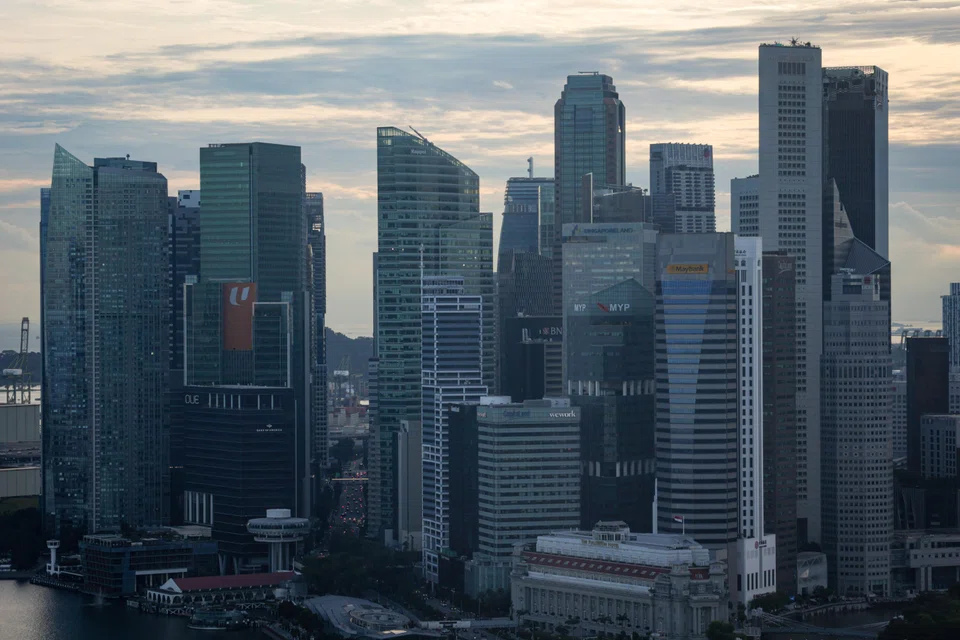
DESPITE the risk of the “collateral impact” from an ongoing US-China trade war that is expected to escalate, Singapore should be able to withstand moderated growth, said Frederic Neumann, chief Asia economist at HSBC.
Singapore’s open economy may be affected by the “tremendous uncertainty” that comes from the imposition of additional tariffs and the pace at which they are implemented. This, he said, may lead companies to hold back on investments.
“You can’t rule out that there will be some drag on growth,” Neumann said in a media briefing on Friday (Jan 17). “But I would expect at some point that the market digests this.”
He added that Singapore’s “structural drivers” – especially its competitiveness as a wealth management, manufacturing and biotechnology hub – remain in place.
The city-state’s integration with Malaysia through the Johor-Singapore Special Economic Zone also adds to the factors that ultimately drive growth, he said.
“Singapore’s direct exposure to US-China trade tensions is very limited,” he added. “The problem comes through indirect exposure because it’s a very large, open economy.”
But more than just trade, he noted that as a regional financial hub, Singapore’s fortunes are also tied to Asean financial flows, for example.
He added: “The fundamentals in Singapore remain extraordinarily robust, that even if there’s a slowdown in investment to Asean, we think it will lead back at some point.”
“The region remains hugely competitive,” he said, noting a shift in growth from North-east Asia to South-east Asia.

Across the region, Neumann said, the Asean economies are expected to grow at a steady rate, with domestic consumption helping to support growth amid an environment of increased uncertainty.
He added that consumption with lower inflation could help the economy, even if the US dollar remains strong. With Indonesia’s central bank this week cutting its interest rate to 5.75 per cent, HSBC predicts that other banks in the region may follow suit.
However, with the volatility in the foreign exchange markets, Neumann highlights that banks have to be tactical in the timing and extent of their rate cuts, lest this hinders growth instead.
The expected rate cuts could also bring investors into the region.
“Asean is becoming central to global supply chains, and clusters of data centres are sprouting up in the region. With rate cuts imminent, we expect investors to favour Asean markets this year,” HSBC said in a report.
HSBC also highlights the uncertainty that comes with prospective new policy shifts under the new US administration. The combination of cyclical, fiscal and political forces might invigorate the US dollar, which puts low-yielding and export-oriented currencies like the Singapore dollar under pressure.
Meanwhile, China’s gradual loosening of capital outflow restrictions presents a significant opportunity for Asean economies.
“Because of high saving rates in China, you could see a potential where they accelerate capital, and that could ultimately drain the system of some of the liquidity,” Neumann said.
“We do think that there is a lot more foreign direct investment coming out of China over the course of (the) year, and that benefits Asean in particular,” he added.
Decoding Asia newsletter: your guide to navigating Asia in a new global order. Sign up here to get Decoding Asia newsletter. Delivered to your inbox. Free.
Copyright SPH Media. All rights reserved.