Singapore to upgrade PayNow, launch new finance institute to drive innovation
Move includes AI training for 100,000 professionals, new measures to prepare sector for emerging technologies

[SINGAPORE] The Republic will upgrade its national payments infrastructure with new PayNow capabilities, including interoperable QR payments and support for artificial intelligence-driven commerce, as the Monetary Authority of Singapore (MAS) seeks to get ahead of the curve on payment trends and demands.
MAS and the Association of Banks in Singapore (ABS) will add features to PayNow, following a joint study on the future of Singapore’s national payment schemes and rails, announced at the ABS annual dinner on Thursday (Jun 25).
By end-2026, MAS and ABS will pilot interoperability between PayNow and Nets QR – which are two separate payment rails – so that consumers can scan and pay at any merchant regardless of which payment scheme they are using.
MAS and ABS will also enhance the online checkout experience for consumers within a year, through deep linking within PayNow QR codes. Currently, consumers must save the PayNow QR code, switch to their banking app to upload and complete the payment, then return to the merchant’s site.
These are some areas of enhancements to Singapore’s national instant payments infrastructure flagged by the PayNow study.
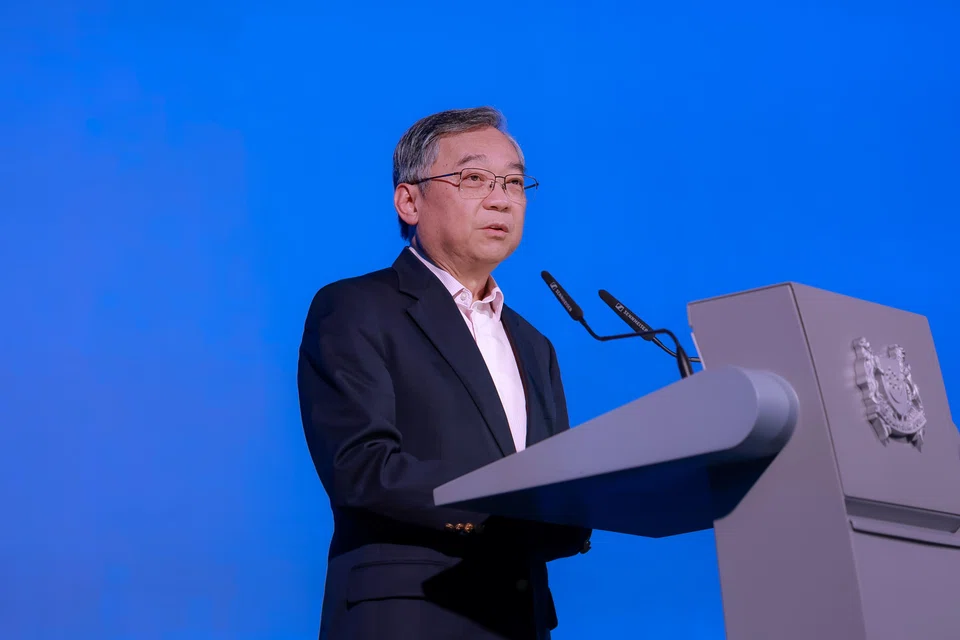
The study is aimed at ensuring Singapore’s national payment schemes and rails are fit for purpose and future-ready, said Deputy Prime Minister and Minister for Trade and Industry Gan Kim Yong at the dinner. DPM Gan is also the chairman of MAS.
Beyond PayNow and Nets QR, Singapore will also continue to advance interoperability and access among more commercial payment schemes, DPM Gan said.
Meanwhile, Singapore is also looking to enable larger-value public-sector PayNow transactions for government agencies, to make it more convenient for consumers and businesses when making such payments.
MAS and ABS will commence the sandbox with government agencies next year, with appropriate safeguards in place.
SEE ALSO



Singapore will also expand payment capabilities for emerging business needs.
These include request-to-pay; structured data fields for automated reconciliation; a micropayments rail; expanded cross-border connectivity; enhanced resilience to payment operations, such as through offline payment capabilities; and new functionalities to facilitate agentic commerce.
AI adoption
To scale AI in finance, DPM Gan said, Singapore needs people who know how to use, question, govern and improve AI tools, instead of just building them.
Hence, ABS will strengthen its agreement with the Institute of Banking and Finance Singapore (IBF) and NTUC’s Financial and Professional Services Cluster (of Unions), to help ABS members equip their workforce with critical AI skills.
IBF is partnering financial institutions and training providers such as NTUC LearningHub to train more than 100,000 finance professionals in AI skills over the next three years, DPM Gan noted.
The three banks have also pledged to partner IBF to equip their employees with foundational AI skills; redesign jobs where AI has the greatest impact; support upskilling, reskilling and redeployment into good jobs; and give young talent structured exposure to applied AI and financial-sector skills.
To date, these institutions have trained more than 26,000 of their employees in foundational AI skills, which close to 80 per cent of their workforce, the deputy prime minister added.
For companies, MAS is setting up the Future of Finance Institute (FFI) to scale financial innovation.
FFI will bring public-private sector collaboration across MAS’ AI and tokenisation initiatives under a single coordinating body.
It will initially focus on AI and tokenisation, help connect the financial and technology ecosystems, and provide shared resources and expertise needed to promote broad-based adoption of these technologies.
“We want Singapore to be a global launch pad for AI in financial services: to anchor strong AI capabilities within financial institutions here, and to broaden adoption across the sector,” DPM Gan said.
The institute will offer four areas of capabilities: a knowledge hub, an innovation garage, industry sandboxes and implementation toolkits.
Further details of FFI’s strategies and governance will be announced later this year, MAS said.
Decoding Asia newsletter: your guide to navigating Asia in a new global order. Sign up here to get Decoding Asia newsletter. Delivered to your inbox. Free.
Copyright SPH Media. All rights reserved.