

Singapore's 5G success will be a group effort, says S Iswaran
 Add BT as a preferred source
Annabeth Leow
DeeperDive is a beta AI feature. Refer to full articles for the facts.
Singapore
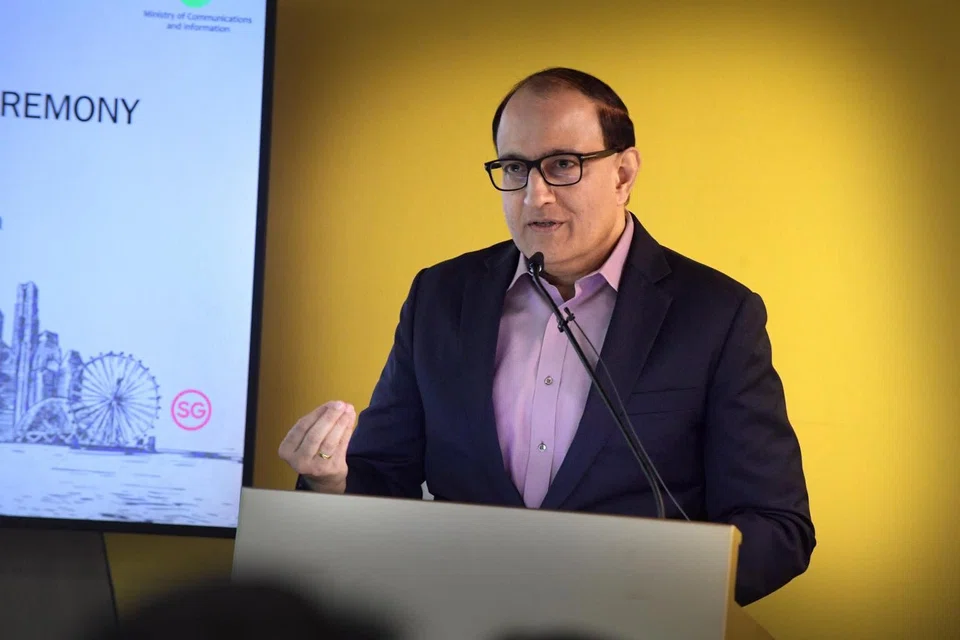
WORKING together and building up demand are key to the success of Singapore's 5G and digital ambitions, said Communications and Information Minister S Iswaran in remarks at the Milken Institute Asia Summit on Wednesday.
He also called collaborations across industry, community and government "critical in ensuring a secure and resilient 5G infrastructure and compelling use cases".
He added that "the demand side" of the 5G market - that is, developing viable use cases for the technology - is as important as supplying infrastructure.
Telecom executives agreed with this sentiment on a panel immediately afterwards, but also noted that the demand for 5G remains nascent, especially in the enterprise sphere.
"If you adopt a closed interface and nobody can connect with you... then, really, you have cloistered yourself in," said Mark Chong, group chief technology officer at Singtel.
Navigate Asia in
a new global order
Get the insights delivered to your inbox.
"It is far better if you adopt open interfaces, cooperate with different ecosystem partners. It gives you options, it gives you ability to scale."
Similarly, Naveen Menon, Asean president for hardware vendor Cisco Systems, said industry-wide "ecosystem change" is crucial for companies and their clients to achieve 5G goals.
Even though consumers and enterprises may still be "figuring out what they want 5G for", he called for more Industry 4.0 technology adoption, which he said could benefit sectors such as transport, manufacturing and agriculture in South-east Asia.
While Mr Chong noted that business decisions to invest in 5G "would be pretty safe", he added: "You will see initially a lot of consumer use cases driven by the higher speeds of 5G - but the real transformation and disruption in 5G will come when enterprises put it together."
He also called for network operators' facilities requirements to be included in public street infrastructure "because it is extremely costly to dig up the road to lay a power cable just to fire up a particular sensor" for 5G.
Mr Iswaran said that Singapore looks forward to "working with all global partners from the public and private sectors" on 5G, and stressed the need for cross-border partnerships and interoperable systems.
The minister also reaffirmed that Singapore is on track with plans for two standalone networks, set to cover at least half the country by end-2022 and the whole island by end-2025.
Licences to build and run nationwide 5G standalone networks were awarded earlier this year to mainboard-listed Singtel, and to a joint venture between mainboard-listed StarHub and Keppel Corp-owned M1.
Decoding Asia newsletter: your guide to navigating Asia in a new global order. Sign up here to get Decoding Asia newsletter. Delivered to your inbox. Free.
Copyright SPH Media. All rights reserved.
TRENDING NOW
Shelving S$5 billion office redevelopment plan proved ‘wise’ as geopolitical risks mount: OCBC chairman

Eurokars Group introduces rental car franchises Enterprise Rent-A-Car, National Car Rental, and Alamo to Singapore
20 photos that show how dramatically Singapore has changed in two decades
Singapore’s key exports up 15.3% in March from electronics surge, exceeding forecasts

