Singapore’s AI growth lies in infrastructure: OCBC
OCBC Investment Research analysts name 10 SGX-listed companies that will do well amid the boom in AI

[SINGAPORE] As the United States and China fight for dominance in the artificial intelligence (AI) space through software solutions, Singapore is finding its own niche in the physical arena.
In a sector update, analysts at OCBC Investment Research have noted that the Republic’s investment is concentrated in building foundational infrastructure such as data centres and power providers.
“Unlike the US and China, Singapore’s AI growth is infrastructure led,” they said.
They said in their report on Tuesday (Jan 27) that the global expansion in AI, alongside the government’s focus on innovation and technology upgrading, will continue to create investment opportunities in two key areas – infrastructure and AI adopters.
Enablers powering the drive
The enablers are one group powering this AI drive, by laying the foundation for scalable AI adoptions.
“Data centre development continues to gain momentum as geopolitical risks and data-sovereignty requirements encourage hyperscalers and enterprises to diversify capacity, with Singapore emerging as a primary beneficiary,” the analysts noted.
On this front, the lender identified Keppel DC Real Estate Investment Trust (Keppel DC Reit) as a “strong proxy” for the growing demand for the data centre space, given increasing digitalisation and cloud adoption trends.
Other potential beneficiaries in the data-centre space identified by the lender include Mapletree Industrial Trust , Capitaland Ascendas Reit and Stoneweg Europe Stapled Trust – all of which have exposure to data centres in their respective portfolios.
AI infrastructure is also driving structural demand for power-cooling and electricity.
The analysts said in the report: “As Singapore’s electricity demand grows, driven by electricity-intensive sectors including advanced manufacturing, digital economy and transport, natural gas remains a cornerstone of energy security and stability.”
Power providers such as Keppel , Keppel Infrastructure Trust and Hong Leong Asia may stand a chance to benefit from the increase in demand.
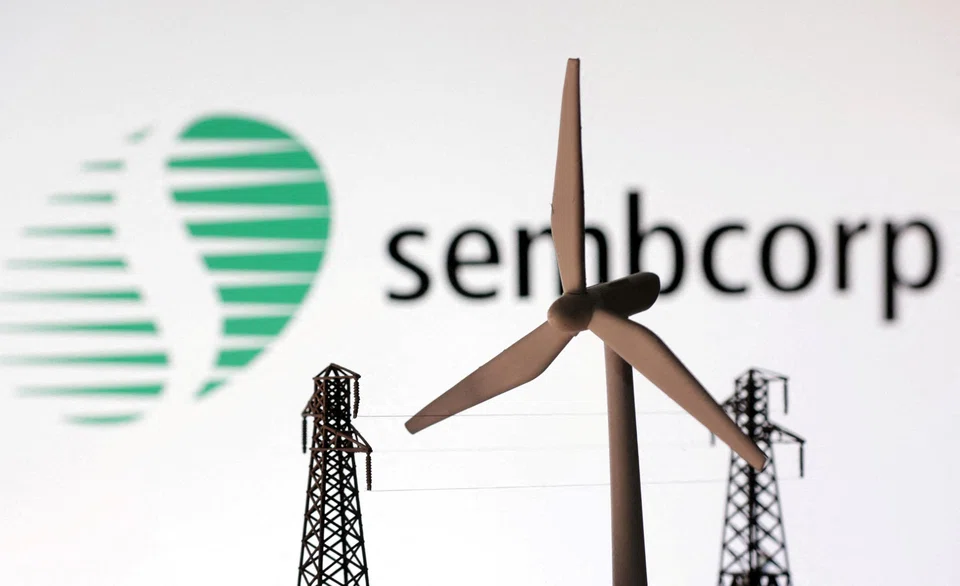
The lender also identified Sembcorp Industries as a potential beneficiary in this space, noting that it is the leading power provider to the data-centre sector in Singapore.
The company has 44 per cent of market share for Singapore’s existing data-centre load of about 1.5 GW, making it the “leading power provider” to the data-centre sector, the analysts added.
Sembcorp’s growth is further supported through its power generation, utilities and integrated urban solutions.
The report also noted that Sembcorp is “well-positioned” to capture incremental demand for data centres and high-tech manufacturing from its existing generation assets.
Beyond power and data centres – communication service providers, such as Singtel , stand to benefit from the AI boom.
“Singtel leverages its strengths in connectivity, data centres and enterprise relationships to position AI as an adjacent growth driver,” the research firm noted.
Another beneficiary in this space is fibre network provider NetLink NBN Trust , which currently supports AI as an infrastructure enabler.
The company’s nationwide fibre network underpins data-intensive AI use cases such as cloud computing, data centres and enterprise digitalisation, the analysts noted.
Embedding AI into operations
Not just enablers, the Republic is also seeing a rise in AI adoption across various companies’ operations.
On the industrial front, the report noted that ST Engineering has been using AI “extensively” across its verticals, ranging from aircraft and engine maintenance, repair and overhaul to smart mobility, and in its AI-enabled cybersecurity systems, which are part of its defence vertical.
Analysts also identified SingPost as an AI adopter, noting that the mail-delivery service provider has invested in generative AI to optimise delivery routes, and launched an AI assistant at POPStops to handle common queries and dispense labels and postage stamps.
Transportation company ComfortDelGro has also been actively incorporating AI into its operations – particularly in the autonomous vehicle space, the analysts noted.
“ Boustead Singapore integrates 360-degree reality photo capturing with an advanced spatial visualisation tool that uses AI to analyse images of construction progress and provide critical feedback to project teams,” said the report.
AI is also extensively used in the financial front.
“( DBS ) has industrialised AI and data analytics from across the franchise, with 1,500 AI and machine-learning models deployed across more than 370 use cases,” the report noted. DBS told The Business Times in early January that it has generated S$1 billion in AI value in 2025.
UOB has also embedded AI and machine learning in its digital transformation to personalise customer experiences, enhance decision making and improve operational efficiency.
AI is also being used to anticipate customer needs and provide personalised recommendations to customers, so they can make informed financial decisions, OCBC noted.
Analysts at OCBC noted that interest in AI has intensified in recent years, as Singapore faces structural challenges from a small and ageing population.
“In this context, AI and automation are increasingly viewed as critical tools to sustain productivity growth and preserve Singapore’s competitiveness,” said the report.