

Singapore’s Horizon Quantum seeks to capitalise on quantum computing’s turning point
The company creates tools that allow conventional software developers to code for quantum systems
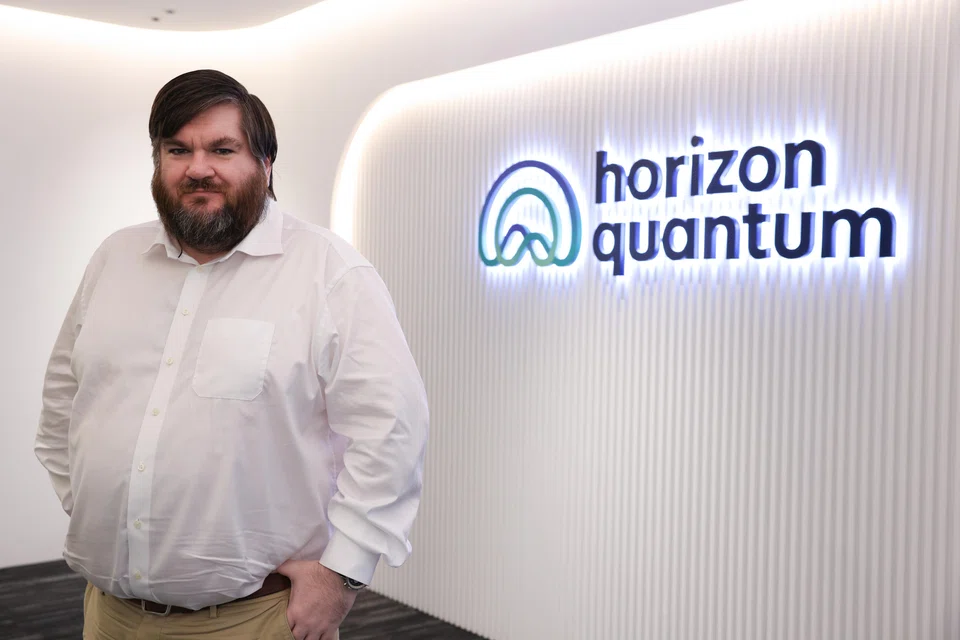
[SINGAPORE] Quantum computing is nearing an inflection point, said Dr Joe Fitzsimons, CEO of Horizon Quantum.
This comes as advances in technology drive down error rates and open up multiple viable hardware pathways, bringing it closer to practical commercial use.
“I think for quantum computing as a whole, we’re getting much closer to the first real application starting to emerge,” he told The Business Times.
“The next few years are going to be really critical… (moving) from something that has been largely theoretical, to something that is a real technology that is having real-world impact.”
Horizon Quantum is positioning itself to capitalise on this shift.
Its decision to do a business combination with dMY Squared and list on the Nasdaq was to accelerate the company’s momentum during this crucial period, said Dr Fitzsimons.
Backed by SGInnovate, a Singapore government-backed investment and deep-tech ecosystem builder, Horizon Quantum currently employs 54 people in Singapore and Dublin. Scientists, engineers and other technical staff make up the bulk of the headcount.
The company creates tools that allow non-quantum software developers to code for quantum computers. It is building code bases that manage the underlying software, allowing conventional developers to program quantum systems without deep quantum expertise.
In navigating quantum systems, conventional software developers often rely on code bases or libraries that are already programmed to carry out a specific application in such systems.



However, without being able to program a quantum computer to do exactly what you need, a developer would be unable to leverage the speed advantage that quantum computing has over conventional computing, said Dr Fitzsimons.
And as quantum developers build and share more libraries, complex functionality can be implemented with very little coding, creating a network effect that will attract users, he noted.
He pointed out that building such a strong ecosystem “is important from a business perspective, because it means more users use your language”.
Dr Fitzsimons added that the end goal is to be able to automatically convert code written in existing programming languages for quantum computers. But the bar that quantum computers have to reach to be considered useful is very high because of the maturity of conventional computing.
Practical applications
Horizon Quantum’s push to level up its growth comes as Singapore ramps up investments in such technologies under its National Quantum Strategy.
Launched in 2024 with close to S$300 million committed over five years, the government has positioned quantum technology as a strategic frontier alongside areas such as artificial intelligence.
Due to their superior processing power over classical computers, quantum computers have the potential to speed up AI development by improving training times and solving complex optimisation problems.
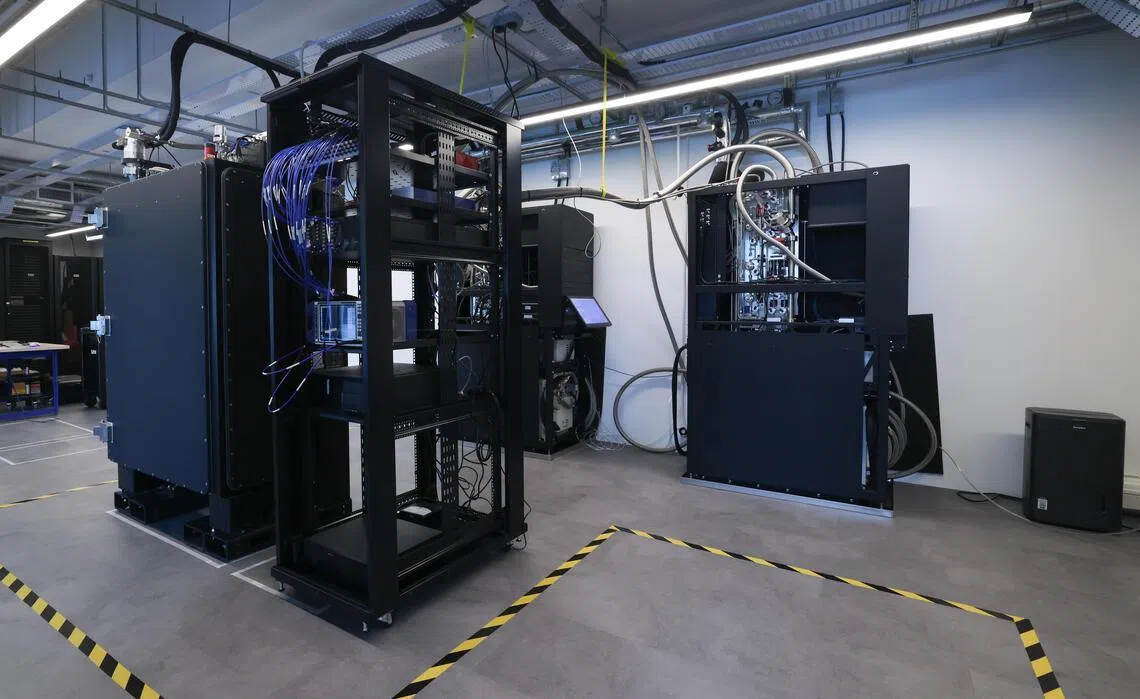
However, Dr Fitzsimons said that the technology’s role in disrupting AI is “not the nearest-term application; it will take a bit longer before we really see transformative gains on that side”.
Instead, he said that the potential for quantum computing lies more in areas such as complex chemistry simulations or accelerating linear algebra, which are often computing bottlenecks for conventional systems.
Horizon Quantum’s market capitalisation stands at US$634.9 million. It is still pre-revenue, posting a lower loss of US$3.6 million in Q1 2026 from US$4.8 million in Q1 2025.
But the company is not prioritising revenue, Dr Fitzsimons said. Rather, it is focusing on partnerships with hardware companies and developing technology to ensure it is in the right position when a breakthrough happens.
“The ultimate end goal for the industry as a whole has to be to get to a point where enormous value is being created through software running on these systems,” he added.
Decoding Asia newsletter: your guide to navigating Asia in a new global order. Sign up here to get Decoding Asia newsletter. Delivered to your inbox. Free.
Copyright SPH Media. All rights reserved.
TRENDING NOW

Once staunchly pro-China, Malaysian Chinese businesses are now distancing themselves from Beijing

Looking beyond looming CEO succession, should UOB potentially pursue a transformative merger?

Could stablecoins be the future of money?

Grab CEO’s wife Chloe Tong on life with Anthony Tan and finding her purpose

