

Singapore’s market capitalisation up marginally in August

Tan Nai Lun
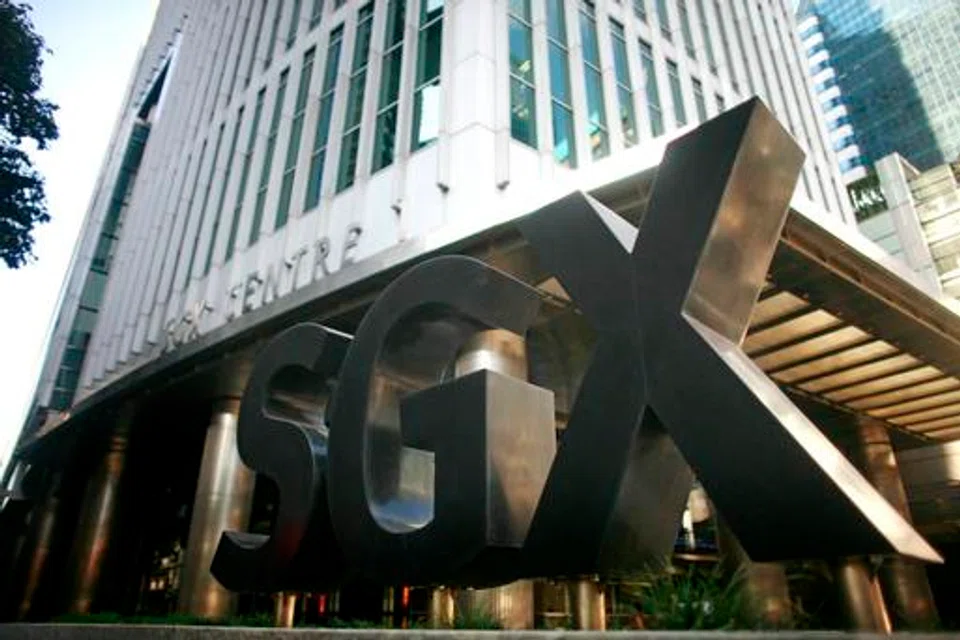
THE total value of Singapore stocks rose marginally in August, with losers outnumbering gainers 248 to 235.
Total market capitalisation of the 647 stocks listed on the Singapore Exchange (SGX) rose 0.1 per cent to S$883.5 billion as at Aug 31, from S$882.7 billion as at end-July, data compiled by The Business Times showed.
The total market cap for mainboard-listed counters rose 0.1 per cent, while the total market cap for companies listed on the Catalist board was up 2.2 per cent.
For the Straits Times Index (STI), the total market cap of its components rose 0.4 per cent to S$536.7 billion in the month.
SGX market strategist Geoff Howie noted that the STI was within a 3 per cent trading range for the majority of the month – the narrowest range for a full month’s trading since September 2021.
“Recent sentiments have hinged on the outlook for interest rate hikes,” Howie added. He noted that over the month of August, expectations for the Federal Reserve’s next interest rate hike rose to 75 basis points from 50 basis points.
Howie also noted that within the STI, there was some basic directional correlation with the performance of global banking stocks, as well as with China benchmark indices.
The biggest gainer in value for the month was Nio , which gained S$2.9 billion to reach a market cap of S$46 billion.
The Chinese electric vehicle maker said allegations made by short-seller Grizzly Research were “not substantiated”, after it completed its independent internal review.

In June, the short-seller claimed that Nio had been “playing Valeant-esque accounting games” to inflate its revenue and boost net income margins, and that it was likely using an unconsolidated related party to exaggerate the group’s revenue and profitability.
Nio is due to release its second-quarter results on Sep 7.
As for the trio of local banks, DBS gained S$2.9 billion to reach a market cap of S$84.2 billion, while OCBC put on S$1.9 billion to hit S$54.6 billion. Meanwhile, UOB lost S$370.9 million to reach S$46.1 billion.
In the second quarter of 2022, a series of interest rate hikes drove up net interest margins and earnings of the 3 banks, with their respective chief executives expressing cautious optimism for the rest of the year.
Net interest income is expected to continue benefiting from the rate hikes.
The bank chiefs also expect the sector and broader Asian markets to remain resilient for the rest of the year, although they noted macroeconomic uncertainties may weaken market sentiment.
Separately, Jardine Cycle & Carriage was also one of the top performers of the month, gaining S$1.9 million to reach a market cap of S$13 billion.
Meanwhile, the biggest loser in value for the month was CapitaLand Investment , which lost S$1.2 billion to reach a market cap of S$19.2 billion in August.
Other decliners in the month include Hongkong Land , which lost S$911.1 million to hit S$15.9 billion; ST Engineering , which fell S$905.5 million to S$11.6 billion; and CapitaLand Integrated Commercial Trust , which was down S$723.9 million to S$13.7 billion.
The property and real estate investment trusts (Reits) sectors were the weakest performing industries in August, shedding 7.4 per cent and 4.3 per cent, respectively.
This led to 5 of the 7 Reits within the STI finishing among the bottom 10 constituents for the month, SGX’s Howie noted.
A better-than-expected Q2 earnings season had removed immediate slowdown concerns in the quarter, noted DBS Group Research in a note.
The research team, however, expects the market to “remain sideways” amid rising interest rates.
Looking forward, a slowdown in major economies in the US and China, supply chain disruptions, regional geopolitical risks and rising inflation can also likely hit earnings, DBS said.
Howie said he expects markets will continue to watch geopolitical developments, central bank policies and Covid-19, aside from growth and inflation concerns.
Decoding Asia newsletter: your guide to navigating Asia in a new global order. Sign up here to get Decoding Asia newsletter. Delivered to your inbox. Free.
Copyright SPH Media. All rights reserved.
TRENDING NOW

Fed hike throws Singapore banks a margin lifeline; UOB likely to benefit more

He built the Vingroup empire. Now South-east Asia’s richest man is handing some key roles to his sons
Chagee, Mixue and Luckin won the market. Sustaining their edge is the harder part

Canada is upping oil flows to Asia, but South-east Asia’s refineries aren’t ready to handle them yet

