OUTLOOK 2025

Singapore’s reinsurance market gears for growth in bid to be Asian hub

Industry watchers cite several favourable factors, including country’s supportive regulatory environment, advantageous geographical location and stability

Summarise
Ranamita Chakraborty
Published Wed, Jan 29, 2025 · 05:00 AM
    • In 2023, Singapore’s reinsurance premiums grew 31 per cent year on year to S$27.6 billion, accounting for approximately 21% of Asia’s reinsurance market.
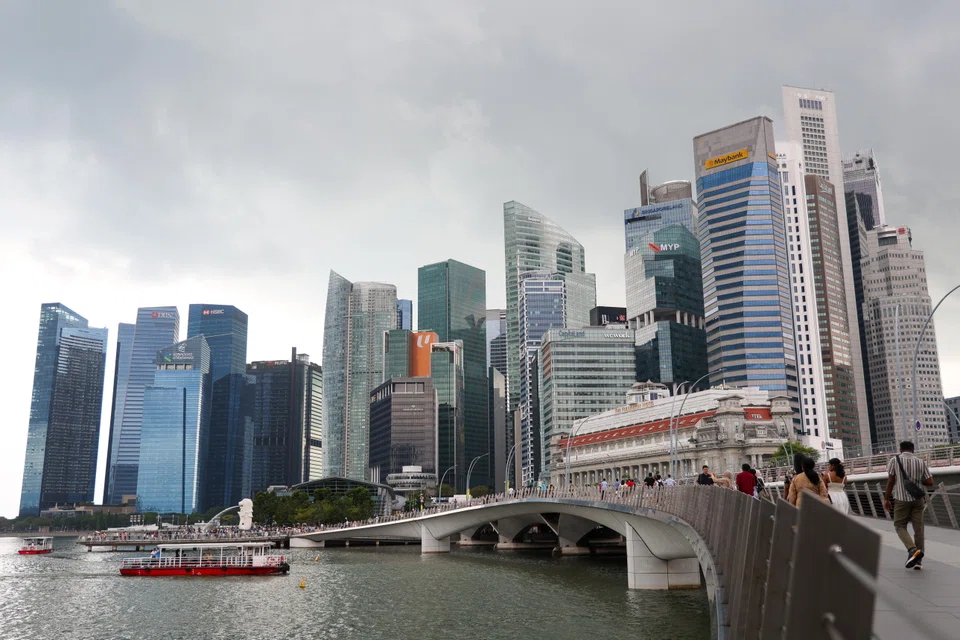
    • In 2023, Singapore’s reinsurance premiums grew 31 per cent year on year to S$27.6 billion, accounting for approximately 21% of Asia’s reinsurance market. PHOTO: BT FILE

    THE reinsurance market in Singapore is poised for substantial growth in 2025, with the government seeking to strengthen the country’s standing as a leading reinsurance hub in Asia. Industry experts shared with The Business Times that their outlook for Singapore’s reinsurance sector remains optimistic, citing favourable conditions.

    Singapore Reinsurers’ Association chair Kenrick Law attributes his optimism to several factors such as the country’s supportive regulatory environment, proactive policies aimed at attracting and retaining global reinsurers, and its growing focus on green financing and climate risk management.

    He emphasised that the government’s regulations promoting transparency, risk management and compliance will continue to attract more global reinsurers to the market.


    Additionally, the government’s focus on developing both local and international talent has enhanced the Republic’s appeal as a reinsurance hub.

    “This, coupled with its stable political environment and well-established financial ecosystem, (provides) a strong foundation for reinsurers looking to establish their regional headquarters or expand their operations,” he explained.

    In 2023, Singapore’s reinsurance premiums grew 31 per cent year on year to S$27.6 billion, accounting for approximately 21 per cent of Asia’s reinsurance market. Although figures for 2024 are not yet available, the momentum is expected to have continued.

    Chris Lim, associate director at credit rating agency AM Best, highlighted that the country benefits from a “strategically advantageous geographical location within Asia-Pacific” which allows Singapore-domiciled reinsurers to transact overseas easily.

    “Singapore is a well-established insurance and reinsurance hub, made up of a vibrant ecosystem of reinsurance players, reinsurance brokers and other financial service providers,” he added.

    Regional hub

    Currently, the Republic serves as the Asia-Pacific headquarters for 12 of the world’s top global insurers and reinsurers. Among reinsurers alone, 16 of the top 25 have established their regional hubs in Singapore, covering markets in Asean, North and South Asia, as well as Australia.

    More specialty insurers and international insurance firms are choosing the city-state as their regional hub, noted Justin Ward, managing director of Asia-Pacific capital advisory at reinsurance specialist Guy Carpenter. He likened Singapore’s strategic position to that of London in Europe and New York in North America.

    For example, Ward said, Singapore serves as the hub for Guy Carpenter’s South-east Asia and South Korea operations.

    The company follows a hub-and-spoke model, with smaller offices in Indonesia, Malaysia and South Korea, but Singapore remains central for key functions such as actuarial services, capital management, market strategy and client management. He added that this strategic focus has allowed the firm to effectively deploy capabilities and attract offshore business to the Republic.

    Ward foresees that reinsurers will increasingly focus on strengthening their capabilities in the Singapore market this year.

    He said: “We see a concerted effort (by) the Monetary Authority of Singapore (MAS) and Singapore government to ensure that Singapore may remain at the forefront of insurance and reinsurance innovation in the region. We don’t see that abating. We see that increasing speed post-Covid and (with) further innovation coming through.”

    Deputy Prime Minister and MAS chairman Gan Kim Yong noted that the Singapore government has committed to doubling down on developing a marketplace of insurers and reinsurers, in a speech at last year’s Singapore International Reinsurance Conference (SIRC).

    He added that the government will also work with insurers and reinsurers in the city-state to deepen their capabilities, particularly in artificial intelligence (AI).

    “Through strengthening our insurance ecosystem, deepening capabilities, including in AI, and developing alternative risk transfer markets in Asia, we will reinforce Singapore as Asia’s leading reinsurance hub,” he said.

    Victor Kuk, head of property and casualty reinsurance for South-east Asia, India, South Korea, Hong Kong and Taiwan at Swiss Re, pointed out that Singapore’s stable political and financial environment is another incentive for many companies to conduct business activities here.

    With Singapore being a gateway for many businesses to international as well as South-east Asian markets, the firm can leverage this unique geographic location to support its clients throughout the region more effectively, he added.

    Looking at recent regulatory developments in Singapore, Kuk anticipates that these will help “position the reinsurance industry for long-term resilience” and bring about “an opportunity for the market to align with global standards”.

    Last August, the MAS imposed stricter oversight for insurers with reinsurance contracts, requiring them to submit terms and conditions for review, with the possibility of audits.

    This move followed a report from the International Association of Insurance Supervisors, which raised concerns about the growing allocation of capital to alternative assets and the increasing use of cross-border, asset-intensive reinsurance.

    Alternative risk transfer

    Singapore has been focusing on expanding its insurance capacity through alternative risk transfer instruments, such as sovereign insurance solutions and insurance-linked securities (ILS). 

    ILS are financial instruments tied to risks such as natural disasters, specialty insurance risks, and life and health insurance. They provide an alternative way for insurers and reinsurers to transfer large risks to capital-market investors.

    Gan previously noted that the government is supporting the development of ILS markets in Asia to increase the available financial capacity for covering major catastrophe risks, especially since Asia currently represents less than 5 per cent of the global catastrophe bond market.

    To further these efforts, MAS is collaborating with the ILS industry to promote these instruments as an asset class for private wealth and investment portfolios, in a drive to channel growing investments from both private wealth and institutional investors in Asia into ILS.

    Among the most well-known forms of ILS are catastrophe bonds – or cat bonds – which transfer specific risks, usually from natural disasters, from sponsors to capital-market investors. 

    Cat bonds are becoming increasingly important as they help address protection gaps that are widening, due to the growing impact of climate change, when traditional insurance coverage is often insufficient.

    Currently, there are 14 ILS listed on the Singapore Exchange, including cat bonds issued by global specialty insurer and reinsurer MS Amlin Asia Pacific.

    Guy Carpenter’s Ward, however, stressed the need for greater interest in ILS from asset managers in Singapore and the wider region, which would contribute to a more vibrant alternative risk transfer market.

    “What will be interesting, moving forward, is how we continue to gain momentum around alternative sources of capital that can be made available to reinsurers and insurers, whether through the presence of fund managers (or) the insurance sector’s focus on ILS, and how that will change the sources of capital available for insurers and reinsurers.”

    Climate transition

    Climate transition in Asia is expected to drive growing demand for reinsurance, creating significant opportunities that Singapore can leverage.

    While the region is particularly vulnerable to the effects of climate change, it also faces a significant protection gap, particularly in terms of catastrophe coverage. In 2023, economic losses in the Asia-Pacific region totalled US$65 billion, with 91 per cent of these losses uninsured, compared with a 30 per cent protection gap in the US.

    Kuk of Swiss Re highlighted that climate change will lead to an increased risk of natural catastrophes across Asia-Pacific, particularly in coastal areas and urban centres located in flood-prone river zones.

    “Protective measures need to be taken for insurance products to remain economical for such properties at high risk,” he said.

    He added that the reinsurance industry plays an important role in building resilience before an event strikes through mitigation efforts as well as after, especially in emerging markets at risk of natural catastrophes and where insurance penetration may not be as high.

    Gan noted in his SIRC speech that Singapore’s focus on sustainable finance and green insurance products has further positioned the country as a preferred hub for reinsurers, particularly as the sector confronts climate-related risks.

    “With the country actively building its research on physical impacts of climate change, such as rising sea levels, extreme weather events, climate-impact modelling and nature-based solutions, reinsurers can leverage these insights to improve their risk assessment models, portfolio management strategies and climate disclosures,” he said.