SingPost to divest Australia business at A$1 billion enterprise value to private equity fund
The group may consider a special dividend after repaying debt and considering future funding needs

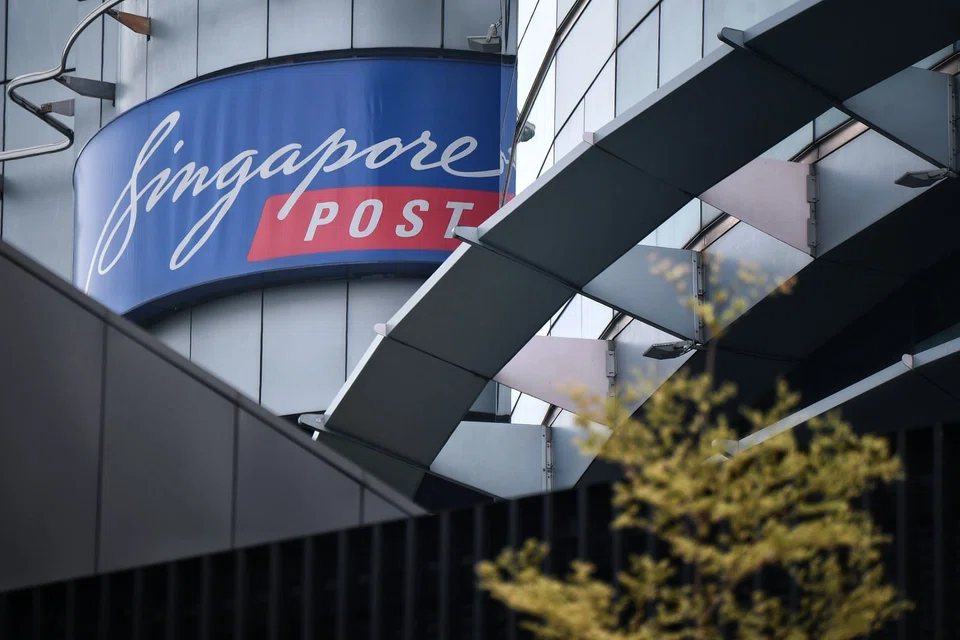
SINGAPORE Post ( SingPost ) has entered into a share purchase agreement to divest its Australian business at an enterprise value of A$1 billion (S$870 million) as part of the outcome of a strategic review. The review, launched earlier this year, sought to explore strategic options that would enhance business value and maximise shareholder value, it said.
SingPost will receive actual cash proceeds of A$775.9 million and generate a gain on disposal of about S$312.1 million, subject to adjustments determined at the time the deal is completed.
The buyer is Pacific Equity Partners, an Australia-headquartered private equity fund, said the national postal service provider on Monday (Dec 2).
SingPost’s Australia segment includes fourth-party logistics services, third-party logistics solutions including transportation and distribution, and last-mile courier delivery, as well as warehousing services.
The net asset value of the company’s Australia segment stood at about S$384.7 million as at Sep 30, 2024. Revenue for the business rose 44.1 per cent on the year to S$574.8 million for the first half ended September. Operating profit increased 30.2 per cent on the year to S$30.4 million.
Apart from the Australia business, the international and Singapore businesses contributed S$12.7 million and S$23 million in operating profit, respectively.
Use of proceeds
SingPost said that proceeds from the proposed disposal will reinforce the group’s liquidity and strengthen its balance sheet.
It intends to use some of the gross proceeds to repay its borrowings, particularly its Australian dollar-denominated debt amounting to A$362.1 million as at Sep 30, 2024. SingPost’s total Australian dollar-denominated debt stood at A$614.8 million as at end-September.
Additionally, the group also said it would consider issuing a special dividend, after repaying its debt and considering its future funding needs. It will retain the rest of the proceeds for future growth opportunities to invest in existing and/or new businesses, assets and investment opportunities, said the group.
Simon Israel, chairman of SingPost, said: “The board believes this divestment is the best option for shareholders by crystallising the unrealised value of the business and bringing forward unlocked value for shareholders.”
What next?
Upon completion of the sale, SingPost will “review and reset” its strategic plan, with a “continued focus on shareholder value”, said group chief executive Vincent Phang.
Assuming that the deal was completed on Mar 31, 2024, the net tangible asset per SingPost share would increase to S$0.689 from S$0.349.
Earnings per share would have been S$0.162, up from S$0.035, if the transaction had been completed on Apr 1, 2023.
SingPost will convene an extraordinary general meeting to obtain shareholders’ approval for the transaction. It will also need to obtain the approval of Australia’s Foreign Investment Review Board for the deal to go through.
The divestment is expected to take place by the end of March 2025. Following the completion, SingPost Australia Investments and its subsidiaries, including Freight Management Holdings, will no longer be part of the SingPost group.
OCBC Global Markets Credit Research said in a report on Monday that the divestment is expected to be a “positive” credit event for SingPost because debt will be reduced substantially, and the Australian businesses are still facing considerable headwinds from softer business environments and stiff competition.
“Per management, SingPost is likely to return to net cash position after the transaction,” said the report.
SingPost’s freight-forwarding business Famous Holdings in Australia, which is not part of the proposed divestment, has been classified as a non-core asset and is available for asset recycling, noted OCBC.
“The outlook of the freight-forwarding industry remains challenging, with continued uncertainty stemming from the Middle East developments per annual report FY2024,” it added.
In a separate report, OCBC Investment Research noted that SingPost’s Australian logistics business is one of the top players Down Under and was contributing significantly to the group as it pivoted away from its domestic post and parcel business.
But the management could not tell the analysts at the briefing on Monday what the strategic plans are for the group, post-divestment. This is why the OCBC Investment Research analyst is not raising the fair-value estimate of SingPost shares at S$0.58.
SingPost did not respond to The Business Times’ query on the possibility of a delisting following the divestment of its non-core assets and the Australian business.
CGS International has, however, raised its target price for the stock to S$0.74 from S$0.58, as it believes that SingPost will double-down on its asset monetisation strategy and return cash to shareholders.
There are S$1.5 billion worth of assets ripe for value-unlocking by SingPost over the next two years, CGS pointed out. These include SingPost Centre (valued at S$1.1 billion) and other post office assets, the freight-forwarding business (valued at more S$100 million), and minority-stake investments.
Maybank Securities analyst Jarick Seet had earlier said that he viewed the group as “deeply undervalued”, considering its current net assets, which could result in higher profitability and dividends if the group decides to sell them over the next few years.
He had added that the sale of the freight-forwarding business would “significantly reduce finance costs and bump up the future profitability” for the group.
A BT commentary last month had urged SingPost to divest non-core assets such as its post office properties to cut borrowings. In March, SingPost said that it would be looking to divest such assets, including retail-commercial mixed development SingPost Centre.
Shares of SingPost ended Monday S$0.005 or 0.9 per cent higher at S$0.585.
“The board believes this divestment is the best option for shareholders by crystallising the unrealised value of the business and bringing forward unlocked value for shareholders.”
SingPost chairman Simon Israel
TRENDING NOW
Fed hike throws Singapore banks a margin lifeline; UOB likely to benefit more
He built the Vingroup empire. Now South-east Asia’s richest man is handing some key roles to his sons
Chagee, Mixue and Luckin won the market. Sustaining their edge is the harder part
Canada is upping oil flows to Asia, but South-east Asia’s refineries aren’t ready to handle them yet