

Singtel board grilled on debt, cybersecurity in three-hour AGM
Chief executive says amount of debt is 'very healthy' relative to size of the company

Annabeth Leow
Singapore
SINGTEL investors girded up to cross-examine directors at the annual general meeting (AGM) on Tuesday, in a three-hour session tackling everything from the telco's performance to cyber security and digital technology.
A number of shareholders pressed the board on the state of Singtel's earnings and balance sheet, calling attention to a gross debt of S$10.3 billion for the year to March 31, 2018.
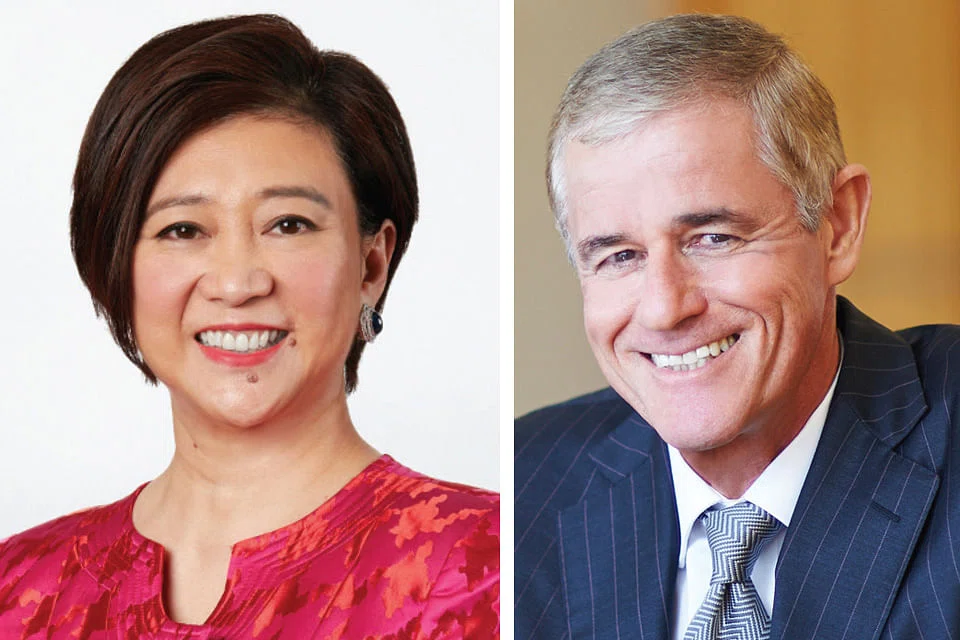
But board chairman Simon Israel and group chief executive Chua Sock Koong both cited "conservative treasury policies", with Ms Chua noting the mix of bonds and bank loans, as well as short-term and long-term borrowings, is managed "very actively".
"We think that, to maximise return on equity, a prudent level of debt is actually very appropriate," she said, adding that institutional investors have called the debt levels "too low".
Ms Chua said that, relative to the size of the company, the amount of debt is "very healthy". Singtel has a long-term credit rating of A+ from Standard & Poor's, while Moody's last year downgraded it to A1, from Aa3.
With about 70 per cent of underlying earnings coming from outside of Singapore, "we actually use the cash on hand, as well as the additional debt that we've taken on, to grow the business," she said.
"So another way of looking at it is: If we had kept the cash and we had stayed in Singapore, we'd be less than a quarter the size we are today."
One shareholder pointed to the price war facing Airtel in India, which has taken a chunk out of pre-tax profit contributions from regional associates, and asked for clarification on Singtel's position that it is a strategic investor and not a financial one.
"You should take that term to mean that we invest to influence the outcome, to influence the future and to have an impact on the strategy and the business model of the future in terms of the company," Mr Israel replied. "When (Ms Chua) says we're not a financial investor, it doesn't mean to say we're not looking for returns.
"What it means is, we're not a fund, we're not a manager. We don't trade in and out of the stock and the strategy is not our problem. So, we are a long-term strategic investor, and clearly India is a long-term growth story."
Also on several shareholders' minds was the massive cyber attack on Singapore's healthcare system, which came to light last week. One investor asked whether it would hinder the growth of enterprise opportunities in the industrial Internet of Things (IoT). Others wanted to know whether Singtel has cyber insurance - Ms Chua said it is insured for server attacks on its own networks and systems - and whether it was involved in the latest data breach, to which Mr Israel answered in the negative.
Bill Chang, chief executive for group enterprise, also said that "we see IoT as a very important front that plays its role in terms of supporting the Smart Nation vision that the government has" and added that Singtel takes IoT security "very seriously".
Singtel was down by S$0.02, or 0.6 per cent, to S$3.31, after the AGM.






