

Singtel, CPF Board to transfer legacy discounted shares to investors’ CDP accounts, giving 615,000 shareholders direct control
As a rough gauge, an investor will make a return of about six times on the original investment


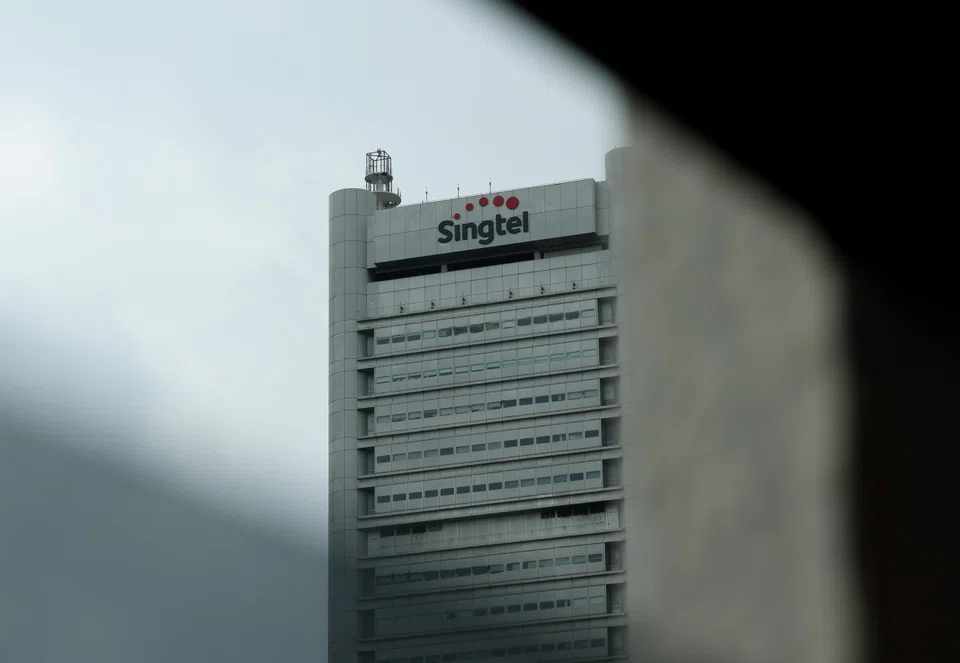
[SINGAPORE] Singtel and the Central Provident Fund (CPF) Board have initiated an exercise to transfer all Special Discounted Shares (SDS) currently held in trust by the CPF Board directly into investors’ individual Central Depository (CDP) accounts.
The move will unwind a 30-year-old legacy structure, effectively giving 615,000 retail investors direct control over their shares and immediate access to cash if they choose to sell.
When combined with other retail shareholders, Singtel’s total retail base is expected to stand at over 700,000 – more than double that of the next most widely held stock on the local exchange, understands The Business Times.
The details were announced following the first reading of the CPF (Amendment) Bill in Parliament on Tuesday (Apr 7). The authorities also announced a special waiver of CPF withdrawal conditions for the SDS sale proceeds.
From Wednesday, investors who sell their SDS holdings can withdraw the proceeds in cash directly to their registered bank accounts within 14 business days.
Normally, proceeds from shares bought using CPF savings must be returned to the investor’s CPF Ordinary Account. The new waiver applies regardless of the shareholder’s age or whether they have set aside their CPF basic retirement sums.
Furthermore, a retroactive concession will be granted to investors who sold their SDS between Jan 1, 2025, and Apr 7, 2026. These individuals can write in to apply to withdraw those past sale proceeds in cash.
The mass transfer of the shares is slated for Nov 21, 2026. Investors who wish to hold on to their stock need to take no action; the shares will be automatically migrated.
Singtel and the CPF Board said that nearly three in five SDS holders already have individual CDP accounts. For those who do not, a designated CDP account will be automatically created in their name to hold and manage the shares.



The 1993 IPO
The transfer closes a major chapter in Singapore’s financial history, dating back to Singtel’s initial public offering (IPO) in 1993 and a subsequent offering in 1996.
The SDS scheme was introduced as a national asset enhancement initiative to give working Singaporeans a direct stake in the country’s economic success.
As many retail investors were unfamiliar with equity markets at the time, the CPF Board was appointed as a trustee to facilitate the purchases and hold the shares.
To discourage investors from immediately flipping the discounted shares for a quick profit, the government baked in a unique loyalty programme.
Investors who held on to their stock were rewarded with free loyalty shares over time. These were distributed in 10 per cent increments across four qualifying dates, ultimately giving long-term holders an additional 40 per cent of their original shareholdings for free.
Today, the youngest SDS holders are in their early 50s. The median shareholder holds around 1,360 Singtel SDS, which includes both the original purchases and the accumulated loyalty shares.
These shares originally cost around S$2,000. As at Apr 1, 2026, that median holding is worth about S$6,800. In addition, these investors have already received around S$5,000 in cumulative dividends over the years, which were credited to their CPF accounts.
As a rough gauge, an investor would make a return of about six times on the original investment.
Clearing bottlenecks
For Singtel, the exercise cleans up an administrative bottleneck. Currently, the telco remains the only company operating under this specific CPF trust scheme. Having to manage more than half a million shareholders via a single statutory board creates significant logistical friction.
For example, under the current system, Singtel must route all shareholder communications – including annual general meeting invites and annual reports – for these 615,000 investors through the CPF Board.
By moving investors to direct CDP ownership, Singtel can communicate with shareholders directly, and execute corporate actions – such as scrip dividends – in a more timely and cost-efficient manner as it pursues its “Singtel 28” growth strategies across South-east Asia and other markets.
Right now, selling SDS shares can be done online or through submitting physical forms at Singapore Post branches. The physical sales forms are manually batched and processed by brokers over several days, depending on sales volumes, meaning investors cannot dictate or lock in a live market price.
Direct CDP ownership will allow shareholders to trade their stock in real time on the open market.
Despite the prospect of a sudden cash unlock, Singtel management does not expect a disruptive market sell-off. Even if all SDS holders without existing CDP accounts decided to sell, the volume would represent a minor fraction of Singtel’s total outstanding shares and could be easily absorbed by standard daily trading volumes.
Carmen Lee, head of equity research at OCBC, believes that most investors are unlikely to sell their Singtel stocks immediately in November (when the mass transfer takes place). She cited low cash deposit rates, as well as the relatively lower CPF Ordinary Account interest rate of 2.5 per cent – compared with Singtel’s dividend yield of 3.7 per cent – as reason to hold.
Lee added that while the announcement should “marginally help with the trading liquidity” of Singtel shares, the overall impact is expected to be rather muted as the telco’s shares are already well-traded on a daily basis.
“However, investors will appreciate this more simplified approach, and this could help some investors to liquidate their holdings in an easier manner via their CDP account.”
Hussaini Saifee, analyst at Maybank, noted that the announcement will have no bearing on the telco’s Singtel28 plans – a three-year strategy announced in 2024, which aims to increase shareholder value.
“Singtel28 are company-led plans such as capital recycling and capital returns to shareholders. It has no linkage to today’s announcement,” he said.
Safeguarding elders
To mitigate the risk of scams targeting elderly investors with the promise of cash windfalls, the CPF Board and Singtel are rolling out a targeted outreach programme. Hard-copy notification letters detailing individual holdings and options will be sent to all SDS holders by end-April.
Additionally, the authorities are partnering with the Agency for Integrated Care to conduct physical visits to older, less digitally savvy investors.
The outreach aims to explain the transfer process and strictly advise investors to verify information only via the official website, ensuring they remain vigilant against fraudulent messages and unverified links.
Decoding Asia newsletter: your guide to navigating Asia in a new global order. Sign up here to get Decoding Asia newsletter. Delivered to your inbox. Free.
Copyright SPH Media. All rights reserved.
TRENDING NOW

Malaysian king buys stake in Singapore-listed mining firm expanding into rare earths

Grab CEO’s wife Chloe Tong on life with Anthony Tan and finding her purpose

Once staunchly pro-China, Malaysian Chinese businesses are now distancing themselves from Beijing
Longer wait times expected as S’pore healthcare institutions report system disruptions

