

Singtel expects rebound in core business, after 4.9% rise in underlying H2 earnings


Annabeth Leow &
Michelle Zhu
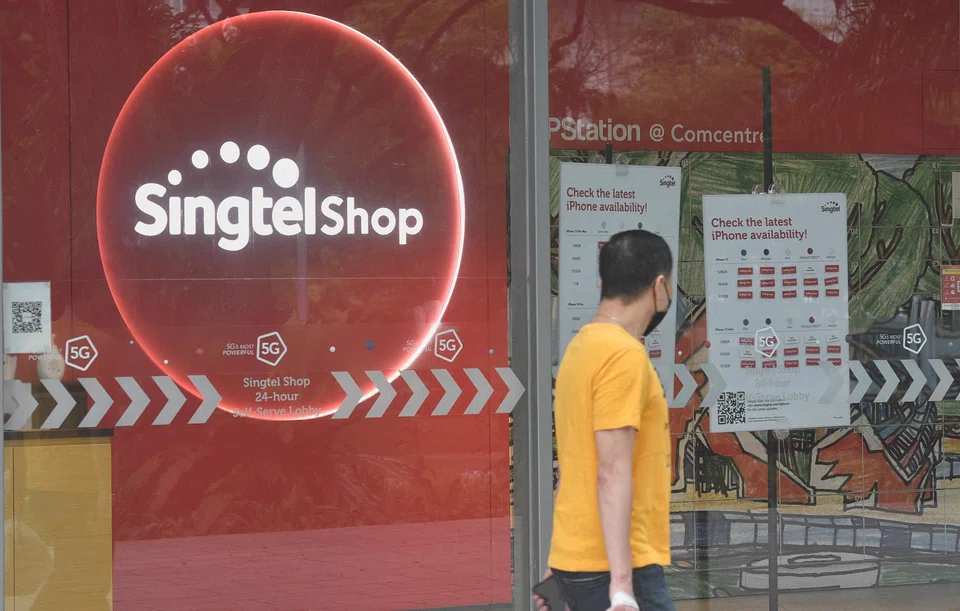
SINGTEL is banking on a travel recovery, as well as easing competition in regional markets, to shore up its top line in the year ahead, the telco’s management has said.
“Notwithstanding the headwinds we’re seeing, we do see the operations from the core (business) coming back quite convincingly,” chief financial officer Arthur Lang told a briefing.
The latest outlook was delivered as mainboard-listed Singtel on Friday (May 27) reported a 4.9 per cent year-on-year increase in second-half underlying net profit, to S$941 million, for the 6 months to Mar 31, 2022.
Earnings swelled to S$995 million, from S$88 million previously, when including exceptional gains from the divestment of a stake in Australian tower assets.
Operating revenue slipped by 6.5 per cent year on year to S$7.69 billion, though the decline was a smaller 5.5 per cent when the impact of National Broadband Network (NBN) migration revenue in Australia and Jobs Support Scheme subsidies in Singapore was excluded.
Lang said Singtel is “cautiously optimistic about the year because, while we have a lot of headwinds coming from the macro issues, we are seeing good secular trends” for the industry, such as income from digitalisation and the return of roaming revenue.
The group noted in a press release that it is expected to benefit from a recovery in international travel as borders reopen. It added that Singtel will press on with an ongoing business transformation – a so-called “strategic reset” – on the back of the developing 5G market, new growth areas in infocomm technology (ICT) and digital services, and data centre expansion.
That’s as Singtel noted in its statements that Singapore consumer mobile service revenue was already up by 1.7 per cent in the second half, to S$382 million, “with gradual recovery of roaming revenue from the easing of Covid-19 travel restrictions and increased 5G adoption”.
“The growth was despite a decline in prepaid from a smaller population of foreign workers and intense competition,” it said. Singapore prepaid lines shrank 4.6 per cent to 1.28 million as at end-March, though postpaid numbers grew 2.3 per cent to 2.85 million. Blended average revenue per user (ARPU) rose 3.1 per cent to S$24 a month, on an uptick in postpaid ARPU.
Similarly, group chief executive officer Yuen Kuan Moon fingered the fall in the foreign workforce for a drop in Singapore mobile market share, but added: “Hopefully, with the return of foreign workers, especially in the construction industry, we will recapture some of the lost share.”
Singtel recently launched a postpaid SIM-only mobile sub-brand named heya, which The Business Times understands is aimed at foreign workers. This market niche is also served by dormitory WiFi provider Geenet, a mobile virtual network operator (MVNO) with Keppel-owned telco M1, and RedOne – an MVNO with mainboard-listed rival StarHub – which targets users who commute between Singapore and Malaysia.
Meanwhile, growth in underlying net profit was attributed to a turnaround at Bharti Airtel, where a return to profitability offset revenue declines at Telkomsel, AIS, Intouch and Globe. Post-tax contributions from regional associates grew 19.1 per cent in the second half, to S$749 million.
Bharti has seen “very strong momentum in improving ARPU” in India – where the hypercompetitive price war plaguing telcos has eased, according to Yuen.
He also noted that “we’ve also seen some improvements in the regulatory environment” in India. Bharti’s contributions had previously been crimped by provisions for network-related fees owed to the Indian government, which fuelled a shock S$668 million loss at Singtel in 2019.
Yuen called Singtel “cautiously optimistic that the Indian market will continue to grow”, and added that “we do see some positive momentum” in the other telco associates’ operating markets as economic conditions pick up post-pandemic.
The Economic Times recently reported Singtel has initiated talks with Bharti Airtel chairman Sunil Mittal, to potentially sell a “small” part of its holding in the Indian telco to the Mittal family.
When asked, Lang referred reporters to a separate bourse filing issued by Singtel on Friday morning, in which the group reiterated its longtime strategic investment in Airtel.
“As for the media hearsay, we do not comment on market speculation and abide by market disclosure rules pertaining to material transactions,” said Singtel in its statement.
But Lang reiterated the group’s position that its investment in Bharti – described as “a very core part” of the international portfolio – also represents “latent value of our balance sheet”.
“One of our key objectives is to really focus on the big holding company discount which Singtel suffers from,” he said, adding that such assets are “not being reflected in our share price”.
On a full-year basis, group net profit was up to S$1.95 billion for the 12 months, from S$554 million before, while operating revenue slipped 1.9 per cent year on year to S$15.3 billion.
Earnings per share was 6.02 cents for the half-year, up from 0.53 cent before, and 11.80 cents for the 12 months, up from 3.38 cents previously. Net asset value rose to S$1.70 a share as at Mar 31, 2022, against S$1.60 as at Mar 31, 2021.
The board has proposed a final dividend of 4.8 cents per share, taking the annual payout to 9.3 cents per share. The latest full-year dividend is up from 7.5 cents per share in the previous year, but lower than 12.25 cents per share in FY2020 and 17.5 cents in FY2019.
Singtel has committed to paying out between 60 and 80 per cent of underlying net profit in the coming financial year, although Yuen told reporters that “we do not provide net profit guidance” when asked for more specific figures on dividend expectations.
The counter closed down on Friday by S$0.03 or 1.10 per cent, at S$2.70, with nearly 42.8 million shares traded.
TRENDING NOW
Far East Organization’s The Serra Residences sells less than a quarter of units released at average S$3,460 psf

Philippine power giant First Gen rebuffs foreign offers, plans up to US$2.6 billion in expansion

Once staunchly pro-China, Malaysian Chinese businesses are now distancing themselves from Beijing

Is stagflation returning? That mostly depends on the Iran war

