

Singtel partners Nvidia in new push to build green AI-ready data centres
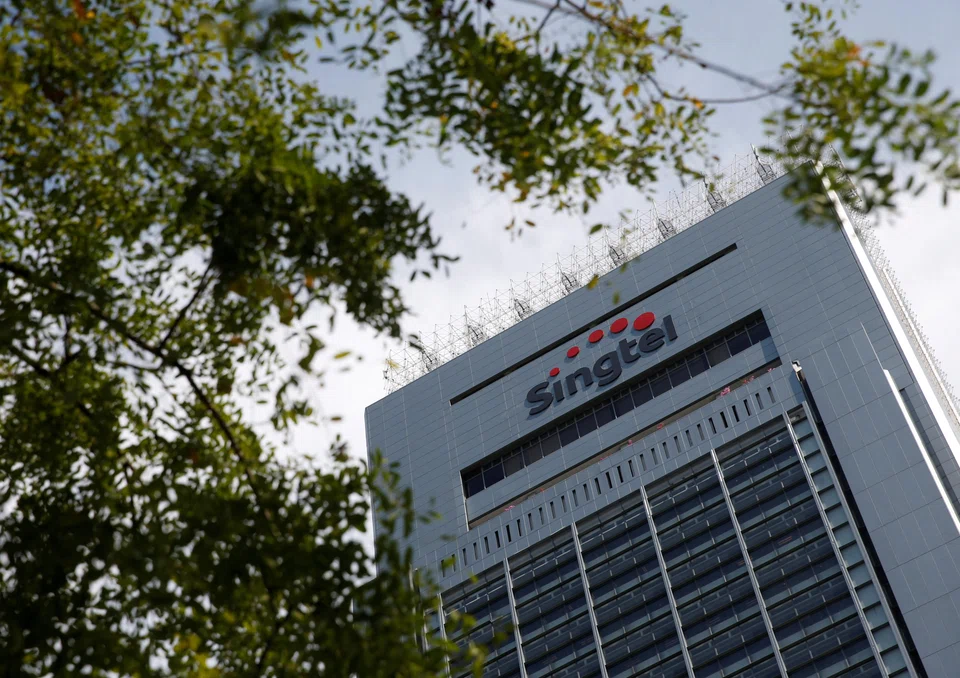
SINGTEL will progressively shut five of its older data centres in Singapore as it shifts its focus to building greener, artificial intelligence (AI) ready data centres under a new brand, Nxera, the telco announced on Wednesday (Jan 31).
Among the key strategic initiatives launching this effort is a partnership with US tech giant Nvidia, which now dominates the market for chips used in AI applications.
This collaboration will make Singtel the Nasdaq-listed company’s cloud partner in South-east Asia, said Bill Chang, the chief executive of Nxera and Singtel’s digital infraco unit.
Nvidia designs and sells graphic processor units (GPU), an essential part of AI infrastructure that dramatically speeds up computational processes for deep learning.
Under the partnership, Nvidia will prioritise shipment of its GPUs to Singtel in the next few months, as the telco works on building the data centres.
When these facilities are up and running, Singtel will offer GPU clusters to its customers to complement their cloud and AI needs, Chang said, speaking at the launch of the new brand.
Laying out the difference that the AI-ready data centres can bring, he said customers today may be able to buy GPUs, but are unable to scale their computing operations effectively, given that AI needs more and more capacity.
“Instead of customers building small mini-kitchens to host that, we came up with a central facility to be able to host this at scale. With the scale, we can invest in the necessary cooling technologies and analytics at scale to lower the costs,” he said.
Singtel will effectively be providing GPU as a service. When this happens, AI for enterprises will be “democratised”, with the scarce and expensive GPUs becoming available “for rent” in the purpose-built AI data centres, Chang stressed.
Cooling technologies are required, because AI GPUs consume a lot of power and generate immense heat per unit. Their servers will thus have to be hosted and managed well in environments that support high-power density, kitted with efficient cooling solutions.
To make this more environmentally friendly, Chang said Singtel will have its AI data centres run up to 100 kilowatt (kW) per rack. Today, most data centres still run in 8-to-12-kW-per-rack environments, he noted.
As part of this transition, Singtel will retire five of its seven existing data centres with a combined capacity of under 10 megawatts (MW) between April 2024 and 2027. It will then move its customers over to its first next-generation AI data centre in Tuas, which is slated to be operational by the first quarter of 2026.
While the five data centres have a power-usage effectiveness (PUE) of around 1.8 on average, the PUE at the new 58MW data centre, DC Tuas, will be 1.23. This puts it within the tightened government regulation for the setting up of data centres here – a minimum PUE of 1.3 is required.
The Tuas data centre’s 1.23 PUE is achieved by incorporating next-generation liquid cooled systems with a submarine cable landing station integrated with them. It was not feasible to retrofit the older data centres this way for cost reasons, Chang said.
This move alone will make Singtel’s overall data centre assets “the most efficient in the industry in this region”, he added.
The data centres Singtel builds from hereon will be “hyper-connected” with its fixed, mobile and subsea networks across this region, he said. For example, DC Tuas will have at least five submarine cables leading directly into it, with access to all domestic and international connectivity providers.
Besides Nvidia, Singtel has other partners from which to tap expertise on renewable energy. They include Gulf Energy, Medco Power, Sembcorp and TNB Renewables.
The partnerships underpin Singtel’s goal to achieve operational net-zero emissions by 2028.
Chang said Singtel will also work with technology partners, including promising local enterprises, to develop a sustainable data centre platform to power the AI future. The telco aims to achieve the lowest PUE with innovative direct-to-chip liquid and immersive cooling, and the highest efficiency in water usage.
These initiatives come as the company is scaling its regional data centre business, having gained a foothold in new markets beyond Singapore, including in Indonesia and Thailand, where work has started on the building of these next-generation AI-ready data centres.
Apart from DC Tuas, Singtel is involved in two other AI data centre projects, which are being executed with Indonesia’s Telkom and Medco Power, and Thailand’s Gulf Energy and Advanced Info Service.
These three data centres will increase Singtel’s pipeline capacity in Singapore to more than 200MW, from its current operational capacity of 62MW.
Singtel is also looking for a foothold in the Japanese market, Chang disclosed to The Business Times: “In South-east Asia, we’re looking at Malaysia, Vietnam. We’re considering Japan. We’ve got clients asking us there. At the moment, we’re just considering the interest in asking us to export our capabilities to them.”
TRENDING NOW

OCBC Q3 profit rises 3% to S$2.04 billion, slightly above expectations

Stocks to watch: OCBC, IHH Healthcare, FLCT, SingPost, Koh Brothers Eco Engineering

From legacy to launch: Francis Yeoh and Yeoh Pei Xien on family unity and YTL’s next‑gen ventures

Wealthy Indonesians snap up government bonds as yields near 8%: OCBC

