

Singtel shareholders should not count on a fat payout from plan to unlock asset value

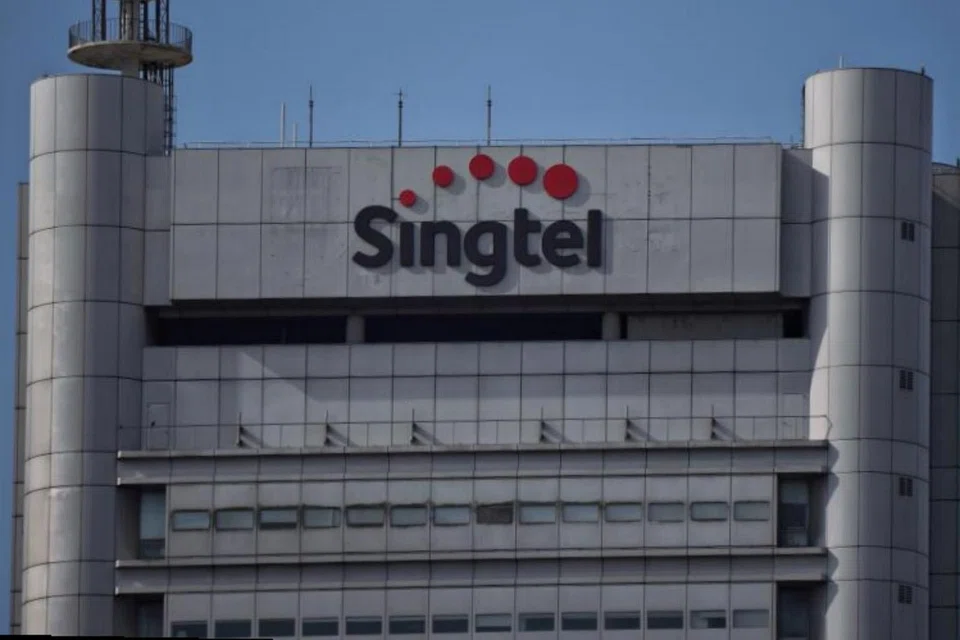
SINGTEL'S decision to "unlock value" from its regional infrastructure portfolio could mean a big shake-up of its legacy assets, consisting of towers, satellites, subsea cables and data centres. These assets, once Singtel's key differentiator, could now revive its stock. But investors should be aware of some caveats.
No big payout
First, shareholders should not expect a bonanza distribution on a par with that from the sale of a majority stake in NetLink Trust.
That's even though Moody's analysts said in a report that it would not "rule out the possibility of special dividends being paid on the back of a significant sale of assets".
In 2017, Singtel had paid out S$500 million of the S$2.3 billion in proceeds from the listing of an entity holding its fibre broadband assets. For shareholders, this worked out to a special dividend of S$0.03 per share.
This time around, the value of the assets available for sale is much higher. Although Singtel has not disclosed exactly what assets are on the table, chief financial officer Arthur Lang has said they are "in the range of mid-single digit billion". CGS-CIMB has interpreted this as somewhere from S$4 billion to S$6 billion.
But Mr Lang also stressed in a call with analysts that "this whole infrastructure exercise that we are working on is not just about divestment".
Rather, Singtel has said that it is "exploring options to leverage its infrastructure assets to unlock latent value and drive growth". Or, as Mr Lang put it: "It is not just simple passive assets and just kind of selling the whole thing, lock, stock and barrel."
Chances of a U-turn in Singtel's recent dividend frugality are thus slim. It pared its ordinary dividends to 7.5 Singapore cents a share in FY2021, from 12.25 cents the year before and 17.5 cents from FY2015 to FY2019.
For shareholders who have been disappointed by Singtel's shrinking dividend payouts, the idea that the current value unlocking exercise may not lead to an imminent bump in dividends might be a tough pill to swallow. But there is a silver lining.
Valuable assets
It is, in fact, promising that Singtel has indicated it will look beyond a simple sale-and-leaseback approach to monetising its infrastructure.
There is no shortage of investors looking to acquire telecoms-related assets today, and telcos all over the world are taking advantage of this demand to lighten their balance sheets.
On the local front, M1 inked a term sheet in end-April to set up a special purpose vehicle backed by Keppel DC Reit. The entity will own and operate M1's mobile, fixed and fibre assets.
There is also strong appetite for data centres, with Mapletree Industrial Trust, Ascendas Reit and Keppel DC Reit among the local buyers.
With greenfield supply in Singapore limited by a government land use moratorium, investors ought to welcome Singtel's data centre assets coming onto the market.
Singtel has disclosed that its data centres have an enterprise value (EV) of 24 times their earnings before interest, taxes, depreciation and amortisation (Ebitda), based on the historical five-year average for the peer group. Its towers have an EV-to-Ebitda ratio of 18 times. Its fibre assets are valued at a ratio of 11 times, and its satellites at nine times. (amendment note)
But those assets also hold significant value for the company's shareholders, even if that value is not currently reflected in Singtel's stock.
Telcos traditionally distinguished themselves by the quality and reliability of their network assets and, by extension, the network experience.
Consultancy Arthur D Little remarked in 2019 that asset-light telcos "have to decide how to slice and dice their assets to raise the necessary funds, without losing competitiveness or unnecessarily increasing the complexity of their operations".
Singtel deserves recognition for realising that such a divestment approach might earn short-term gains, but would produce only long-term pain for the entire business model.
Elaborating on Singtel's results and its new plan, Singtel's chief executive Yuen Kuan Moon floated the possibility of "different ownership structures" for certain assets, as well as "sustainable infrastructure". In the same briefings, Mr Lang cited data analytics as another area to consider.
Waiting for a clear strategy
Moving towards an asset-light model will require some thought.
Singtel must articulate, and demonstrate, a clear and sustainable strategy. At the same time, it will have to maintain the operational strength in its core services.
For instance, when Mr Yuen talks about "leveraging on next-generation green technologies", what specific infrastructure business opportunities does the C-suite have in mind?
Which of Singtel's infrastructure assets "do not align or may be less important to (its) vision", and which are sacrosanct? What is the rationale behind each assessment?
Also, what regulatory concerns could affect selling assets such as satellites and towers in Singapore, where policymakers take a hands-on view of critical infrastructure?
And how will recycled capital be efficiently channelled into Singtel's vision of creating "multi-local digital ecosystems" in key Asean markets?
Without concrete examples, Mr Yuen's talk of "national digicos" is just corporate gobbledygook.
As such, shareholders should press Singtel's management for a decisive timeline, and frequent updates, on the execution of the turnaround. READ MORE: Singtel's review of its digital units is long overdue
Amendment note: This article has been edited for clarity.
TRENDING NOW

World’s largest offshore wind platform by Seatrium consortium on track to be completed by 2028

Is stamp collecting enjoying an analogue revival or are its best days over?

GovTech retrenches another 38 staff in second round of layoffs
MBS adjusted property Ebitda falls 20.6% in Q3 with fewer high-roller visits, weaker hold

