Sinostar PEC raises the innovation bar
The latest technology will be used at its new petrochemical plant to produce high-quality polypropylene, used in high-value products.

Claudia Chong
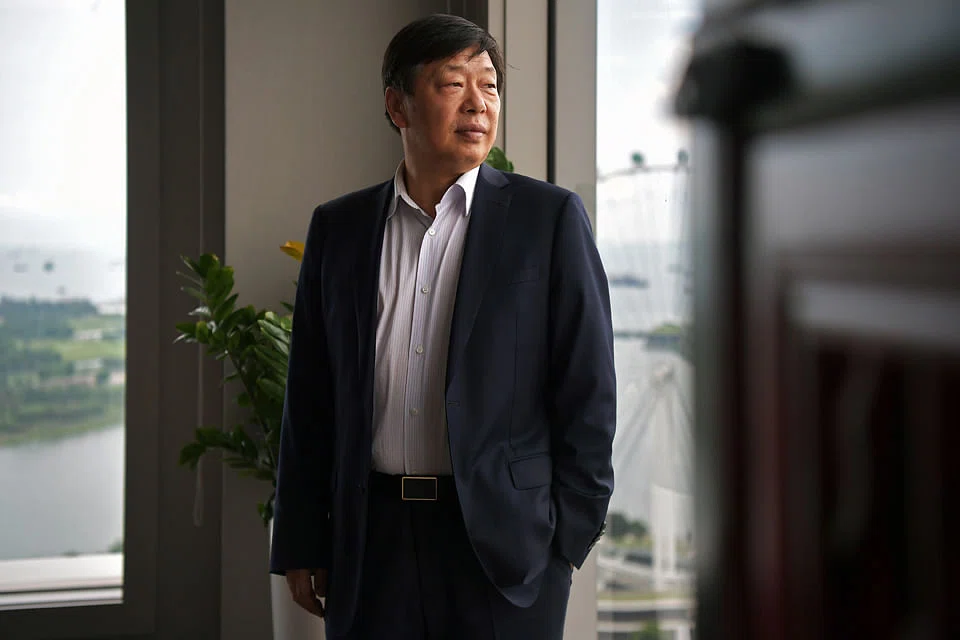
INNOVATIVE and high-quality development is of top priority this year for mainboard-listed Sinostar PEC Holdings, a producer and supplier of downstream petrochemical products in China.
The company is putting its money where its mouth is. By the fourth quarter of 2020, Sinostar's new 1.2 billion yuan (S$237 million) polypropylene production plant in Shandong would have been decked out with the latest-generation technology imported from Germany, called Spheripol.
The tech is expected to enhance product quality while making more efficient use of resources. Furthermore, the plant will boost the group's production capacity of polypropylene by five times to 250,000 tonnes per annum.
To Sinostar's non-executive chairman Li Xiang Ping, the investment in the new plant was vital. High-quality polypropylene is, after all, one of Sinostar's high-growth products.
"(It) has higher margins as it is widely used in high-value products such high-end medical equipment, automotive accessories, home appliances, electrical films, food packaging and other consumer products," said Mr Li.
Through the new plant, the group is also hoping to benefit from fully using the additional 90,000 tonnes of unprocessed propylene from recently-acquired subsidiary Dongming Qianhai. This will allow Sinostar to produce more polypropylene, which yields higher profits as compared to the sale of unprocessed propylene.
Although propylene and polypropylene formed only 34 per cent of total sales in 2018, it contributed to more than 80 per cent of gross profit. This is due to higher margins compared with that of processed liquefied petroleum gas (LPG), the group's other business segment.
Sinostar has an exclusive agreement with strategic partner Shandong Dongming Petrochem Holdings Group (Dongming Petrochem), of which Mr Li is chairman, to receive a supply of all its raw LPG till 2036. Dongming Petrochem is a petroleum refining corporation in China.
Sinostar started out as a listing vehicle when, in 2006, it acquired petrochemical producer Dongming Hengchang - a joint venture between Dongming Petrochem and its key management staff. It was listed on the Singapore Exchange in 2007, raising net proceeds of S$54.4 million from an initial public offering.
Mr Li said that the company intends to pour more resources into innovative R&D and management practices to tap China's petrochemical demand. For instance, Sinostar is looking to pursue "new ideas and introduce new minds to the table".
"Bringing in new blood instantly grants you a fresh set of eyes and ideas (since) someone may be looking at your problems for the very first time. It's tough in any industry to keep yourself distanced enough - from a business model or problem that you've spent years managing - to stay objective and see the big picture," said Mr Li.
"New blood can also challenge the group to think, act, innovate and decide differently. Even if the new hires don't work out, ultimately, you will learn something from their involvement, and that nugget of new information may be the spark needed to fuel your next big project."
Giving an outlook of the market, Mr Li acknowledged the slowdown of China's economic growth. He said: "We take a more disciplined approach to capacity additions, and we need to work much harder on core capabilities and our group's strategy. We are looking into advanced analytics to reach a new phase of productivity. We are also working on reinventing the interface (for) producing our final products."
In the first quarter ended March 31, 2019, a boost in topline led Sinostar to turn a net profit of 32.4 million yuan, up 52.4 per cent year-on-year. Revenue increased 85.4 per cent to 979.5 million yuan, mainly due to contribution from Dongming Qianhai, offset by a fall in sales from processed LPG, propylene, and logistics and transport-related services.
Due to the construction of the new polypropylene plant and the Dongming Qianhai acquisition, the group moved from a net cash position to a net debt position. Prior to the acquisition, the company had zero borrowings.
In particular, the purchase of a 70 per cent stake in Dongming Qianhai meant that Sinostar shouldered the firm's liabilities of one billion yuan, an internal loan from non-controlling interest (NCI) Dongming Petrochem.
As a result, the group's credit metrics look stretched. As at the end of the first quarter, Sinostar's cash and equivalents stood at 300.6 million yuan, 29.3 per cent of its short-term debt.
That said, the NCI has given a written undertaking not to recall the loan amounts early. If the debt has not been settled by the repayment due dates for the respective tranches of loans, the NCI will evaluate Dongming Qianhai's repayment ability and financial health to mutually agree on the next proposed repayment schedules.
The amount owed to the NCI breaks up into five tranches of 200 million yuan each. "We have progressively paid off the first two loans. We currently have both financing directly from our strategic partner, Dongming Petrochem and bank loans. We are using these two options and not ruling out the possibility of fundraising," said Mr Li. Sinostar has never raised money from shareholders.
Looking forward, Mr Li believes the biggest growth opportunity for the company is the globalisation and reform of the Chinese government's policies. "(It) will create more opportunities and fair competition for foreign enterprises and state-owned enterprises located in China, including (through) tax rebates, human resources, operations, environmental and other policies, that provide better opportunities for our business development," Mr Li said.
Sinostar has no near-term plan to diversify out of China, but is receptive to it. "There is a possibility that we may look at more acquisitions depending on circumstances," said Mr Li. The firm will carry out more research for developments in other regions, though it has not had any recent cross-border development.
"At this moment, we will continue to strengthen our leadership position in the China region within the nine provinces, namely Shandong, Hebei, Shanxi, Shaanxi, Sichuan, Henan, Hubei, Anhui and Zhejiang, as this is what we are most familiar with."