‘Size in banking is not everything’: UOB pursues capital-light strategy as Q2 profit rises; trims fee growth outlook
Lender declares a dividend of S$0.88 per share for the period

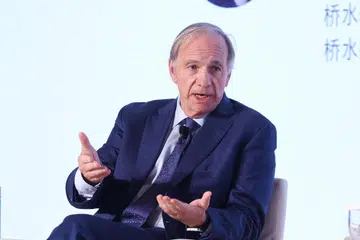
[SINGAPORE] UOB signalled that it will continue pruning non-core businesses as it reshapes itself into a more capital-light, advisory-led lender, with group chief executive Wee Ee Cheong saying that the bank will focus on businesses where it has a competitive advantage.
The comments came after UOB reported a 10 per cent rise in its second-quarter net profit and two days after announcing the S$555 million sale of its asset management arm to Allianz Global Investors.
“Size in banking is not everything,” Wee said at the bank’s second-quarter results briefing on Friday (Aug 7). “To be a good bank, you have to be relevant.”
This shift comes as wealth management becomes an increasingly important growth driver for UOB, underpinning its push towards higher-return, capital-light businesses.
For Q2 ended Jun 30, 2026, UOB posted a 10 per cent rise in net profit to S$1.48 billion amid record wealth fees. This beat the S$1.45 billion earnings forecast in a Bloomberg estimate by five analysts.
Net interest income for the quarter fell 2 per cent to S$2.3 billion, reflecting low net interest margins in the prevailing rate environment.
Net interest margin (NIM) was down 17 basis points to 1.74 per cent for the quarter, from 1.91 per cent in the previous corresponding period.
Net fee income increased 5 per cent to S$665 million, supported by strong growth in wealth and fund management activities. Other non-interest income rose 28 per cent to S$632 million, benefiting from non-recurring gains from asset divestments.
The lender declared a dividend of S$0.88 per share, compared with S$1.10 per share a year ago, which comprised an interim ordinary dividend of S$0.85 and a special dividend of S$0.25.
H1 earnings per share came in at S$3.46, up from S$3.33 previously.
Wealth gains
To accelerate wealth growth, Wee sees “significant opportunities” across its SME and business owner sectors.
He noted that the bank’s competitive advantage lies in its regional wholesale banking franchise, which will “double up” to complement its private banking business.
“Given our footprint, all these foreign direct investments, when they come to Singapore, they will see UOB as the most comprehensive,” he pointed out. “When we support them in their business… they will give us a piece of the wealth business.”
The bank is still targeting to double its wealth fees, which was what drove its partnership with Allianz Global Investors.
UOB had said that this will expand its investment solutions and open-architecture offerings for clients.
The sale of such non-core assets is reviewed by the bank regularly and depends on specific opportunities instead of a broader programme in the bank, noted group chief financial officer Leong Yung Chee.
Wee added: “That is also our strength – a lot of other banks don’t even have non-core (assets) to sell.”
It also continues to invest in talent, platform and products while expanding its North Asia presence to support regional wealth flow.
Wee said that he would rather focus the bank’s resources on new emerging infrastructure and the rising need to protect banking clients from scams, than investing in fund manufacturing, for example, which requires scale to grow meaningfully.
“We just want to focus on what we think we can do better,” Wee added. “Hopefully, in the next few years, we will start to see UOB navigate into a different shape of bank.”
More cautious outlook
Nevertheless, the bank cut fee income guidance for 2026 to low single-digit growth, from a high single-digit growth.
Leong said that some of its sizeable fee deals in the pipeline have been pushed into the second half of the year.
Outlook for its credit card fees, which roughly account for about a third of UOB’s fee income, has also shifted.
A change in spending patterns has resulted in lower interchange fees in the buckets which consumer spend on. Meanwhile, UOB is seeing higher annual retention costs as people travel more, as well as higher scheme fees.
Outlook for its other businesses were unchanged. The bank is looking at low single-digit growth for loans, a full-year NIM of 1.75 to 1.8 per cent, a low single-digit increase in operating cost and total credit costs at around 25 to 30 bps.
In comparison, DBS – which reported Q2 results on Thursday – raised its full year 2026 net profit guidance to above FY2025 levels. OCBC, which posted Q2 results on Friday, raised loan growth outlook as well.
Following the results, shares of UOB fell as much as 2.2 per cent, before paring some losses to close 0.6 per cent lower at S$43.30 on Friday.
In Q2, UOB also added S$902 million in new non-performing assets during Q2, due to a single real estate client in the Greater China region.
Leong said that the bank had been monitoring the client closely, and had taken it into account in the provisions it set aside in the third quarter of 2025.
The non-performing loan ratio stood at 1.6 per cent for the quarter, unchanged from a year earlier.
Human touch
With artificial intelligence, Leong noted that it is no longer just a buzzword and has “become something very ingrained in the bank”. Copilot is available to more than 30,000 of its staff across the region, with more than 400,000 prompts per month.
UOB is working with an external auditor to structure and model a framework by the end of the year, such that it can report its financial contributions regularly going forward. “But more important to us is the human factor,” Wee noted.
Wee said that younger bankers tend to be highly proficient with technology, but may be lacking in EQ, or emotional intelligence.
“They have good IQ… but they don’t have the wisdom (that experience gives), they don’t have the empathy, they don’t know how to cross-sell,” he explained, adding that the bank intends to hire and train young graduates as well as existing staff to be “smarter than machines”.
“Banking is a people business,” Wee added.