Sizing up the latest privatisation offers
The offers for Sin Ghee Huat and Top Global seem to undervalue both companies, but minorities of the former have more reason to hold out

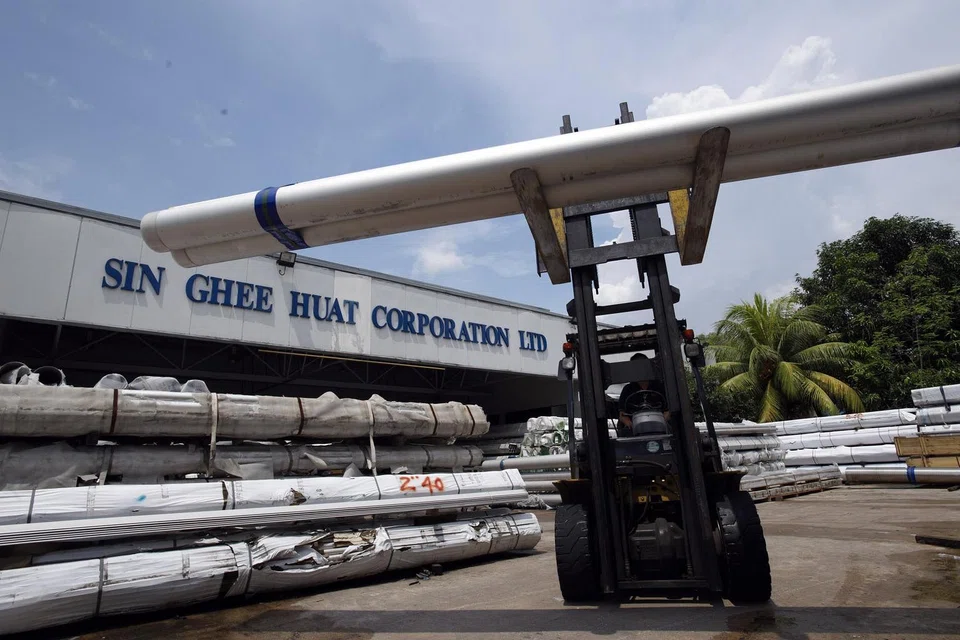
THE seemingly unending Groundhog Day of lowball privatisation offers for locally listed companies continued this past week - with the latest candi-dates being stainless steel products distributor Sin Ghee Huat and real estate player Top Global.
Like most such transactions, these latest offers are from the respective major shareholders of the two companies. The presented rationale for both deals is that minority investors will be able to cash out at prices that are higher than the recent market prices of the two stocks, sans brokerage charges.
Yet, the offers are anything but generous. Both are plainly opportunistic, coming after a period of poor performance by the companies and just as the post-Covid-19 recovery is gathering steam. More importantly, both deals seem to significantly undervalue the assets and businesses held by the two companies.
Given our local conventions and expectations of independent directors, it seems unlikely that any action will be taken to obtain better terms for minority investors - such as courting alternative acquirers in the case of Sin Ghee Huat, or exploring the sale of assets at Top Global.
So, what should minority investors of the two companies do?
In both cases, the offerors have said the offer prices are final and will not be revised. So, investors have nothing to gain by mounting a resistance in the hope of the offerors sweetening their deals.
All that really matters is whether investors believe Sin Ghee Huat and Top Global will be able to quickly improve their financial performance and drive their share prices above the offer prices if they remain in the public market.
My own view is that it is only minority shareholders of Sin Ghee Huat who should really fight to keep their company from being taken private. Indeed, investors who do not own shares in Sin Ghee Huat may well be tempted to jump in too.
The stock is still trading more than 8 per cent below its offer price. And even if the offeror fails to take the company private, the stock could perform well over the longer term as the post-Covid-19 recovery gets underway.
Post-Covid turnaround?
The most striking thing about Sin Ghee Huat is perhaps that its stock has not performed all that poorly over the past decade, despite the company being heavily exposed to customers in beleaguered industries - such as marine and shipbuilding as well as energy and petrochemicals.
With a strong balance sheet, Sin Ghee Huat opted to keep paying dividends even as its profitability waned - including during a particularly tough period from 2016 to 2018, when it was barely profitable.
For the 10-year period up to end-2019, before Covid-19 came along, shares in Sin Ghee Huat delivered a total return of 42.7 per cent (on a dividends reinvested basis). The Straits Times Index returned 54.3 per cent over the same period.
Things seemed to come to a head last year though. For the financial year ended June 30, 2020, the company reported a 25 per cent drop in revenue to S$37.5 million and a net loss of S$4.2 million versus a net profit of S$2.4 million the previous year. No dividend was declared for the fiscal year.
There was little improvement in H1 FY21. For the six-month period to Dec 31, revenue fell 38 per cent year-on-year to S$13.3 million, while earnings dropped 72 per cent to less than S$0.1 million.
Even in the wake of this profitability crunch, however, the offer for Sin Ghee Huat seems inadequate. Under the deal, a company called HHH Co will pay S$0.27 per share for Sin Ghee Huat. This values the latter at nearly S$60 million.
While the offer price is 25.6 per cent above the market price of Sin Ghee Huat's shares just before the offer was announced, it is 25 per cent less than the listed company's net asset value (NAV) of 36 cents per share as at Dec 31.
In fact, the offer price values Sin Ghee Huat at slightly less than its net current assets (that is, current assets minus total liabilities) of nearly S$60.2 million as at Dec 31. In effect, the offer price ascribes no value to the company's property, plant and equipment.
Investors convinced that Sin Ghee Huat's profitability will soon improve with a pick up in sectors such shipbuilding and oil and gas will probably be reluctant to accept the offer. If anything, they may be inclined to purchase more shares in the market.
Sin Ghee Huat closed at S$0.22 on Friday.
HHH Co is owned by siblings Low Ah Hoo and Low Chui Heng. The latter is on the board of Sin Ghee Huat. HHH Co already owns about 20.16 per cent of Sin Ghee Huat, and has secured undertakings from parties holding a further 47.33 per cent of the listed company to accept the offer.
Top Global uncertainty
Much like Sin Ghee Huat, Top Global's market valuation has been depressed by weak profitability over the last few years.
For FY2020 ended Dec 31, in the wake of Covid-19, the company reported revenue of S$40.7 million, down 30.3 per cent against the previous year, and the lowest in four years. The company reported a net loss of S$16 million for the year, versus a net profit of S$5.6 million for FY2019.
Top Global's NAV stood at slightly over S$0.73 per share at the end of 2020. This was nearly 10 per cent lower than its NAV per share at the end of 2019, and more than 15 per lower than its NAV at the end of 2016.
Yet, the likely drivers of a turnaround in profitability at Top Global are harder to discern than at Sin Ghee Huat. Moreover, the controlling shareholder of Top Global already has an overwhelming stake in the company, which could help its offer succeed despite the uncompelling terms.
A privately held company belonging to Sukmawati Widjaja called SW Investment Holding is offering to pay S$0.39 per share for Top Global, valuing the company at more than S$125 million.
This offer price is a nearly 47 per cent discount to Top Global's NAV per share as at Dec 31. But it is also 122.9 per cent more than Top Global's market price just before Ms Widjaja bought an 8.1 per cent block of the company's shares last month in an off-market transaction at S$0.39 apiece.
Ms Widjaja and her son Hano Maeloa now hold a combined 86.96 per cent stake in Top Global. They have provided an irrevocable undertaking to accept the offer and waive their rights to any consideration payable.
SW Investment does not currently own any shares in Top Global. Its offer is conditional upon it obtaining not less than 90 per cent of all Top Global's shares.
The offeror has also indicated that if it obtains more than 90 per cent of Top Global's shares (other than those it already holds), it will exercise its rights to compulsorily acquire the rest of the company's shares.
Top Global closed at S$0.385 on Friday.
- For more analysis and insight on market trends and corporate issues, listen to the Mark To Market podcast at bt.sg/mark2mkt