

SK Hynix debut is a bet that AI breaks boom-and-bust chip cycle
It raised US$26.5b with its offering, and much of that is going toward expanding chip manufacturing
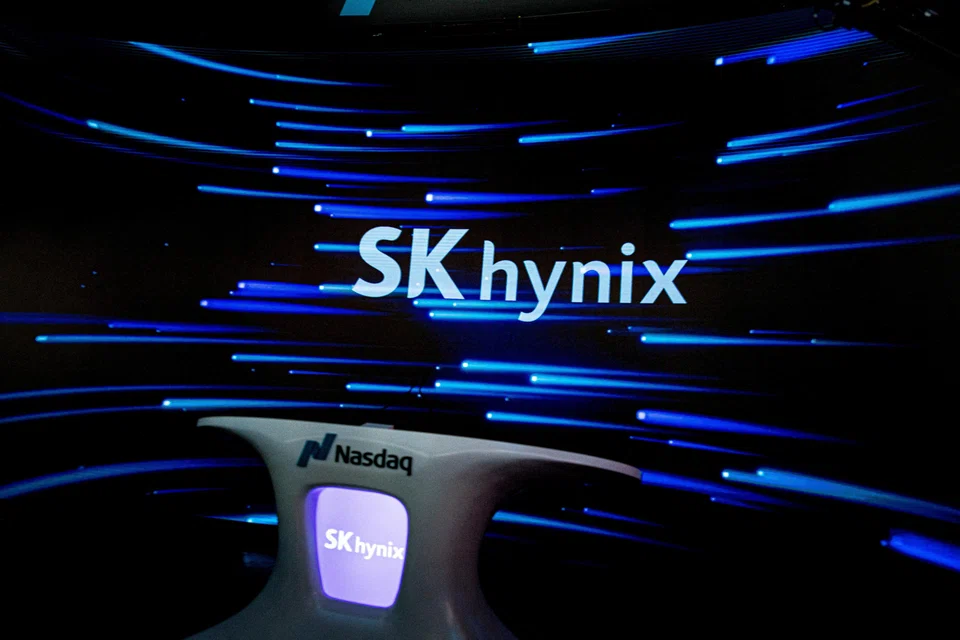
SOUTH Korean memory chipmaker SK Hynix just pulled off the largest public listing by a foreign company in US market history. Shares soared 13 per cent on their first day of trading.
Behind this historic debut is a simple bet: that the artificial intelligence boom has fundamentally reshaped the decades-long boom-and-bust cycle that’s defined the memory-chip business for good. SK Hynix raised US$26.5 billion with its American depositary receipt offering, and much of that is going towards expanding chip manufacturing – a move the entire industry had for years resisted after being burned by past supply gluts.
“We’ve always been a cyclical industry, so there had been prior ups and downs,” SK Hynix CEO Kwak Noh-Jung told Bloomberg. But “things have clearly changed”, he added. The ChatGPT era has brought about persistent memory supply shortages that are rippling across supply chains and raising the prices of everything from iPads to Xbox consoles.
Now, customers come to SK Hynix asking for long-term supply agreements, Kwak said. “They believe that the shortage situation will last for longer,” he said, later predicting that the deficit may extend beyond 2030.
Trillions of dollars in data centre investment plans, financed by seemingly every corner of the financial markets from private credit to corporate bonds, hinge on this outlook. Alphabet, Amazon.com, Meta Platforms, Microsoft and Oracle alone have collectively added some US$350 billion in debt in the past five years to amass the hardware fuelling their AI ambitions.
Plenty are betting against all the hype. Big names on Wall Street including Michael Burry of “Big Short” fame and Bridgewater Associates founder Ray Dalio have warned of an AI bubble that will eventually burst. Even the largest, most successful AI developers have yet to prove that their models and tools can turn profits.
For now, SK Hynix and its memory-chip peers – Samsung Electronics and Micron Technology – are riding high as major beneficiaries of the AI spending binge. It’s stoked the appetite for both conventional memory and a newer variety called high-bandwidth memory, or HBM, that works with AI systems. “I have some confidence that the demand will grow and our supply capacity is never going to catch up,” SK Group chairman Chey Tae-won said in a Bloomberg Television interview.
Chey, whose conglomerate controls SK Hynix, said supply and demand for memory chips may not normalise until the world achieves artificial general intelligence, a term loosely defined as the point at which AI systems are generally smarter than humans. “Until then,” he said, “we need a lot of memory.”
If the AI buildout is anything like the expansion of the Internet, it will last decades, according to Kwak. “We spent almost 30 years finishing the completion of the Internet infrastructure,” Kwak said. “When it comes to AI, I believe that the AI industry size is much, much larger than the Internet.”
The US stock offering capped a remarkable comeback story for SK Hynix, which was born from a creditor-led bailout in South Korea of its two progenitors – LG Semiconductor and Hyundai Electronics – and suffered for years from painful boom-and-bust cycles.
Chey said SK Hynix is now securing multiyear agreements with customers, helping ensure more steady demand. “It’s not a cyclical business any more,” Chey said. Even in a downturn, the long-term agreements help maintain volumes and memory prices, he said, “so that actually gives us a different moment.”
The chipmaker is also considering new ways of selling access to its technology, including a concept called “memory as a service”, Chey said. He suggested that customers could rent usage rather than purchasing the actual semiconductors, without going into details on a plan.
Kwak said that part of the rationale for the US offering was indeed to more closely collaborate with AI customers who are all asking for different types of products and designs, further bolstering demand for its chips.
Asked whether SK Hynix would consider bringing memory manufacturing to the US, he said he wouldn’t rule out the idea. But sites would have to meet the company’s criteria for electricity, water and talent.
The broader SK Group is already putting more than US$35 billion into the US, Chey said on Friday. “My plan is at a much bigger number,” he said, “much, much, much bigger than US$35 billion.”
He’s also open to issuing more SK Hynix shares in the US. But first, Chey said, the company needs to deliver strong returns to its newly minted investors.
“Once we have a better return, then there’s more demand,” he said. “The first thing we have to do is keep the stock price stable, and then hopefully in the long run, we can have the upside potential.” BLOOMBERG
Decoding Asia newsletter: your guide to navigating Asia in a new global order. Sign up here to get Decoding Asia newsletter. Delivered to your inbox. Free.
Share with us your feedback on BT's products and services






