

Small-cap Singapore stocks lag large-cap counterparts as high interest rates take their toll

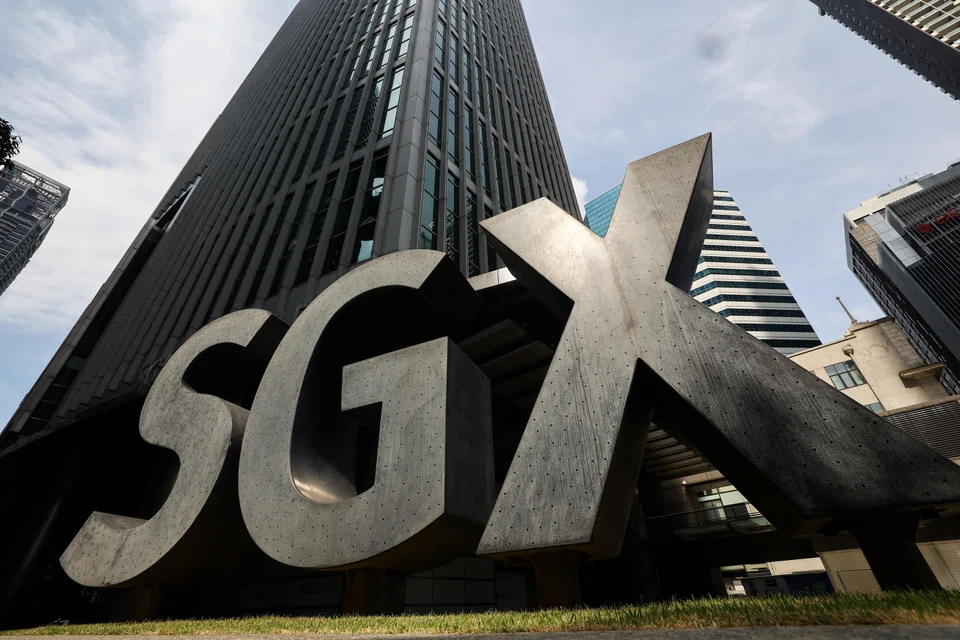
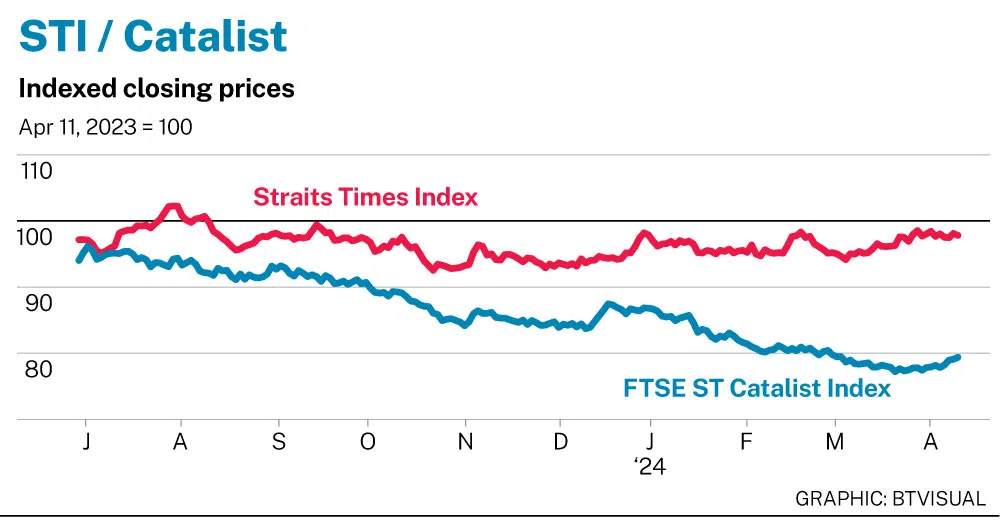
SINGAPORE-LISTED companies with small market capitalisation have been having their worst run against large caps in the last one year, with the gap between both widening since the second half of 2023.
High interest rates have exacerbated the flailing performance of the Catalist board, the home of small-cap stocks, while boosting the performance of banks on the Straits Times Index (STI), which represents the largest listcos, said analysts.
Since July last year, the FTSE ST Catalist Index has fallen by about 19 per cent.
Meanwhile, the STI, which tracks the performance of the top 30 companies on the Singapore Exchange (SGX), has risen 1 per cent over the same period.
Bank boost, small-cap slaughter
Analysts told The Business Times that the STI’s performance has been buoyed by local banks, which have seen a revenue boost due to higher borrowing rates.
“Because of the high interest rate environment, the banks are making a lot more money through their loans. Their margins have expanded, and the banks are making record profits,” said Jarick Seet, an analyst with Maybank Securities Singapore.
All three local banks – DBS , OCBC and UOB – posted record full-year net profits for FY2023.
However, the same economic conditions, coupled with the Catalist’s already poor performance and changes to the investor landscape in recent years, have weighed small caps down even further, said analysts.
Paul Chew, head of research at Phillip Securities Research, said that small caps are usually more sensitive to economic cycles due to the smaller size of their earnings.
“If a small company makes S$2 million in net profit, even adding an additional admin staff or single bad debt of S$50,000 per annum can knock earnings down in percentage terms,” he explained.
Terence Wong, chief executive officer of fund management company Azure Capital, said the high-interest rate environment has merely exacerbated the performance of Catalist, which has already been languishing for the past decade.
He pointed out that Catalist had already been suffering from a lack of investor interest and liquidity. This comes after episodes such as the collapse of Chinese companies listed on SGX – also known as S-chips – around 2008 onwards and the penny-stock scandal involving companies such as Blumont Group in 2013 drove investors away.
Investors have since turned to the big-cap stocks such as blue chips which are “relatively safe” and provide growth over time.
In addition, e-trading platforms have also proliferated in the last two to three years, making it easier for investors here to invest in other small-cap alternatives, such as tech companies in the US which offer “supercharged returns”, said Wong.
The rising popularity of low-cost passive funds and exchange-traded funds over the last few years, both locally and globally, have also resulted in investors putting their funds towards big rather than small caps, added analysts.
The situation is worse in Singapore as overseas companies are more attractive given their growth potential, particularly the technology sector in the US.
Investors are also more familiar with these tech stocks, which have become household names, as compared to “esoteric” small caps on the Catalist, said Chew of Phillip Securities Research.
Outlook
The widening gap between small- and big-cap stocks on the local bourse mirrors a global trend.
The US’ small-cap index, Russell 2000, has gone up by 24 per cent since 2020, while the S&P 500, which tracks the largest companies in the US, has risen more than 60 per cent due to the growth of big tech stocks.
However, analysts were mixed on how far Singapore’s market reflected the global trend, and whether the gap between the Catalist and STI would persist.
Seet of Maybank Securities felt that the divergence between small and big caps “is not reflective of the future”.
He said that in general, it is not sustainable for a few key stocks to be valued highly while the rest of the stocks are trading at below valuation due to the popularity of passive investing.
In the case of Singapore, however, it would be hard to predict if the divergence between Catalist and STI will continue to widen, said Seet, adding that it would depend on the performance of STI components.
However, Azure Capital’s Wong was of the view that small caps in Singapore will continue to fare poorly.
He said: “In the US, it is because the big guys are doing so well that (small caps) have sort of hollowed out. But investors here have lost faith in the small guys over the years.”
TRENDING NOW

Grab CEO’s wife Chloe Tong on life with Anthony Tan and finding her purpose

What role can Japan play in Asean’s future?

He built the Vingroup empire. Now South-east Asia’s richest man is handing some key roles to his sons

Asean’s challenge is to become resilient against global geopolitics: former Indonesia trade minister

