Smaller family offices may face ‘onerous’ challenges due to proposed tweaks to GIP: observers
Singapore’s small market could present diversification challenges, they note

WEALTHY individuals who want to set up a family office (FO) in Singapore through the Global Investor Programme (GIP) may face more challenges, given that the scheme may be tweaked in a bid to revitalise the local stock market.
Market observers said that families may have difficulty in diversifying their portfolios in the Republic’s small market, even as they expect the proposed moves to be, overall, a step in the right direction.
The Monetary Authority of Singapore (MAS) recently announced adjustments to the GIP, which grants permanent residency to eligible foreign investors, among other moves to boost the Singapore equities market.
New applicants under the “family office” option of the GIP must now allocate at least S$50 million of their assets under management (AUM) to equities – excluding real estate investment trusts (Reits) and business trusts – listed on Singapore-approved exchanges.
Previously, this capital could be spread across equities, Reits, private equity in Singapore-based businesses, and other asset classes.
Manish Tibrewal, co-founder of multi-FO Farro Capital, expects that the change will be “onerous” for those that want to set up in Singapore via the GIP route, especially for those whose total AUM are at or just above the minimum threshold of S$200 million.
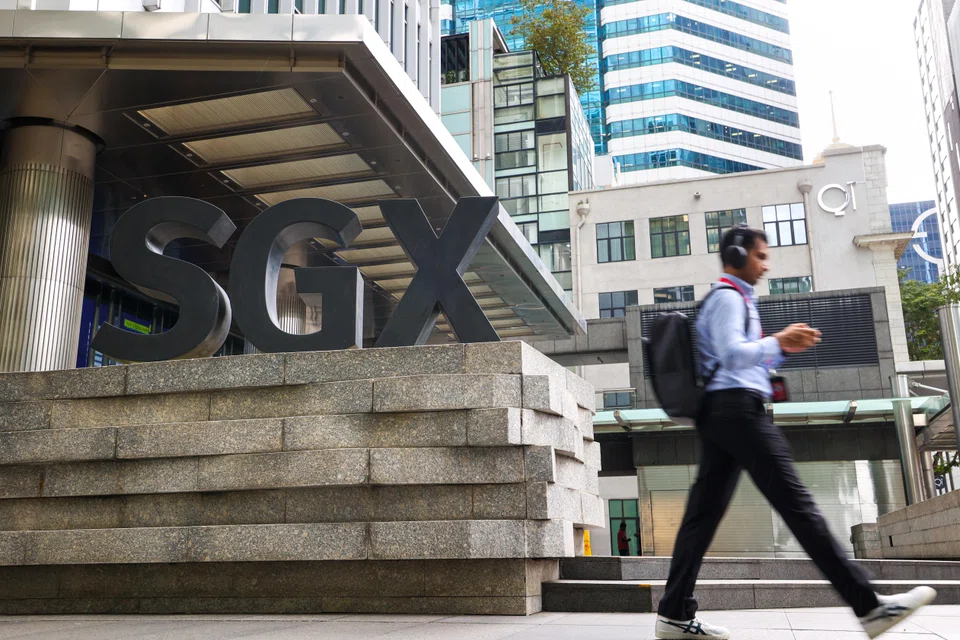
The total market capitalisation of companies on the Singapore Exchange (SGX) is only around US$650 billion, with just 10 companies forming half of that value, Tibrewal noted.
Singapore also lacks sizeable companies in several high-growth sectors that investors are interested in, such as technology and healthcare, he said.
Even though Tibrewal has noted an increasing tilt towards encouraging investments in the Republic, MAS’ move was a surprise as it came shortly after major changes to the tax incentives for single family offices (SFOs), announced in 2023.
Changes to the GIP were also a surprise to Kevin Teng, chief executive of multi-FO Wrise Private Singapore, who similarly noted diversification challenges.
Teng said that his clients had been prepared for some changes, ever since the government indicated that it would take a holistic approach to boost Singapore’s capital markets.
Some clients, who entered Singapore prior to MAS’ proposal, appreciate the added flexibility in diversifying their portfolio.
But for those who are still considering setting up a FO, the new requirement may feel like a higher barrier to entry, he noted.
Lim Kexin, partner specialising in tax and entrepreneurial and private business at PwC Singapore, said that some potential GIP applicants are also apprehensive as the funds have to be locked in listed equities for an extended period, hindering country portfolio diversification.
The S$50 million has to be invested in Singapore-listed equities for at least five years.
“FOs, like any portfolio investors, often value flexibility and the ability to rebalance their portfolios to achieve diversification and investment risk management, especially given the dynamic nature of financial markets,” pointed out Lim.
She added that it was unsurprising that the government is trying to leverage FOs, however, given that they have increasingly become key financial market players through their deployment of strategic and patient capital.
The right direction?
Market observers said that the moves are still a step in the right direction to boost the markets, even though they may not be a game changer just yet.
Wrise’s Teng noted that the GIP tweaks are a direct effort to revive the SGX, and that a S$5 billion injection into the Equity Market Development Programme marks a positive first step.
Shirley Crystal Chua, founder and group CEO of multi-FO Golden Equator Wealth, is also optimistic about the adjustments, since the required percentage is significant but not excessive. “And hopefully, if all the collective measures and changes implemented are effective, there will be renewed vibrancy in the market that (will) make it strategically and commercially sensible for us to invest,” she said.
Meanwhile, the tweaks are unlikely to deter GIP applications in general, noted PwC’s Lim.
Only the SFO option is affected by the change – applicants have the option to invest via active business or making an investment in GIP funds, she said. The various measures of the MAS review group and recent Budget 2025 initiatives should also offer more investment options for GIP applicants to consider, she added.
Annually, an average of 60 investors are accorded Singapore permanent residency through the GIP.
Furthermore, families are not restricted to just GIP-linked SFOs in order to apply to become permanent residents (PRs), Lim said. They may also set up SFOs in Singapore staffed by locally hired professionals without a need for their principals to be PRs, she noted.
But, said Golden Equator’s Chua, to fundamentally alter the attractiveness of the Republic remains “very challenging”.
Liquidity on the SGX remains concentrated in a handful of blue-chip stocks, while mid and small-cap stocks struggle with weak trading activity.
If the market does not pick up even with the changes, new entrants will likely do just the bare minimum to fulfil requirements and invest in a few blue-chip stocks, added Chua. “We are moving in the right direction, but nothing so far is a game changer. We do not believe there will be a single elixir that seals the deal.”