

Soup Restaurant, Jumbo, ABR show financial strength in weathering pandemic

Singapore
RESTAURANTS here had a tough time last year with ever-changing dining restrictions that oscillated between tightening and easing.
Now that such restrictions look set to ease more permanently, there may be some opportunities for investors to ride a recovery in the appetite for dining out. But care needs to be taken to avoid stocks that are over-leveraged.
Figures from the Department of Statistics Singapore showed that monthly sales of restaurants had declined more often than they picked up in 2021. On a year-on-year basis, sales fell in 7 months - mostly between June and November. On a month-on-month basis, meanwhile, sales declined in 5 months.
Troubles at No Signboard
No Signboard Holdings has been one casualty of this difficult period. The company operates the No Signboard Seafood chain of restaurants as well as several other food and beverage (F&B) brands such as Little Sheep Hot Pot and Mom's Touch.
On Feb 9, No Signboard informed shareholders that a subsidiary, Hawker QSR, intended to appoint a provisional liquidator as its liabilities have made it impossible to continue in business.
No Signboard has also received letters of demand from landlords who are owed over S$176,000 by Hawker QSR.
Trading in the counter was halted on Jan 19 and suspended on Jan 24. No Signboard's board said the company cannot demonstrate it is able to continue as a going concern, after a private share placement that would have given it much-need liquidity failed to materialise.
For investors who had been closely following No Signboard's fortunes, the company's troubles may not be surprising. No Signboard was not profitable even before Covid emerged. For FY2019 ended Sep 30, it reported negative operating cash flow as it expanded rapidly.
Although Covid-related restrictions are now easing, it may take some time for the F&B industry to reap the benefits of looser regulations. It is also tough to predict consumer behaviour: consumers may opt to reduce their spending locally, for instance, as they splurge on overseas travel after being forced to stay home for so long.
In the face of this uncertainty, investors looking to buy into a rebound should scrutinise the metrics of the F&B groups.
Analysing the data
One useful metric is the Altman Z-score. The higher the score, the lower the probability of bankruptcy. A score lower than 1.8 is said to predict with 72 per cent accuracy a bankruptcy event within 2 years.
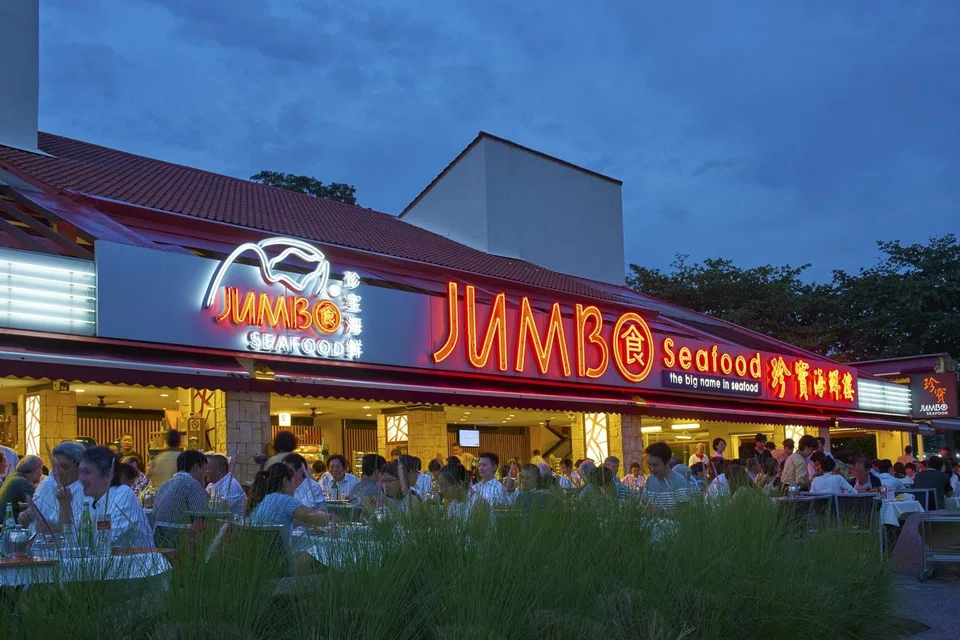
Based on calculations performed by The Business Times using their latest reported financials, Soup Restaurant, Jumbo Group and ABR Holdings had Altman-Z scores ranging between 2.2 and 3.8.
Japan Foods, RE&S Holdings, Tung Lok, Katrina Group, Sakae Holdings and No Signboard Holdings, however, all scored lower than 1.8.
In assessing the ability of a company to meet its short-term obligations with its most liquid assets, excluding inventory, investors should also look for a quick ratio of 1 or above. Restaurants' inventory usually consists of perishable goods and these are unlikely to fetch much during a liquidity crunch.
Soup Restaurant, Jumbo Group, Japan Foods and ABR each had a quick ratio of over 1; Sakae and Katrina had a quick ratio of 0.1 and 0.4, respectively, the lowest among listed peers analysed.
Another metric, working capital, if negative, would mean the company's current assets are inadequate to pay for current liabilities. This would usually result in its ability to operate as a going concern being questioned.
Sakae, RE&S and Katrina had in their financial statements also shown current liabilities exceeding current assets.
Katrina had tried to allay investor concerns by saying it was confident it could generate sufficient cash flow, tap available banking facilities and enjoy continued credit terms from suppliers.
As for Sakae, it stated it had taken bank borrowings on a short-term basis as part of its cash management strategy to enjoy the flexibility and lower interest rates. The borrowings reflected as current liabilities were fully secured against its leasehold building in Singapore.
A final measure is the ratio of net debt to equity, which is a measure of a company's ability to meet long-term obligations. Soup Restaurant had more than adequate cash to cover its lease liabilities - without any bank borrowings recorded in its books as at December 2021. ABR was also in a net cash position.
No Signboard had a ratio of 20.4 while Katrina had negative equity. The rest had ratios ranging between 0.4 and 1.7.






