South-east Asia’s tech giants set for steady growth despite post-Covid challenges
Total addressable market across e-commerce and on-demand services is projected to increase at a compounded annual growth rate of 15% to reach US$416 billion by 2030

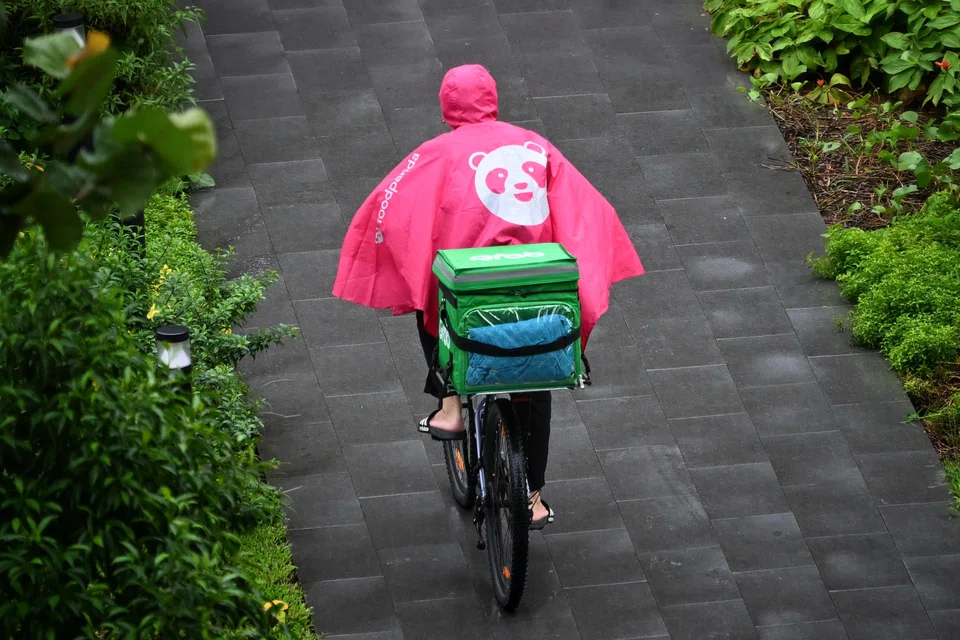
SOUTH-EAST Asia’s tech giants such as Grab and Sea are poised to continue with steady growth ahead, analysts say, even as the Covid-19 pandemic-led surge in digitalisation subsides.
Maybank Research noted that the total addressable market (TAM) across e-commerce and on-demand services such as food delivery and ride hailing in the region is projected to increase at a compounded annual growth rate of 15 per cent to reach US$416 billion by 2030.
The engines for regional growth in gross merchandise value – or the total value of merchandise sold on a platform – include a growing middle class and behavioural shifts, market watchers pointed out.
“Currently, we estimate about 200 million households in the region, of which about only 20 to 30 per cent actively use some sort of e-commerce or food delivery platform,” said Jonathan Woo, senior research analyst, Phillip Securities Research.
Even accounting for low per capita income in South-east Asia, Maybank Research estimated that penetration levels of the higher end of the economic strata in the region are still half of more developed markets such as the United States and China.
“We expect e-commerce and on-demand gross merchandise value to grow by double-digit levels in evolved markets like the US and China, suggesting an even bigger growth impetus in Asean,” Maybank Research analysts Hussaini Saifee and Etta Rusdiana Putra said in a recent report.
Inflation woes
Market watchers, however, warn that take rates – the fees or commissions charged by platforms for their services – are unlikely to be raised on the food delivery front, with customers already citing affordability and price inflation as key concerns.
A consumer survey by Maybank Research found that some 53 per cent of respondents did not use online food delivery services as they found it expensive. Some 75 per cent who did use such services said that they were cutting down due to price increases. Respondents who were ordering online food delivery daily also expected to reduce their frequency of ordering.
This makes increasing take rates from food delivery harder, noted Phillip Securities’ Woo. As part of efforts to improve monetisation, take rates from advertising will likely be increased instead, he said.
“By our estimates, food delivery take rates within South-east Asia are hovering around 20 per cent, while take rates for Uber Eats and DoorDash in North America are only around 15 per cent,” he said.
The way Woo sees it, the biggest challenge facing Grab’s food delivery service now is in improving profitability while decreasing its take rate.
It is likely that Grab has to improve overall logistics to reduce delivery times and inventory costs, he added.
With monetisation from food delivery likely to be capped, the tech giants are expected to turn to e-commerce to provide some upside.
E-commerce opportunities
DBS Group Research analyst Sachin Mittal reckoned that there has been a shift towards rationalisation in the e-commerce sector, even in competitive markets such as Indonesia.
He noted there have been efforts to raise the take rate as e-commerce players move towards profitability.
Mittal said that the recent merger of TikTok Shop and Tokopedia has made TikTok Shop less aggressive.
Having a large Indonesian player in its fold makes TikTok Shop part of a duopoly with Shopee in the Indonesian market.
“TikTok (was) aggressive for a reason, because there was a big local player Tokopedia in Indonesia. So now that they have acquired the player, there is no reason to be aggressive,” he added.
The impact of TikTok Shop on traditional e-commerce platforms such as Shopee has been felt, as users shifted to impulse-buying from watching content.
A doubling of sales and marketing spending since last year has helped Shopee keep competition under control, explained Phillip Securities analyst Helena Wang.
“The key question is whether Shopee can sustain this growth, especially when its sales and marketing spending returns to normal levels,” she said.
Another new entrant, Temu, has also seen slower expansion in South-east Asia than in Europe and the US.
Citing various reports, Maybank Research said that Temu is estimated to have clocked up a user base of about 60 million and raked in US$16 billion in revenue from the US in 2023, despite launching there only in September 2022.
The analysts pointed out that the cash burn could be “a short-term strategy to gain market share” that might work in the US due to higher average order values, but might not work in South-east Asia.