
SpaceX IPO will not break capital markets but add to strains

The stock debut will widen the valuation gap between the constituents of indices and the companies outside them
Summarise
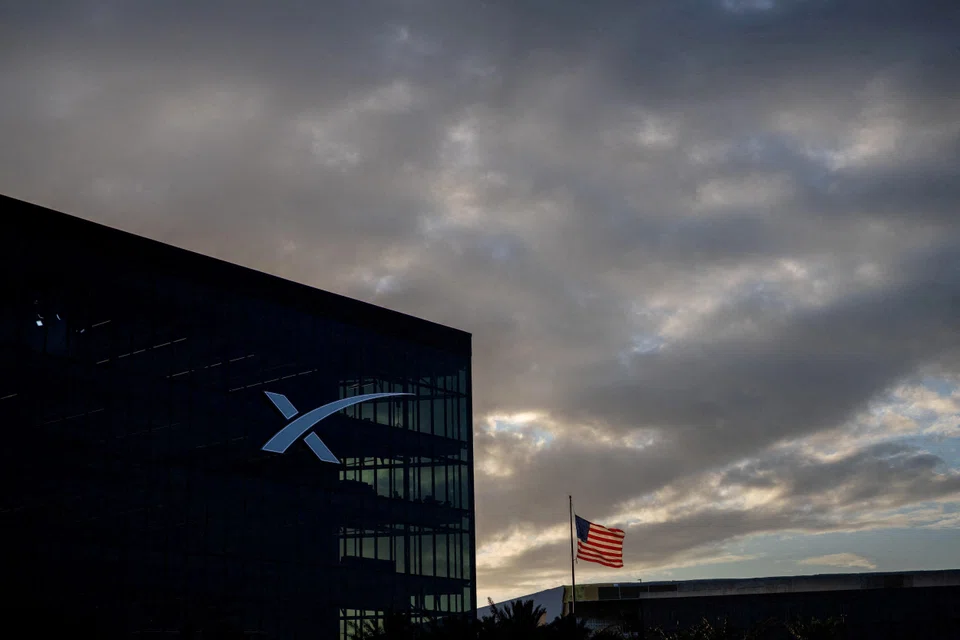
    • SpaceX (above), Anthropic and OpenAI's IPOs are expected to raise US$170 billion combined at valuations that may exceed US$4 trillion.
    • SpaceX (above), Anthropic and OpenAI's IPOs are expected to raise US$170 billion combined at valuations that may exceed US$4 trillion. PHOTO: REUTERS
    Published Mon, Jun 8, 2026 · 04:30 PM

    DURING the dotcom bubble, hundreds of companies went public. Yet, only a handful raised more than US$1 billion.

    Over the next 25 years, initial public offerings (IPOs) grew steadily larger as businesses and the global economy expanded.

    The biggest was Saudi Aramco, which raised about US$29 billion in its 2019 IPO that valued it at about US$1.9 trillion. SpaceX, Anthropic and OpenAI are expected to raise roughly US$170 billion combined at valuations that may exceed US$4 trillion.

    Index providers have been revisiting their rule books, some perhaps to ensure SpaceX can enter their benchmarks as soon as practicable.

    As an index provider – my company runs Rafi Indices – I am wary of opportunistic rule changes.

    The S&P also just announced it that would not be changing its rules to expedite mega-IPOs. However, the indexing community remains haunted by Tesla’s addition to the S&P 500 in 2020.

    For index inclusion, the S&P requires a company’s most recent quarterly earnings and the sum of its trailing four consecutive quarters’ earnings to be positive.

    This delayed Tesla’s inclusion until it was already among the world’s most valuable companies. Between the Nov 16 announcement that it would be added to the S&P 500 and its Dec 21 accession, Tesla rose 70 per cent.

    Less well-known is that investors had expected its inclusion months earlier. From its March lows to its S&P admission, Tesla’s stock rose by nearly ten times. Fairly or not, many viewed the delay as a black mark for the committee that oversees the index.

    Indexing is already reshaping markets. To borrow the old American Express slogan, “membership has its privileges”.

    Inclusion in a major index creates a vast pool of valuation-indifferent buyers. Index funds must buy additions and sell deletions regardless of price. Ongoing inflows create a constant stream of buyers for member stocks.

    I estimate about US$14 trillion worth of index funds track the S&P 500 directly, excluding benchmarked assets. Another US$4 trillion tracks the Nasdaq and the Russell 1000.

    With the US stock market worth roughly about US$80 trillion, these funds collectively own nearly one-quarter of the market, and an even larger share of the stocks in their respective benchmarks.

    Consider a thought experiment. Suppose SpaceX sells 4 per cent of the company in an IPO at a US$2 trillion valuation – a capitalisation that would be equivalent to about 2.5 per cent of the US stock market.

    If the S&P, Nasdaq and Russell committees immediately added the stock at full market-value weight, I calculate that the index funds would need to buy more than US$500 billion of SpaceX shares, while only about US$80 billion would be available.

    In theory, the market-clearing price would be infinite. That breaks the capital markets.

    Of course, this is not how indices work. New additions are generally based on the float, which is the amount of shares available to public investors.

    Under that approach, index funds might need to buy up to US$30 billion of stock from an US$80 billion float. That rocks the markets but does not break them.

    Markets can readily absorb a giant IPO. After absorption, index membership can create a durable valuation advantage.

    Compare the S&P 500 with the “Next 500”, the stocks ranked 501 to 1,000 by market capitalisation. Since 2012, the S&P 500 has dramatically outperformed the latter.

    The conventional narrative is straightforward: The S&P 500 contains America’s best businesses, while the rest of the market offers laggards and perpetual disappointments.

    The fundamentals tell a different story when looking at cash flow rather than earnings, under Generally Accepted Accounting Principles accounting standards as a cleaner measure of business performance.

    Over the past quarter century, the S&P 500’s cash flow has grown about 3 per cent a year slower than the Next 500.

    The implication is striking. Over the past 12 years, the biggest companies have won in the stock market not because their businesses grew faster, but because investors paid more for them.

    Their valuation premium relative to the Next 500 has risen to roughly 80 per cent, even as profit growth lagged.

    SpaceX and the other giant IPOs will probably reinforce the advantages of index membership, and widen the valuation gap between index constituents and the companies left outside the club.

    But, unless cash-flow growth for the largest companies reverses course and begins to exceed that of the next tier of firms, investors should earn better long-term returns from the non-members than from the members. FINANCIAL TIMES

    The writer is founding chair of Research Affiliates



