

SPACs can benefit Singapore, but implementation will determine success: participants
Singapore
ALLOWING Special Purpose Acquisition Companies (SPACs) to list in Singapore can benefit the Singapore markets, and there is interest from investors and sponsors in the structure, but market participants said success would depend on how the listing rules are drawn up.
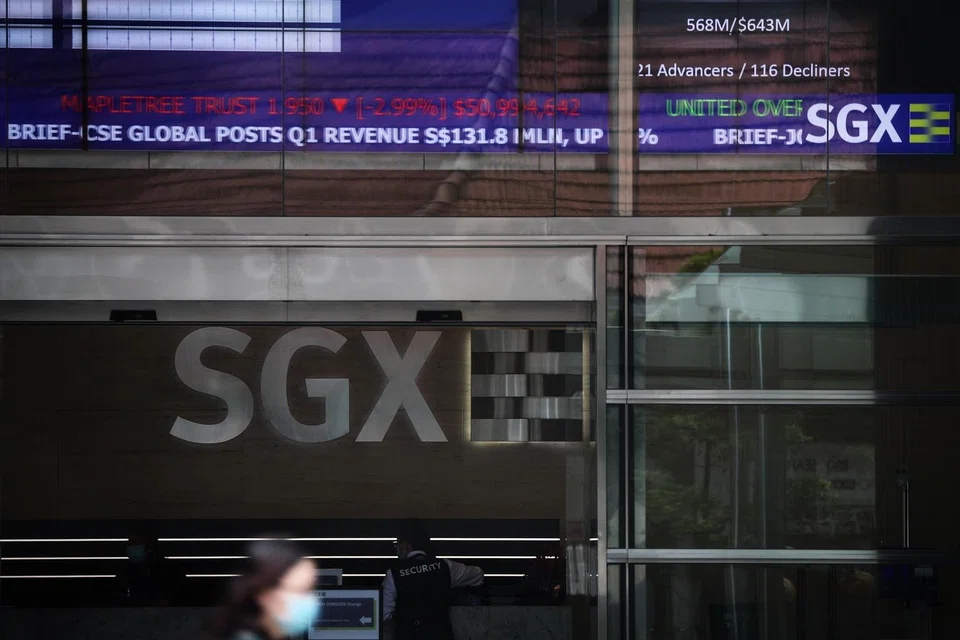
Last week, Singapore Exchange Regulation (SGX RegCo) said it was considering a public consultation, possibly as early as this quarter, on SPACs listings, given their current popularity globally.
Jeffrey Chi, vice chairman for Asia at Vickers Venture Partners, told The Business Times: "It would certainly not only provide more exit opportunities for tech companies in Asean, but also be potentially rewarding for the financial sector in Singapore (in terms of) investment banking fees, (and) retaining South-east Asian unicorns to be listed in the region."
Dr Chi is also chairman and chief executive officer of Nasdaq-listed SPAC, Vickers Vantage Corp I, which raised US$138 million this month. He said the popularity of SGX-listed SPACs could depend on how they are differentiated from their counterparts on other exchanges - such as Nasdaq and New York Stock Exchange (NYSE) - that already allow SPACs or are considering doing so.
SPACs, also known as blank-cheque companies, are shell companies that raise capital through an initial public offering (IPO) to acquire an existing firm.
After the funds are raised, the sponsor of a SPAC would typically have two years to "de-SPAC" - to identify a target company and complete a merger or acquisition. If a suitable deal is not found, the SPAC would be liquidated with funds returned to shareholders.
Market participants observed that an advantage of SPACs is the speed and efficiency of bringing companies to the public market, with also more certainty for pricing compared to traditional IPOs.
While SPACs are not new - SGX previously consulted on the topic over a decade ago - their prominence surged in 2020 with some US$78 billion raised in the United States last year. This was more than the total raised via SPACs in all previous years, according to Bloomberg.
Closer to home, SGX RegCo has also received expressions of interest for the structure.
Edwin Low, Credit Suisse's managing director and co-head of investment banking and capital markets (IBCM) in Asia-Pacific, said his bank is seeing both "strong investor interest" as well as enquiries from sponsors who are keen on raising funds through a SPAC.
"We expect to be one of the more active players in this product, when SGX is ready to allow SPACs to list on the local exchange," he said.
His colleague Tan Kuan-Ern, who is managing director and head of Singapore coverage in IBCM at Credit Suisse, added that there has been good Asian demand for the Asian-sponsored SPACs that have listed so far: "We think there is positive scope for the SPAC theme in Singapore as well, especially since the investor base here is now familiar with some of the recent SPACs."
Credit Suisse was an underwriter for three SPACs from Singapore that have listed on the NYSE: SC Health, Aspirational Consumer Lifestyle, and Tiga Acquisition.
Mr Tan said: "If investors and sponsors have a good experience with Asian-sponsored SPACs, it bodes well for an expansion of the SPAC market among new sponsors, and the use of the SGX as a platform for new Asian-sponsored SPACs."
The availability of SPACs can also broaden the investments available to retail investors.
Stefanie Yuen Thio, joint managing partner at TSMP Law Corporation, said one of the key competitors to stock exchanges is private equity (PE) funds because of the latter's ready availability of capital and ability to move quickly. When dealing with PE funds, companies looking for capital also do not have to subject themselves to the timing and regulatory requirements of a traditional listing process.
"Making SPACs available will allow the retail investor to invest in the kinds of investments that PE funds have access to," she said.
"Retail investors can commit a smaller investment amount into the listed vehicle and would have a market in which to trade the investment."
Sponsors that have already launched SPACs in the United States are also watching developments.
Ravi Thakran, who raised over US$200 million in Aspirational Consumer Lifestyle SPAC last September, said he believes there are a few thousand companies in Asia that should be public. SPACs are able to provide them a route to list, he added.
Mr Thakran, who is founder and chairman of Singapore-based PE fund Turmeric Capital, said: "We have done one SPAC in the US, and we might do more going forward in the US, but we would be very keen if this play started here."
Vickers Venture Partners' Dr Chi also said he would consider raising a SPAC here, but that attention would need to be paid to the regulatory structure governing SPACs.
"Success will be about finding quality companies trading in Singapore while keeping the process of fundraising and approvals to do the 'de-SPAC' relatively smooth," he said, adding that proper disclosures and protecting shareholders' interests remain critical.
Apart from the process, the team behind the SPAC would also be important.
"In a SPAC situation, the fund management team making the investment decision is critical," TSMP's Ms Yuen Thio said. "This is because the investment target may not have been identified yet and the retail investor is putting their faith in that track record and expertise."
Mr Thakran also said SPACs could benefit from having solid operating teams involved, with a clear business case on why they are buying an asset and how they can build it to be a company with robust returns in the mid-to-long term.
Tham Tuck Seng, capital markets leader at PwC Singapore, noted that the quality of the companies being acquired by SPACs may be a potential concern. This can, however, be mitigated by stipulating that acquired companies should also meet exchange listing requirements.
He cautioned, however, that a rush for SPACs could result in an increase in asset prices.
Luke Pais, partner and Asean leader for private equity at Ernst & Young, noted that the IPO due diligence process is typically longer and more rigorous than that for SPACs. However, he noted that having incoming businesses meet listing requirements can help mitigate issues of lower quality businesses.
Investors should carefully consider the quality of the sponsor and if they have a strong track record, Mr Pais said.
They should also be aware of the possibility of overvaluation, especially if SPACs are near the end of their investment window and face competition to acquire quality assets.
"The other key question to consider is how will a company trade post-listing - is there depth in the market and is the market ready for such type of listings," Mr Pais added.
READ MORE: Crescent Cove Advisors launching special purpose acquisition company to target S-E Asian tech firms
TRENDING NOW

China recruited exec at Singapore data centre firm to spy on Nvidia CEO Jensen Huang: US intelligence
DBS, OCBC, UOB’s big sell-off: Was it their Q3 numbers or a broader market de-rating?

Could Japan trigger the next global financial crisis?

Philippines’ FDI slowdown exposes uneven investment prospects across S-E Asia

