SPACs may have more success than DCS in bringing tech listings to SGX
While both are favoured by tech players, special purpose acquisition companies have advantages not found in dual-class shares
Singapore
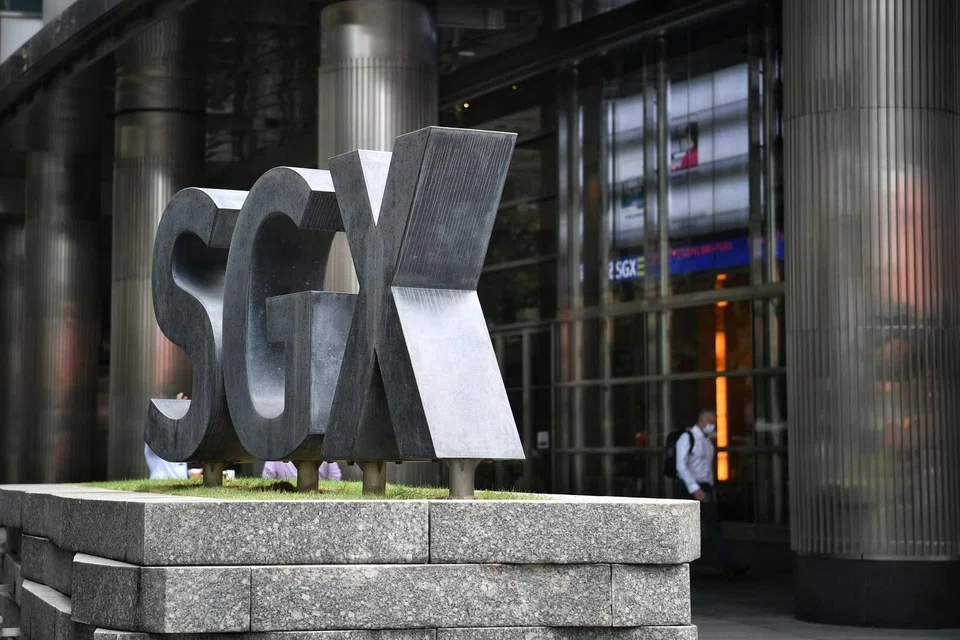
THE unique structure of special purpose acquisition companies (SPACs) could help the Singapore Exchange (SGX) attract technology-related listings, even as a previous move to allow dual-class shares (DCS) disappointed.
The SGX's first mover advantage and an ecosystem of fast-growing startups are reasons to be positive, market watchers say.
SPACs are shell companies that raise cash through an initial public offering (IPO) for the purpose of acquiring an existing company.
After the funds are raised, the sponsor of a SPAC will have a fixed time frame to "de-SPAC" - to identify a target company and complete a merger or acquisition. If a suitable deal is not found, the SPAC would be liquidated with funds returned to shareholders.
The process of listing via a SPAC is faster and cheaper, said Golden Gate Ventures partner Michael Lints. This gives companies more fund-raising flexibility, and they can also attract institutional capital with a private investment in public equity (Pipe) round. These advantages are not found in DCS, he said. The DCS structure, on the other hand, does not add any flexibility for companies in terms of the roadshow, fundraising process or the listing process itself.
The local bourse had amended its rules in 2018 to allow for DCS, which provide extra voting rights to certain shareholders such as founders.
Both SPACs and DCS are favoured by tech players.
"If you look at SPACs in the US, for example, most of the SPACs are looking at tech growth companies," said Tham Tuck Seng, capital markets leader at PwC Singapore.
But Mr Tham said SPACs have an advantage over DCS in attracting listings as the SPAC sponsors would be in a better position to negotiate with target companies on valuation, providing companies with some certainty.
The DCS structure is still relevant to tech companies, said Mr Lints of Golden Gate Ventures.
"These differences in voting rights make a big difference for tech companies in terms of their consideration to list," he said. "With these dual class shares, at least in terms of the direction, the strategy, you still have an important say there. I think that is important for founders as they are considering listing."
Tech companies clearly favour the DCS structure, with Facebook and Alibaba among those with it. Last month, homegrown tech company Grab announced that it was going public via a SPAC merger in the US. It would also have different share classes, with its co-founder Anthony Tan getting 60.4 per cent of voting power, despite an equity stake of just 2.2 per cent.
But while the DCS structure appeals to tech companies, few have taken advantage of the rule changes to list in Singapore. Last year, AMTD International was the first company to use the structure in its secondary listing on SGX.
A possible reason for the lack of interest is that Singapore is not unique in allowing DCS. Other countries, including Hong Kong and the US, also allow for DCS.
"I think if Singapore had it and our competition didn't, it would be fine," said Jeffrey Chi, vice-chairman for Asia at Vickers Venture Partners. He added that having DCS does not fundamentally change the attractiveness of the SGX relative to others.
The lack of suitable companies that could employ DCS may be another reason for the low usage.
Nick Davies, partner at law firm King & Wood Mallesons, said: "It takes a certain size of tech company and visionary founder to convince investors that a dual class share structure is investible. There are not many of these companies in South-east Asia."
Such larger companies would also typically seek a listing in the US or Hong Kong as these are perceived as having more liquidity to support a listing than SGX, he added, noting that SGX also has quite a high bar for companies of this type - which typically have not earned sustained profits - to list.
The number of potential SPACs, or companies that may wish to merge with a SPAC, is much larger than the number of tech companies in the region large or successful enough to pursue a DCS listing, Mr Davies said. Allowing SPACs could spur new listings as well as new sources of liquidity on SGX.
Ultimately, Golden Gate Ventures' Mr Lints said, SGX still needs to attract enough institutional capital and liquidity to the markets.
Even as rule changes open the market to new products, Johannes Juette, partner at law firm Clifford Chance, said there are no single measures that can short-cut Singapore's long term objective to attract tech/growth companies given the intense competition to attract these listings.
"I do think that Singapore's challenge is to create a certain momentum for listings, either from certain industries or jurisdictions," he said, although he does think that SPACs would still move the needle. "Compared to dual class share structures, which fundamentally benefit pre-IPO investors and founders, SPACs are more likely to allow companies that otherwise might not be able to list to do so, which could help create more momentum."
The challenge for SGX will be in structuring a regime that balances the risks and rewards of SPACs.
Dr Chi of Vickers Venture Partners said rules around SPACs need to be "compelling and friendly", with "not so much the nitty-gritty mechanics of what a SPAC can or cannot do, but essentially, how efficient a listing process around SPACs will be".
SGX launched its consultation on SPACs in end-March, with proposals that aim to reduce some of the risks such as excessive dilution for long-term investors and a rush for sponsors to de-SPAC.
SGX Regulation chief executive Tan Boon Gin had said that if everything goes well, the bourse is targeting to introduce a framework by the middle of the year. The timeline of this will depend on the feedback received.
In the consultation, it was proposed that SPACs would not be allowed to have a DCS structure at IPO as a SPAC has no commercial operation at listing. The founding shareholders would also not be permitted to vote on a business combination. The DCS framework can be applied to the combined entity upon a business combination.
SGX's consultation comes amid surging popularity in US SPACs, with record amounts being raised over the past year. The structure has, however, attracted the attention of the US securities regulator, which has issued accounting guidance for SPACs and warned investors on differing economic interests between sponsors and investors.
Mr Juette of Clifford Chance said Singapore has made "tremendous efforts and strides" in building an attractive ecosystem for tech companies and other startups, but the results in terms of big volumes of tech listings in Singapore have not been seen.
"A healthy and well-regulated SPAC regime could change that and may provide an avenue for these companies to come to market sooner and faster and to list in Singapore, rather than having to look abroad."