

Spike in property agent commissions may draw greater scrutiny given its wider impact

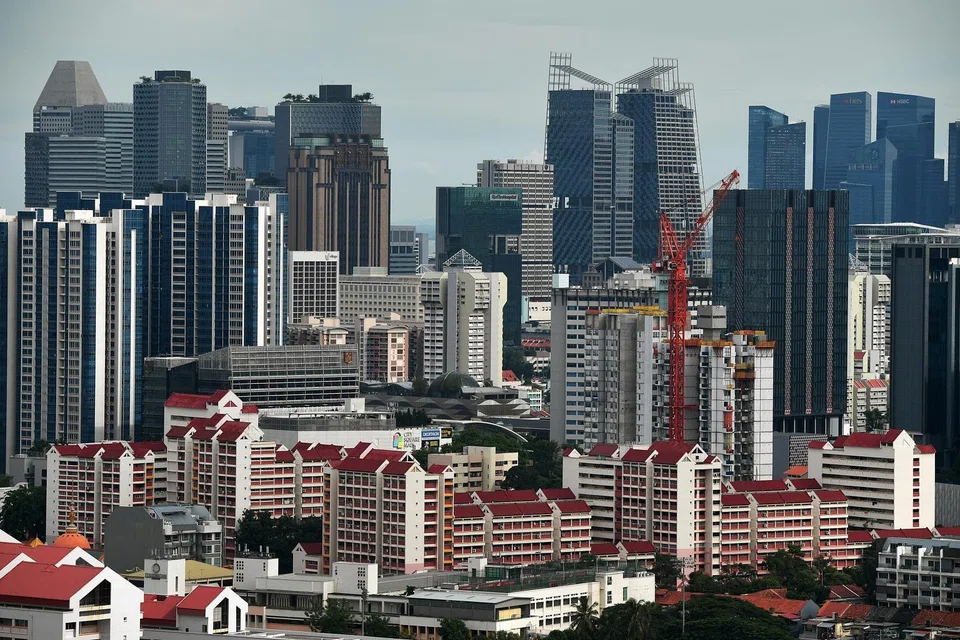
SINGAPORE'S physical property market has been resilient, but this has not been reflected in the share prices of the listed developers. Shares of CapitaLand and City Developments, two of the largest local players, have declined nearly 10 per cent and 30 per cent, respectively, in the past year.
But the share prices of the property agents tell a slightly different story. PropNex, for instance, has gained more than 60 per cent.
This divergence is reflective, also, of the financial performance of both segments of the property sector. Developers' profit margins for Singapore private housing projects here have shrunk, but the commissions they have been paying to property agents to move their units have risen.
Some developers have seen pre-tax profit margins from Singapore private residential projects whittled to 10-12 per cent or even to single digit.
One possible reason for the divergence is government efforts to dampen exuberance in the property market.
Prior to the onset of the total debt servicing ratio (TDSR) framework in late-June 2013, margins were 15 to 20 per cent, or even more, according to the head of a listed developer.
Meanwhile, in the aftermath of the July 2018 cooling measures, when it became harder to sell private homes, agent commission rates for new launches began rising. Today, they stand at an average of 3 per cent - up from 1 to 1.5 per cent previously.
Developers who need to clear units in older projects have to pay 7 to 8 per cent, or even more.
Unsurprisingly, Singapore's two listed property agencies have done well financially.
Apac Realty, which operates a real estate brokerage in Singapore under the ERA brand, reported a 6 per cent year-on-year (y-o-y) rise in revenue to S$172.8 million for the six months ended June 30, 2020. This was primarily due to a 15.5 per cent or S$7.3 million increase in brokerage income contribution from new homes sales. The group's net profit rose 52 per cent to S$7.8 million in H1 FY2020.
Meanwhile, rival PropNex posted a 24.6 per cent y-o-y hike in revenue to S$360 million for the first nine months of 2020. Net profit surged 82.8 per cent to S$21.6 million.
Changing times
The disparity of performance - between developer and agent - has attracted some attention, with some market players questioning whether the margins earned are proportionate to the risks. It is the developers, after all, who risk the most capital for projects.
In their defence, agents say they have to work much harder to convince buyers these days. They often spend their own money on advertising campaigns via social media platforms.
Profit margins, however, are impacted by more than risk. In the early 1990s, when property prices were shooting up amid a speculative buying frenzy, it was easy for developers to sell homes. All they had to do was advertise their projects or spread word of an imminent preview and a queue of buyers would form.
There were also fewer restrictions on landbanking then, and developers had more leeway to time their launches to maximise profits.
Profit margins could easily hit 20-30 per cent then, and in some cases were above 100 per cent.
Agents generally received commissions of 0.5 per cent to 0.7 per cent for a new launch, or even less for bigger projects with a large number of units.
In recent years, however, the balance of power in the property market has swung from developers to agents.
Cooling measures have helped to rein in property prices. From the third quarter of 2013 to the fourth quarter of 2020, the Urban Redevelopment Authority's private home price index rose just 1.6 per cent.
Besides reducing the amount private home buyers can borrow and imposing additional costs on local investors and foreign buyers, the government also incentivised developers to finish developing residential projects and selling all units within five years of the land purchase.
Collectively, these measures have made developers more reliant on the marketing network of agents who fanned across Singapore with a mission of converting HDB dwellers into private condo buyers. In the face of the pandemic, they have even expanded their outreach via webinars.
At the same time, a wave of consolidations in the property agency business in recent years has resulted in just a handful of big players - putting the agents in a stronger position to demand higher commissions.
Unsustainable practices
These fat commissions are now creating a new set of problems.
To boost their chances of clinching sales, some agents have been channelling a chunk of commissions to buyers indirectly. This is sometimes done under the guise of "referral fees", and is passed on to buyers through a third party to avoid detection. Such payments are in breach of guidelines set by the Council for Estate Agencies.
Industry sources say some savvy property buyers scout around for agents who agree to give them a bigger portion of their commissions.
Such kickbacks also obscure prices. Said a property consultant: "You cannot track prices, you can't tell the extent to which property prices are going up. This could send wrong feedback to public policy makers."
Separately, some observers say the high commissions are drawing university graduates who could be more productively occupied in other professions.
In any case, property agents may have to be prepared for additional scrutiny on commissions. Some are suggesting this could come in the form of requiring developers to declare the commission rates they are paying to agents. Others have suggested a cap or some kind of regulation of property agents' commission rates.
Ultimately, the margins the property agencies currently enjoy may come under some pressure.
READ MORE: Agents channelling a chunk of commissions to buyers






