S'pore banks able to withstand a sharp property fall: Fitch
Potential earnings impact manageable due to a proactive regulator and measures introduced to curb excessive debt
Singapore
SINGAPORE banks are strong enough to withstand a sharp downturn in the property market despite their large exposure to the sector, said Fitch Ratings.
The downside risks for banks would be modest even if housing-loan quality were to deteriorate drastically, it said.
Fitch said its worst-case scenario of a 45 per cent home-price collapse with housing non-performing loan (NPL) ratio of 5 per cent (end-June 2016: 0.4 per cent) - would shave 17 per cent to 24 per cent off their 2015 earnings. This excludes the negative impact of the stress on the other parts of the banks' business.
During the 1997-1998 Asian financial crisis, the three local banks - DBS Group Holdings (DBS; AA-/Stable), Oversea-Chinese Banking Corp (OCBC; AA-/Stable) and United Overseas Bank Limited (UOB; AA-/Stable) - had an average NPL peak ratio of 4.3 per cent.
In the aftermath of the Asian financial crisis, private-home prices and Housing and Development Board (HDB) resale price indices in Singapore collapsed by 45 per cent and 30 per cent, respectively.
Housing loans form a third of domestic system lending. Property-related loans accounted for 52.1 per cent of domestic loans at end-June 2016, with 31.7 per cent in housing loans and another 20.4 per cent in building and construction loans.
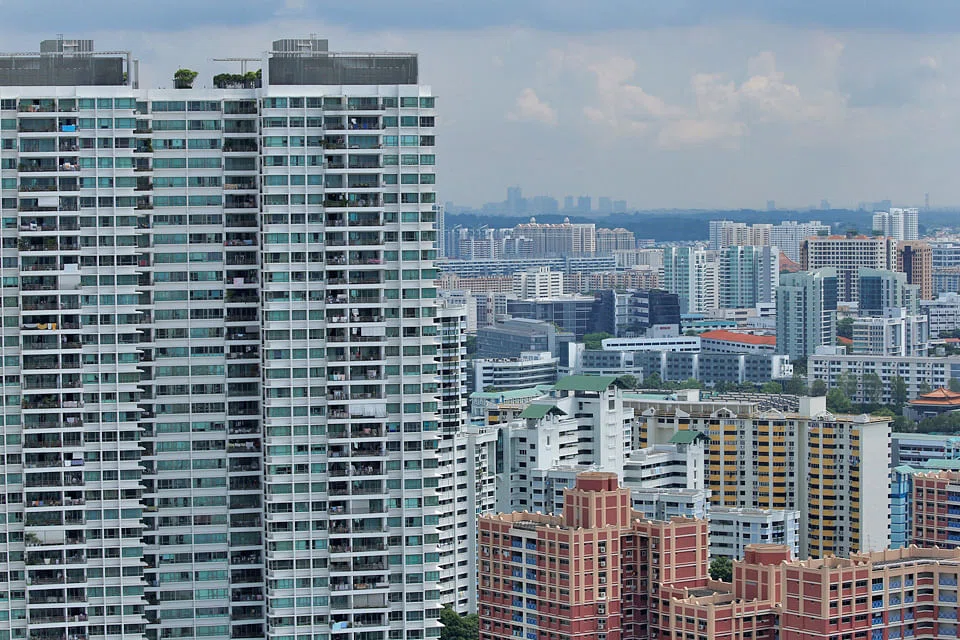
Fitch expects Singapore's private residential-home prices - having declined 9.4 per cent since peaking in September 2013 - to weaken further as a large supply of new homes floods the market while population growth slows.
Housing loans - about four-fifths of consumer loans - increased by a compound annual growth rate (CAGR) of 16.2 per cent over 2009-2013, aided by a low interest rate environment.
"There is lingering concern a collapse in home prices would pose potential risks to Singapore's banking sector as a large supply of new homes are flooding the market amid slowing immigration and a more challenging operating environment," it said.
"We expect home prices and rentals to soften further in the near to medium-term as pent-up housing demand that started in 2005 appeared to have been met in 2015 by a flurry of residential-property developments in recent years and moderating population growth that had slowed to 1.4 per cent CAGR in 2012-2015, from 3.3 per cent in 2005-2011," it said.
Signs of an oversupplied market have emerged amid the rising vacancy rate of non-landed private homes, at its highest in slightly more than 11 years. Compounding this is the burgeoning number of unsold non-landed residential units that had risen to 4,993 at end-June 2016, well above their long-term average of 4,218.
Fitch believes the potential earnings impact on Singapore banks would be manageable in the event of a sharp decline in home prices because of a proactive regulator and measures to curb excessive debt introduced as early as 2009.
"The authorities are more proactive in curbing property speculation than during the Asian financial crisis. Measures to curb speculation in residential property were introduced as early as September 2009, and subsequently tightened in response to changing circumstances," it said.
"In our view, regulators have latitude to stem a sharp decline in home prices by selectively unwinding the property-cooling measures," it said.
"This may occur in the event of an unexpected and drastic plunge in home prices that have historically been triggered by external factors."
Fitch also noted the reasonably strong household balance sheets.
Household assets are more diversified now compared with the pre-Asian financial crisis era, with a greater proportion of liquid assets such as deposits, shares and securities, Central Provident Fund (CPF) contributions and life insurance.
"Current household leverage - household debt as a proportion of household assets - of 16.5 per cent is reasonably low from a historical standpoint," it said.
Fitch looked at another worst case scenario - where the combined valuation of homes, shares and securities falls by 45 per cent, equivalent to declines recorded during the Asian financial crisis. "We believe this is a remote case," it said.
Adding the period-to-date correction of 9 per cent, this would take the total home price correction to about 50 per cent from its peak.
Even at this level, total liquid cash - represented by currency and deposits of S$365.9 billion - is still in excess of household liabilities of S$301.8 billion at end-2015.
On foreign buying which has fallen as sentiment waned, it said these purchases are deemed investments where a lower maximum loan to value applies. "This presents a wider safety margin for banks." Also Singapore is an international wealth-management centre which suggests that some of these investments are committed for the long term.
Fitch said banks' mortgage quality should stay resilient as long as unemployment rate remains low, which it believes is likely in the foreseeable future. The seasonally adjusted unemployment rate was 2.1 per cent in June, up from 1.9 per cent in March, the highest since March 2014.
"History tells us that owner-occupied borrowers usually default on their home loans as a last resort. This is supported by the close-to-90 per cent correlation between unemployment and housing NPLs using data between 2001 and 2015."
Bottom line, Fitch believes Singapore banks are well positioned to withstand potential asset-quality deterioration, given their disciplined underwriting standards and healthy weighted average loan-loss reserve coverage of 113 per cent at end-June 2016 (as a proportion of NPLs).
"Singapore banks' rating profiles will also continue to be supported by their adequate profitability, steady funding and liquidity pools, and strong capitalisation, as reflected in their 'AA-' ratings and Stable Outlooks."